
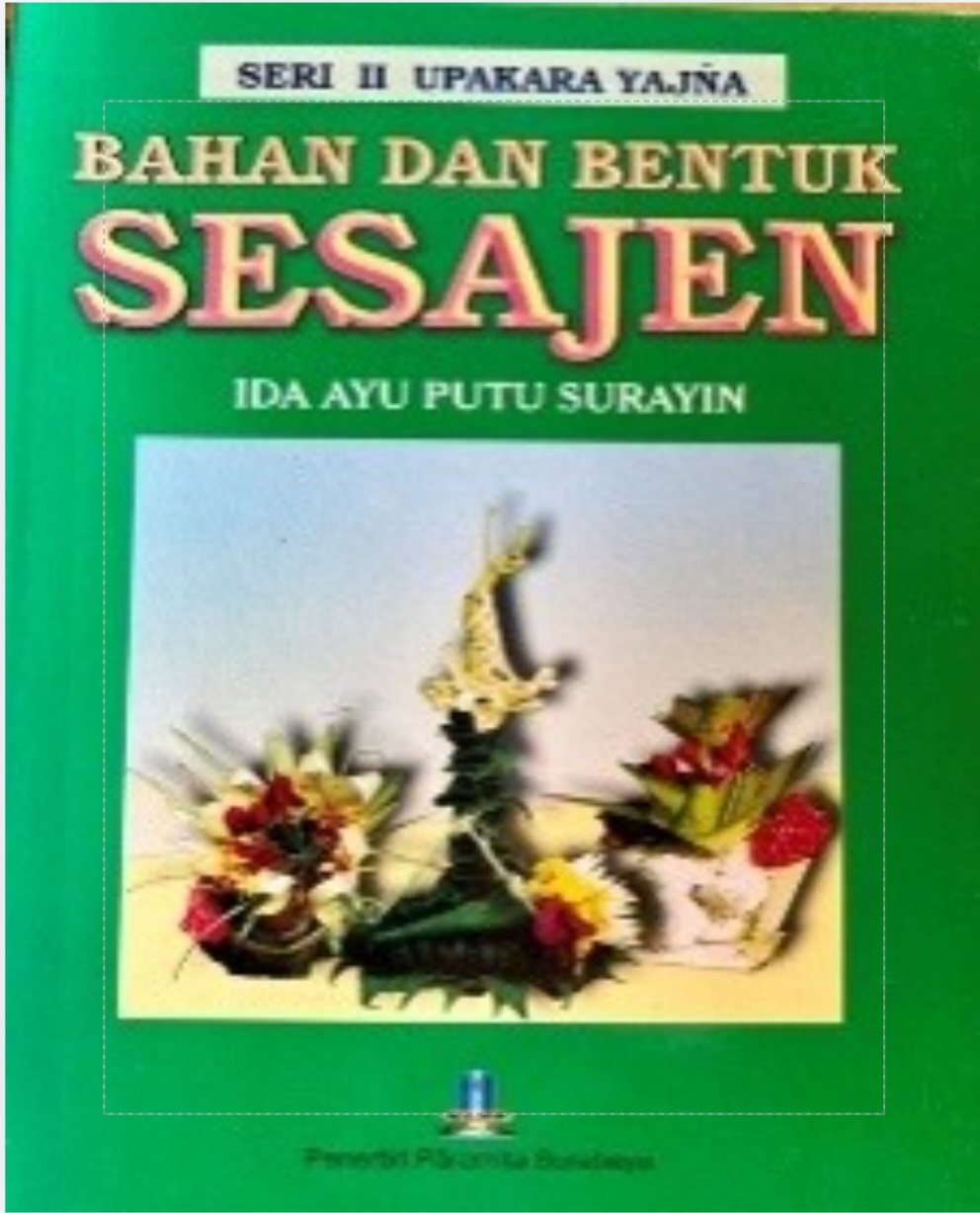
Author: Ida Ayu Putu Surayin, 2002. 140pgs. (Indonesian), softcover Seri II Upakara Yajna
Publisher: Paramita, Surabaya
Balinese offerings are intricate ritual creations dedicated to deities, ancestral spirits, human communities, and even the underworld. They are central to Balinese religious life, serving as visible expressions of devotion, gratitude, and the pursuit of cosmic balance. Rooted in a synthesis of Hindu-Buddhist traditions and indigenous animism. These offerings are present in all major ceremonies: rites of passage (manusa yadnya), temple rituals (dewa yadnya), and funerary rites (pitra yadnya). These offerings are governed by the principle of balance between the seen (sekala) and unseen (niskala) worlds. Materials and techniques, such as natural elements of palm leaves, betel (sirih), jackfruit (nangka) leaves, flowers, processed substances, like rice flour, cakes (jajan), cooked foods. Using containers: of clay, wood, bamboo—reflecting ecological adaptation and artisanal tradition. Sesajen functions as devotional: acts of reverence toward gods and ancestors, social cohesion: collective preparation strengthens community bonds; aesthetic discipline: artistry itself becomes worship, and cosmic mediation, offerings maintain harmony between benevolent and malevolent forces. Balinese offerings are multifunctional cultural artifacts—simultaneously works of art, vehicles of prayer, instruments of social solidarity, and embodiments of cosmological philosophy. Their omnipresence in ritual life reflects the Balinese worldview that the sacred permeates daily existence, and that beauty, devotion, and balance are inseparable.
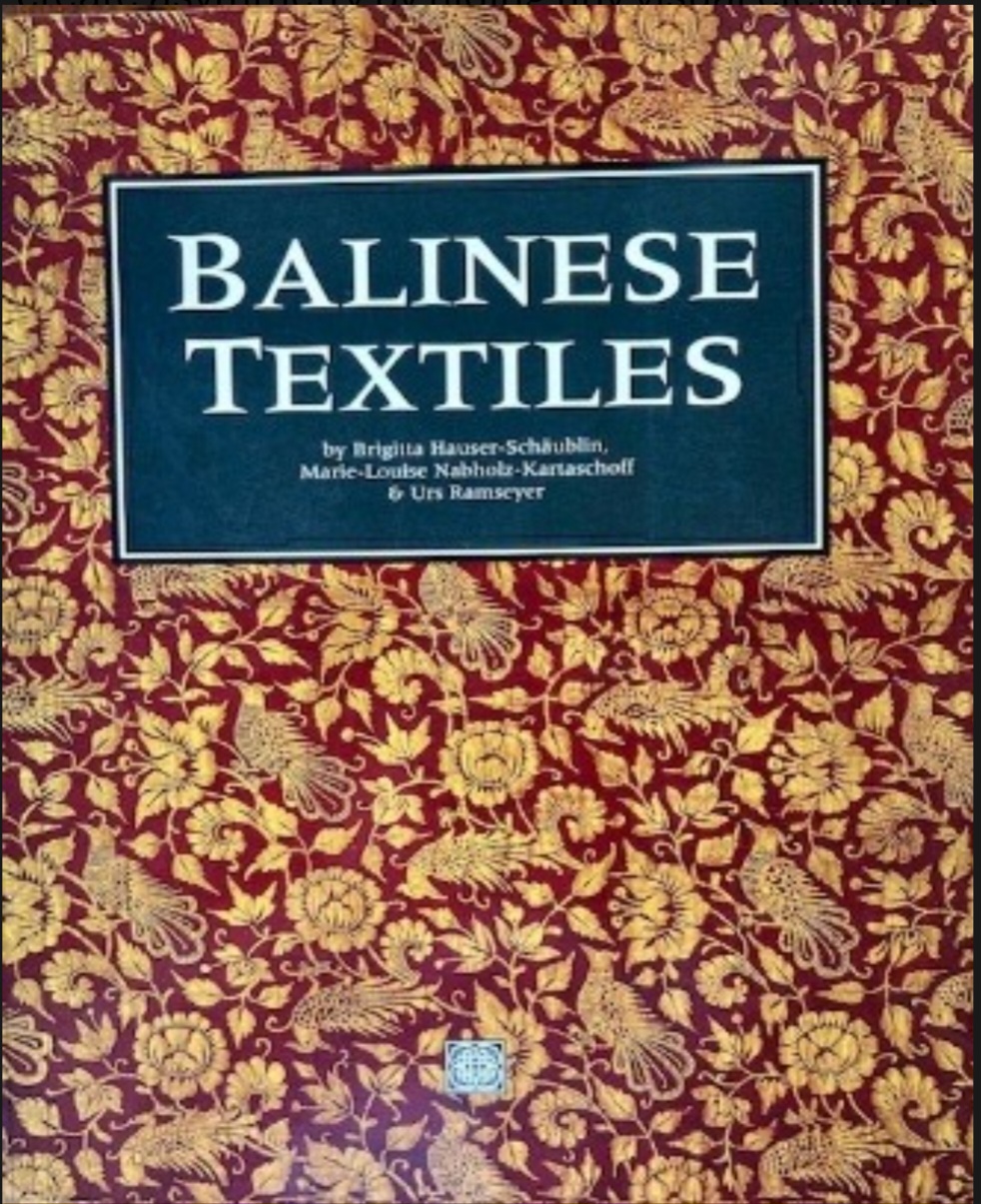
Author: Brigitta Hauser-Schāublin, Marie-Louise Nabholz-Kartaschoff & Urs Ramseyer,1991. 143pg. (English). Softcover.
Publisher: Periplus Editions, Singapore
The authors commence their work with a comprehensive introduction to the cultural universe of the Balinese people, subsequently presenting the island’s diverse corpus of textile traditions. These include the intricately patterned weft-ikat Endek; the opulently adorned Songket, distinguished by its supplementary weft decoration; the gilded Perada, embellished with gold leaf; the ritualistic Bebali, integral to ceremonial practice; the archaic Keling, associated with Nusa Penida; the dualistic Poleng, embodying the symbolic interplay of black and white; the sacred Cepuk, venerated in both Bali and Nusa Penida; and the protective Geringsing, renowned for its apotropaic qualities. As one of the earliest and most authoritative reference works on Balinese textiles, the book continues to serve as a seminal resource in the field to this day.
Author: Maria Wronska-Friend. 2015. 135 pg. (in English and Polish)
Publisher: Central Museum of Textiles, Lodz, Poland.
The book is associated with a Balinese textile exhibition taking place in Łódź, sharing the same title.
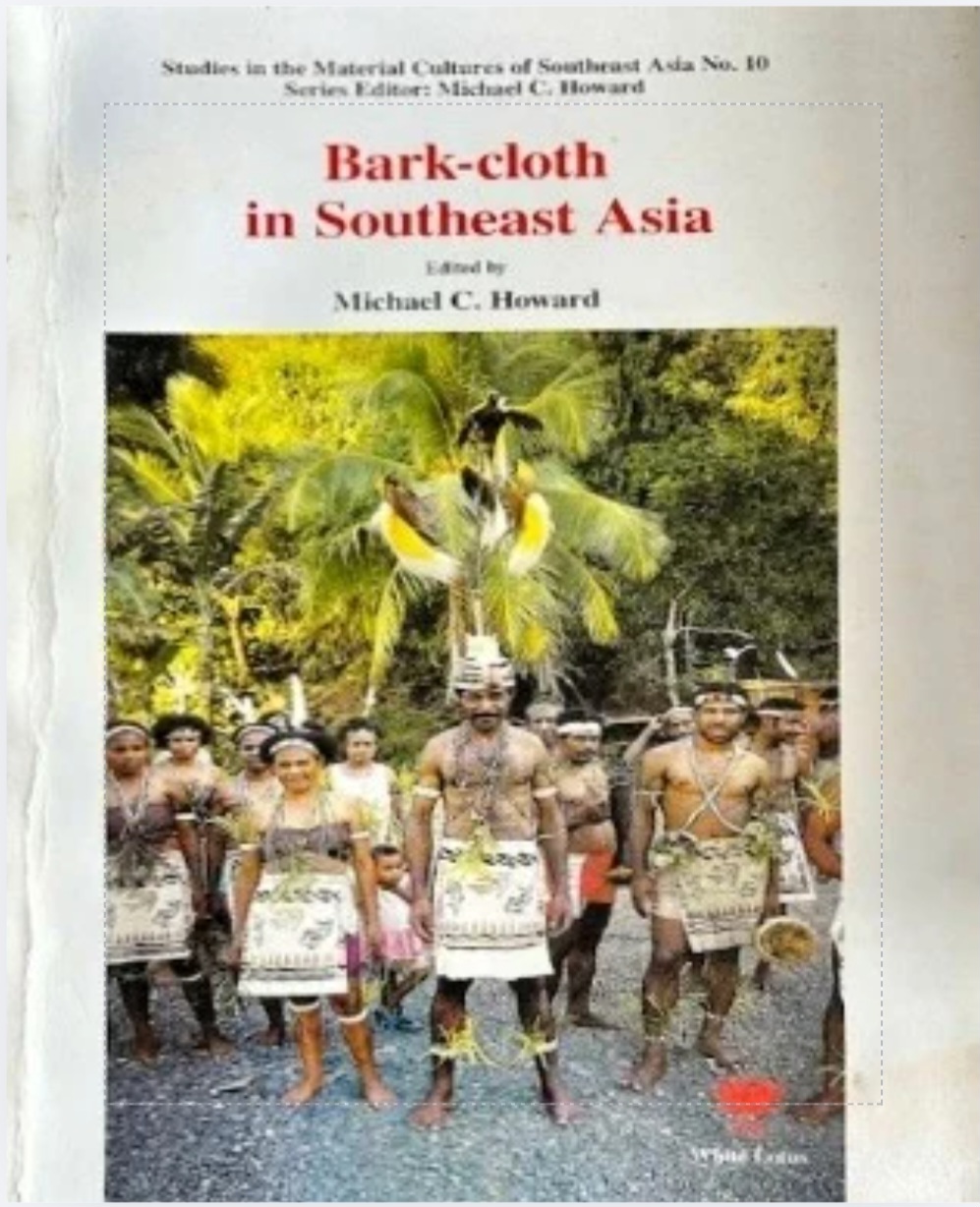
Author: Michael C. Howard, editor. 2006. 309pgs. English. Softcover. Studies in the Material Cultures of Southeast Asia Series no.10
Publisher: White Lotus, Bangkok
The volume presents the first comprehensive survey of Southeast Asian bark-cloth traditions. It opens with chapters that examine the archaeological evidence for bark-cloth production and use across the region, with particular attention to the holdings of the Rijksmuseum voor Volkenkunde in Leiden, the Netherlands. Subsequent chapters provide detailed analyses of bark-cloth practices in Vietnam, southern Thailand, peninsular Malaysia, Taiwan, the Philippines, Kalimantan, and Papua, thereby situating these diverse traditions within a broader comparative framework.
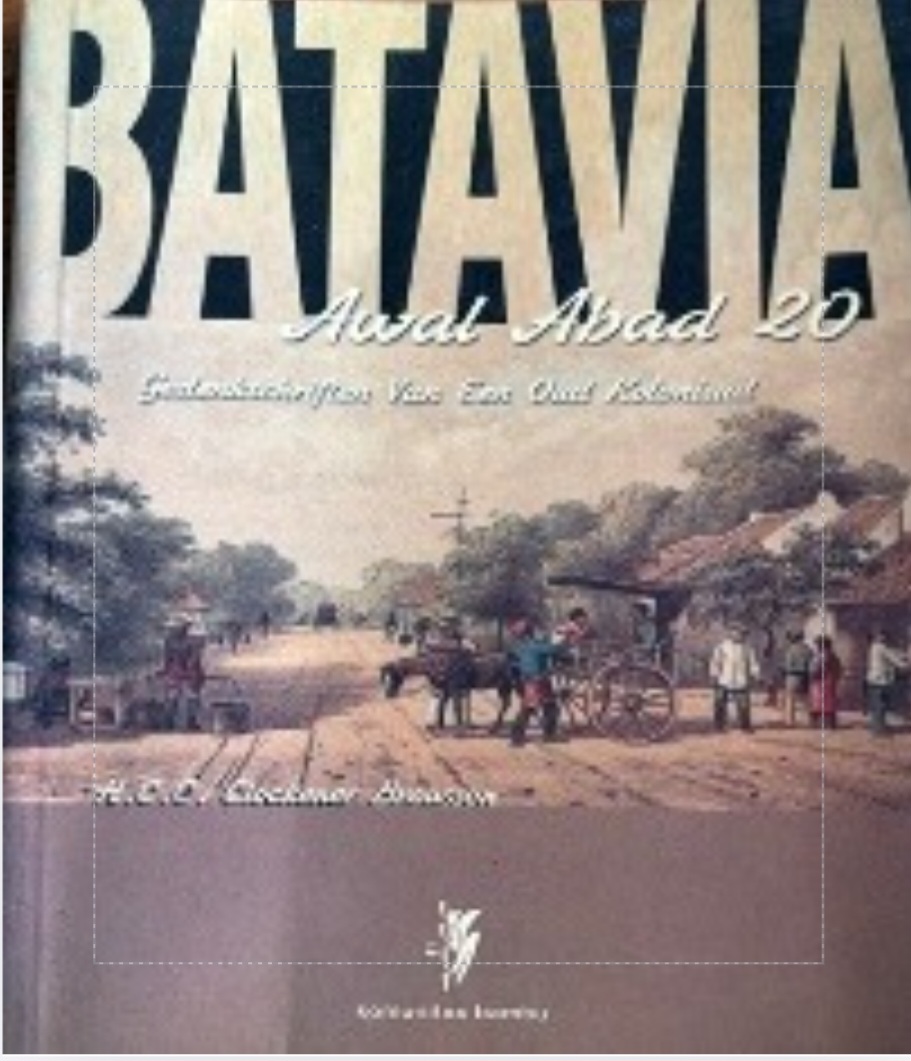
Author: H.C.C. Clockener Brousson, 2004. 150pgs. (Indonesian). Sofcover
Publisher: Komunitas Bambu, Jakarta
This modest booklet, translated from Dutch, serves as a commemorative account of C. Brousson, one of the pioneers of East Indies journalism in the early twentieth century. Brousson began his career publishing a newsletter, and through this work he chronicled his experiences as a colonial soldier who eventually found himself stationed in Batavia, as Jakarta was then known. The narrative offers vivid glimpses into daily life: the routines of the barracks, the workings of the postal service, the parks and canals that doubled as communal washing places, the theatre house for comedies, and the vibrant Chinese community. Brousson also reflects on the broader history of Batavia, its bustling Chinatown, and the activity of its harbor. Far more than a simple memoir, this booklet stands as a valuable document of urban life in the capital of Indonesia during the early 1900s. It captures the texture of a city in transition, blending personal observation with cultural and historical detail, making it a fascinating window into a bygone era.
Page 9 of 108