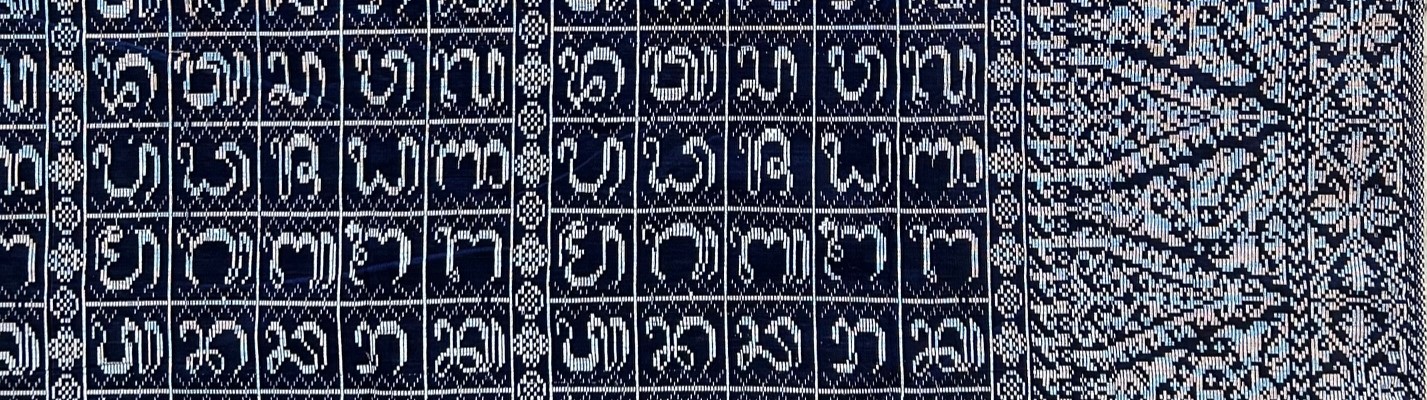

Author: Sian E. Jay, 2012. 163pgs. (English). Hardcover
Publisher: Yayasan Tenun Indonesia, Jakarta
This volume illuminates the enduring significance of Indonesian hand-loomed textiles, notably ikat and batik, by tracing their trajectory from ceremonial regalia into the realm of contemporary interior design and refined living. Beyond aesthetic adaptation, the work underscores how these fabrics embody layered cultural meanings: they are not merely decorative objects but carriers of social identity, ritual symbolism, and collective memory. The book’s principal strength lies in its emphasis on modern applications. It deftly bridges the divide between historical preservation and present-day lifestyle, offering imaginative strategies for integrating richly textured fabrics into domestic and professional spaces. In doing so, it demonstrates how traditional weaving practices can be recontextualized without erasing their cultural resonance, thereby sustaining dialogue between heritage and innovation. Visually, the book is striking; it functions as both a mood board and a reservoir of inspiration for interior designers, collectors, and textile connoisseurs. Its lavish imagery foregrounds the aesthetic potential of these fabrics while simultaneously inviting reflection on their ethnographic depth — the ways in which motifs, dyes, and weaving techniques encode cosmological beliefs, kinship structures, and regional identities. It must be noted, however, that the text does not aspire to serve as a comprehensive anthropological treatise or a technical manual for practitioners of weaving. Rather, its orientation is toward the stylistic and decorative possibilities of Indonesian textiles. As such, it is particularly valuable for home decorators, lifestyle enthusiasts, and design professionals, while less directly relevant to academic researchers seeking exhaustive ethnographic or technical analysis. Nevertheless, by situating textiles at the intersection of cultural heritage and modern design, the book contributes meaningfully to broader discourses on material culture and the adaptive vitality of tradition.
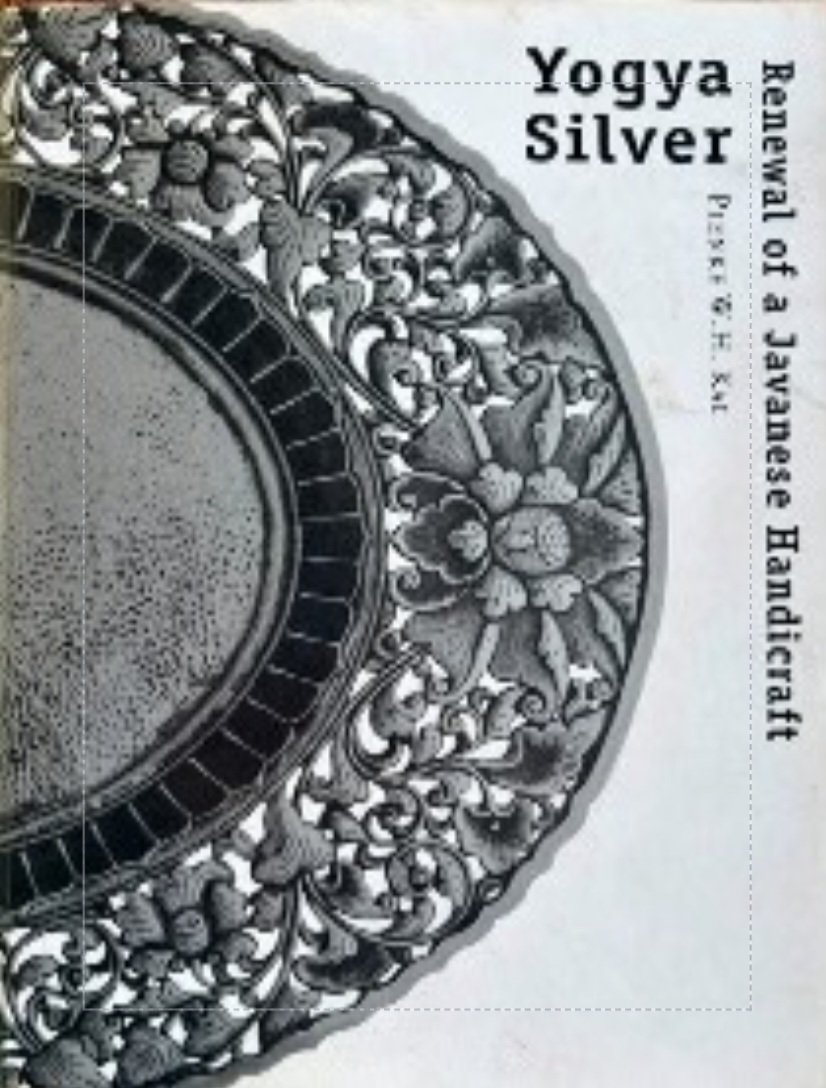
Author: Pienke W.H.Kal, 2005. 159pgs. (English), Softcover
Publisher: Tropen Museum, KIT Publishers, Amsterdam
Yogya Silver: Renewal of a Javanese Handicraft constitutes a highly specialized and authoritative study on the historical and artistic evolution of silverwork in Yogyakarta and Kotagede, Central Java. Published by KIT Publishers, this 160-page volume functions simultaneously as a catalog and a historical retrospective, serving collectors, historians, and connoisseurs of Southeast Asian decorative arts. It addresses a longstanding lacuna in the scholarship on modern Indonesian handicrafts. For nearly a century, the standard reference remained the early twentieth-century multi-volume documentation by J.E. Jasper and Mas Pirngadie. Kal’s work modernizes this discourse by tracing the transformation of Yogya silver from a localized artisanal tradition into a globally recognized art form. The narrative is structured around three principal pillars: Cross-cultural Renaissance: Although silverworking had flourished in the region for centuries, Kal demonstrates how collaboration between Dutch and Javanese decorative craft profoundly reshaped the industry. This hybridization enabled traditional Javanese motifs to adapt to European functional demands, producing tea sets, presentation bowls, and bonbonnières that merged indigenous aesthetics with colonial utility. Stylistic analysis: The book offers a meticulous breakdown of Yogya silver’s aesthetic markers, notably its bold relief, intricate floral repoussé, and oxidized backgrounds that create striking contrasts with polished silver edges. Visual documentation: Operating as both historical study and art catalog, the volume showcases significant pieces drawn from renowned private and museum collections. For active silver collectors, one of the book’s most practical contributions is its compiled index of silversmiths’ initials and maker’s marks. Since much of Kotagede’s silver was stamped with distinctive workshop initials rather than standardized European guild marks, Kal’s index provides an indispensable tool for authenticating and dating antique Javanese silver. Far from being a casual coffee-table publication, Yogya Silver is a dense yet accessible work of material culture history. It contextualizes the interplay of colonial dynamics, local craftsmanship, and global trade within a single artistic medium. For appraisers, antique silver collectors, and scholars of Javanese heritage alike, this text represents a vital addition to the reference library, bridging the domains of decorative art, ethnographic study, and cultural history.
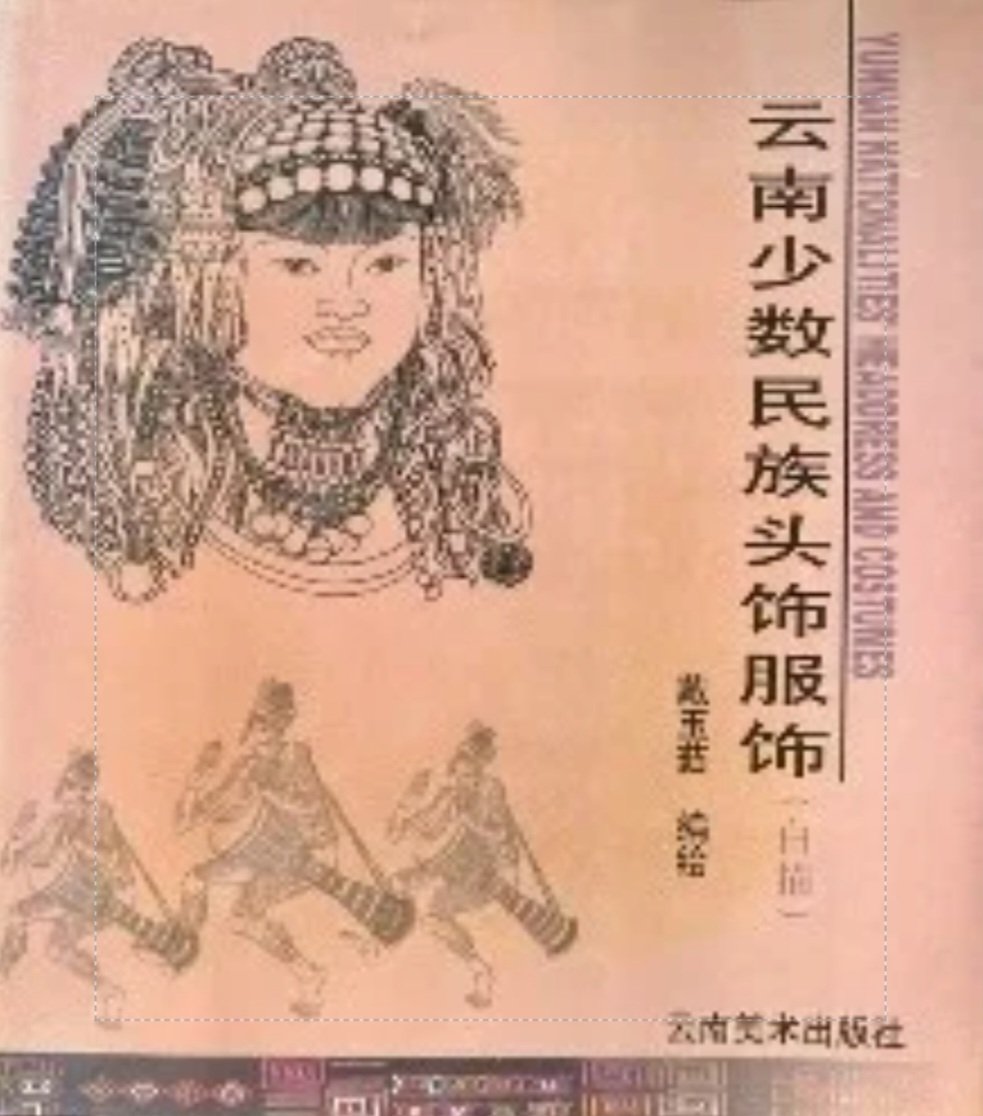
Author: unknown, 2001. 183pgs. (Mandarin)
Publisher: Unknown, Kunming, Guizhou, China
This volume provides a comprehensive visual documentation of the headdresses and traditional costumes of Yunnan's ethnic communities, offering a valuable record of the intricate textile traditions and material culture associated with the province's twenty-six officially recognized ethnic groups. Situated within China's most ethnically diverse region, the publication highlights the remarkable diversity of sartorial practices, decorative techniques, and cultural symbolism embodied in indigenous dress traditions. Through its detailed portrayal of costume elements, the book contributes significantly to the study of ethnography, textile history, and the material expressions of cultural identity. One of the volume's principal strengths lies in its meticulously executed drawings of headdresses and costumes. The precision of these drawings facilitates close examination of construction methods, ornamental motifs, textile patterns, and regional stylistic variations that may be difficult to discern through illustrated documentation alone. As a visual reference, the work constitutes an important resource for researchers interested in traditional dress, material culture, and the preservation of intangible cultural heritage. However, the publication's scholarly utility is somewhat constrained by its exclusive use of the Chinese language. While the visual material remains highly informative, the lack of multilingual text limits accessibility for international researchers, anthropologists, ethnographers, and textile specialists who do not possess proficiency in Chinese. The inclusion of English translations or bilingual annotations would have substantially enhanced the volume's value as a reference work and facilitated broader engagement with the rich cultural heritage of Yunnan's diverse ethnic communities.
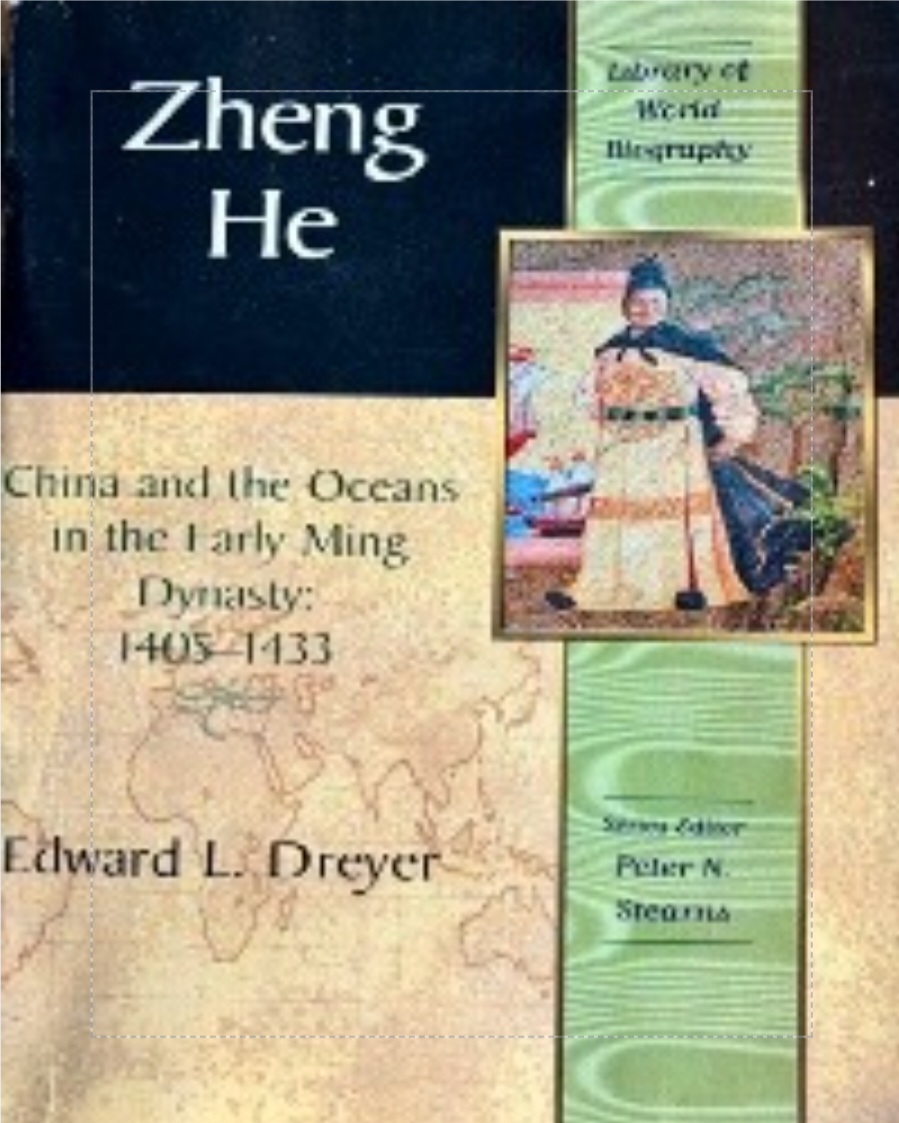
Author: Edward L. Dryer, 2007. 238pgs. (English). Softcover The Library of World Biography.
Publisher: Pearson, Longman, London
This volume, part of Longman’s Library of World Biography Series, situates Zheng He within the broader framework of early Ming maritime policy. While Chinese sources document his career extensively, the author seeks to probe Zheng He’s personality and intellectual world, though evidence remains limited. The study emphasizes that his expeditions were not commercial ventures but strategic demonstrations of Ming authority. Framed as “power projection,” the voyages compelled South and Southeast Asian polities to acknowledge the emperor’s supremacy through the tributary system, which exchanged local tribute for imperial recognition, gifts, and calendars. By contextualizing these missions within early Ming politics, the book highlights their role in shaping China’s external posture and its long-term ambivalence toward overseas engagement.
Page 151 of 151