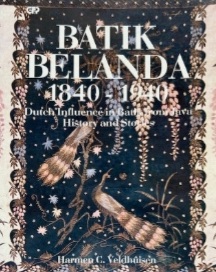
Author: Harmen Veldhuisen, 1993,156pg. (English). Softcover.
Publisher: Gaya Favorit Press, Jakarta
The book commences with an introduction to the sarong and the kain panjang, highlighting the circulation of Indian textiles in seventeenth-century Javanese society. The second chapter examines the emergence of the commercial textile trade, while the third chapter focuses on Indo-European batik manufacturers—predominantly women—who played a pivotal role in shaping the industry. Chapter four explores the revival of batik production between 1860 and 1880, followed by chapter six, which documents the flourishing period from 1890 to 1910. The concluding chapter addresses the decline of the batik canting industry between 1910 and 1940. For decades, this volume has served as a seminal reference for the study of historical batiks.
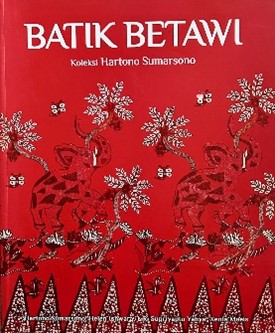
Author: Hartono Sumarsono et al. 2017. 252pg. (Indonesian)
Publisher: Kepustakaan Populer Gramedia, Jakarta
Batik Betawi explores the history of Batavia, now Jakarta, and the Betawi people's creation of stamped batik from lower-quality white cotton, which lacks distinct characteristics. In Jakarta, batik is seen as a commodity, leading to quick shifts in production based on sales. Initially, batikers from Pekalongan and Cirebon influenced the motifs, resulting in similarities with northern Central Java batiks. The book offers new insights for batik enthusiasts, highlighting lesser-known aspects of this unique style.
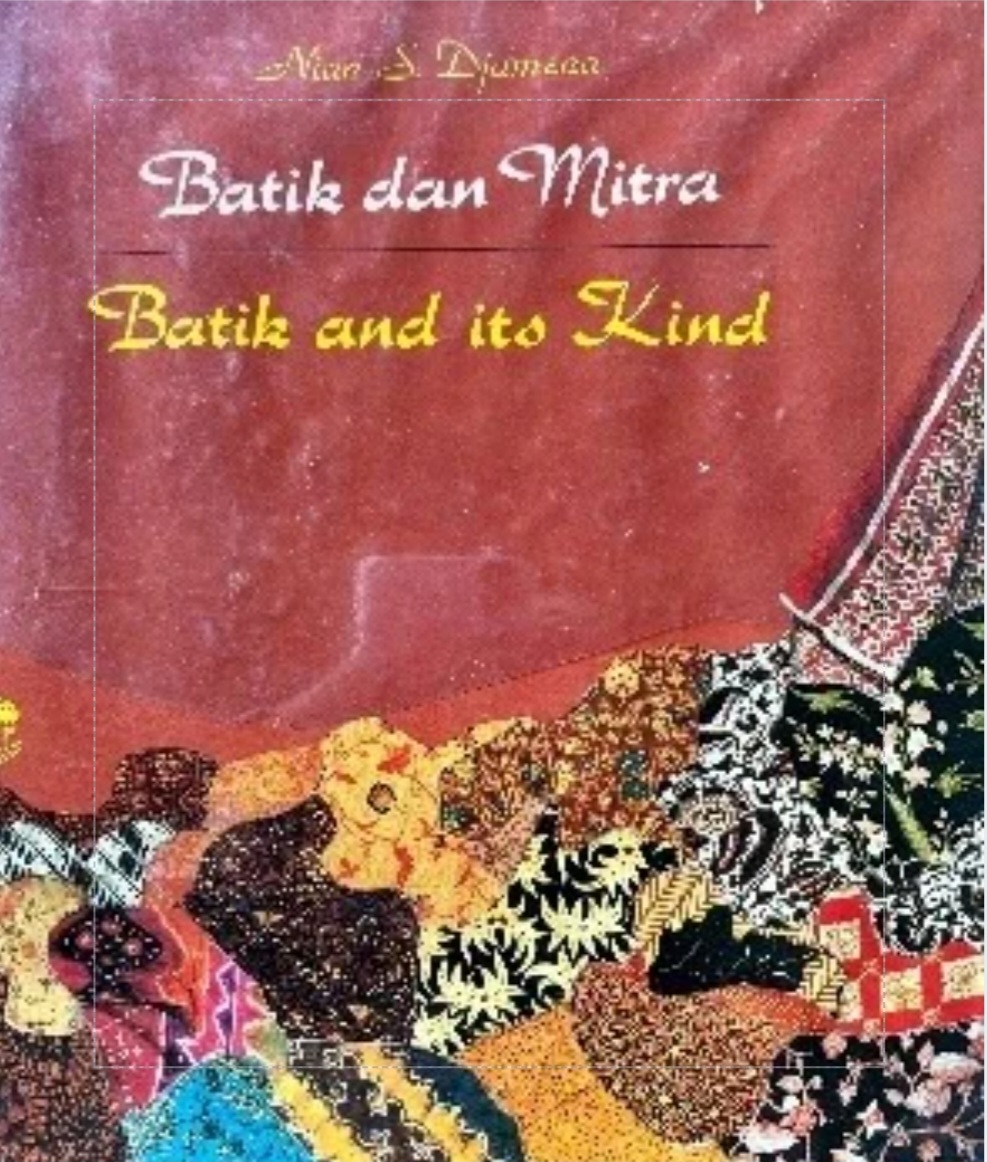
Author: Nian S. Djumena, 1990. 130pgs. (Indonesian & English). Hardcover
Publisher: Penerbit Djambatan, Jakarta
This volume represents one of the earliest comprehensive studies on Batik. Its author, Nian, holds the distinction of being the first woman in Indonesia to earn a formal degree in Textiles from the Hogere Textiel School in Enschede, Netherlands. She descends from a lineage deeply rooted in textile production; her family operated factories in the early twentieth century. Her father successfully advanced the enterprise under the brand name Ratatex during the 1960s, establishing a prominent reputation in the Indonesian textile industry. The book approaches batik through a regional lens, systematically examining the distinctive traditions of East, Central, and West Java. Beyond regional variation, Nian provides a meticulous analysis of batik’s structural components, including the head and end decorations.. She further explores specific forms such as the Terang Bulan, the Pagi-Sore rectangular cloth, and the Pradan cloth. Traditional garments are also given careful attention: the kain panjang, the sarong, and ceremonial headgear. In addition, she contextualizes these textiles within the cultural practices and codified rules that govern the wearing of traditional batik, thereby situating the art form within its broader socio-cultural framework.
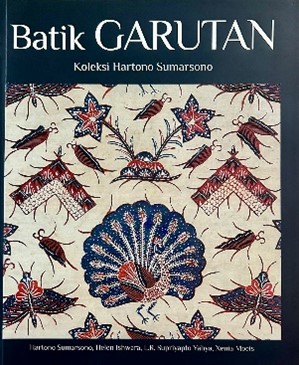
Author: Hartono Sumarsono, 2016. 262pg. (Indonesian)
Publisher: Kepustakaan Populer Gramedia, Jakarta
Garut is a town located in the highlands of West Java. This book showcases the observations of a passionate collector and entrepreneur, featuring intriguing old images from West Java. The collection consists of 300 hand-drawn pieces spanning from the 1930s to the 1970s. The author presents the contents of the book from the perspective of a collector, rather than an academic viewpoint. His primary concern is to preserve these beautiful pieces before they are lost to time.
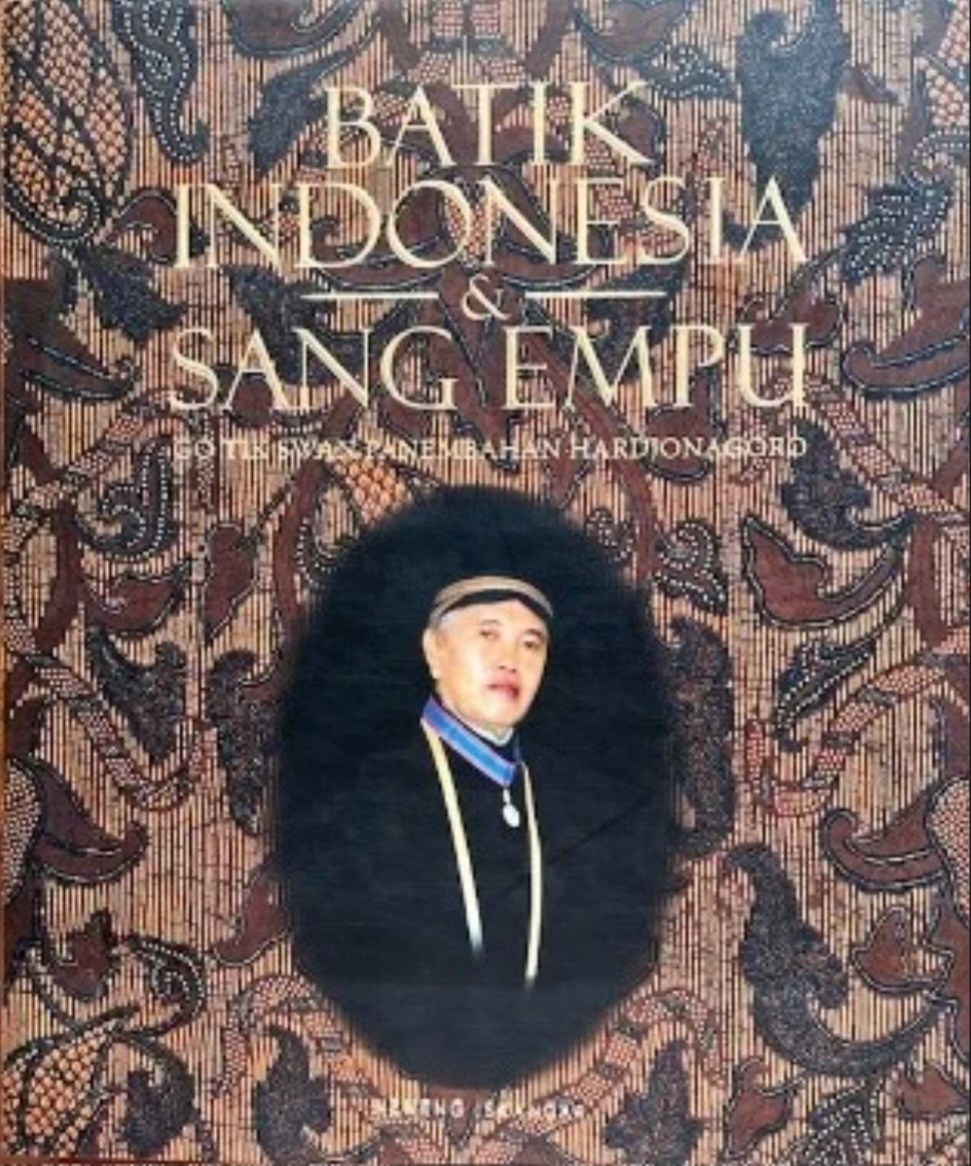
Author: Sri Sintasari (Neneng) Iskandar, 2008, 216pg. (Indonesian & English). Hardcover
Publisher: Srihana, Jakarta
This volume offers a distinguished introduction to the Batik master Go Tik Swan Panembahan Hardjonagoro, while simultaneously presenting the breadth of his artistic oeuvre. The book commences with the section Batik Indonesia (1955–1970), which narrates the historical circumstances surrounding the inauguration of a national batik tradition intended to be worn by all Indonesian women. At the behest of President Soekarno, Hardjonagoro was entrusted with the mandate to design a batik that could serve as a unifying national symbol. From this commission emerged the vibrant and emblematic Batik Indonesia. The second part, Nungak Semi (1970–1990), derives its title from the Javanese expression meaning “a wooden stump from which new leaves or branches sprout.” This metaphor encapsulates the renewal and creative flourishing of Hardjonagoro’s work during this period. The final section, Panembahan Hardjonagoro (1990–2008), illuminates the maestro’s profound devotion to batik, his consummate skill as a cultural artisan, and his enduring affection for Java. Together, these chapters trace not only the evolution of his artistry but also his lifelong commitment to preserving and advancing the cultural heritage of Indonesia.
Page 18 of 151