
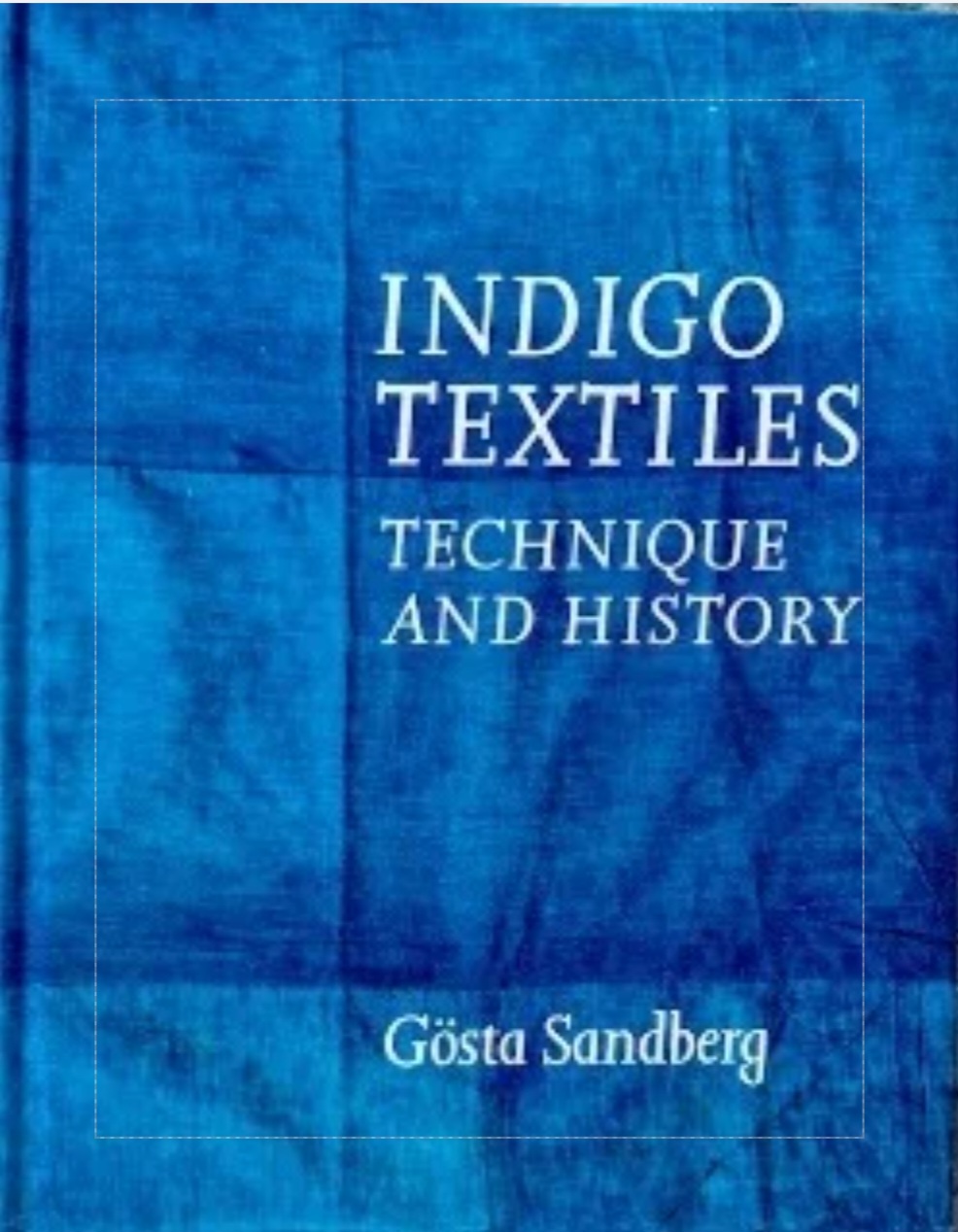
Author: Gӧsta Sandberg, 1989. 184pgs. (English). Hardcover
Publisher: Lark Books, Asheville, NC, USA
Gösta Sandberg’s monograph on indigo constitutes a seminal contribution to the study of textile history and dyeing traditions. As a longtime Swedish researcher devoted to the subject, Sandberg offers a meticulously documented exploration of indigo’s cultural, technological, and aesthetic significance across continents and centuries. The volume situates indigo within a broad historical framework, beginning with the contest between woad and indigo in Europe, and extending to the eventual triumph of synthetic indigo in the modern era. Sandberg’s narrative deftly interweaves technical detail with cultural analysis, examining dyeing and printing practices in Europe, West Africa, China, and Japan. Particularly noteworthy is his attention to regional patterning techniques, which illuminates the diverse ways in which indigo was harnessed to produce distinctive visual identities. Sandberg’s ethnographic sensitivity is evident in his accounts of wax-resist batik among the Meo, as well as the Indonesian traditions of plangi and ikat. His discussion of chromatic innovations—Indigo Turkish Red, African kola brown, and Javanese soga brown—underscores the interplay between local resources, cultural symbolism, and technical ingenuity. Equally compelling is his treatment of contemporary indigo dyeing, including the subsequent processing of dyed materials, the use of printing paste, and the art of blueprint dyeing. Sandberg’s inclusion of historical recipes, such as Cajsa Wang’s 1762 urine bath method, enriches the text by linking artisanal practice to archival documentation. This work stands out for its interdisciplinary approach, bridging textile technology, cultural anthropology, and art history. Sandberg’s synthesis of technical processes with cultural narratives makes the book invaluable not only to historians of dyeing but also to scholars of material culture and global trade. . While the book’s breadth is impressive, some readers may find its technical sections dense, particularly those unfamiliar with dye chemistry. Nevertheless, this density reflects Sandberg’s commitment to precision and authenticity. The text’s strength lies in its ability to balance scientific rigor with cultural storytelling, thereby appealing to both specialists and informed general readers. Gösta Sandberg’s study of indigo is a landmark in textile scholarship. By tracing indigo’s journey from plant to pigment, from local craft to global industry, Sandberg demonstrates the enduring resonance of this legendary dye. His work not only preserves traditional knowledge but also situates indigo within the broader discourse of cultural heritage and technological innovation.
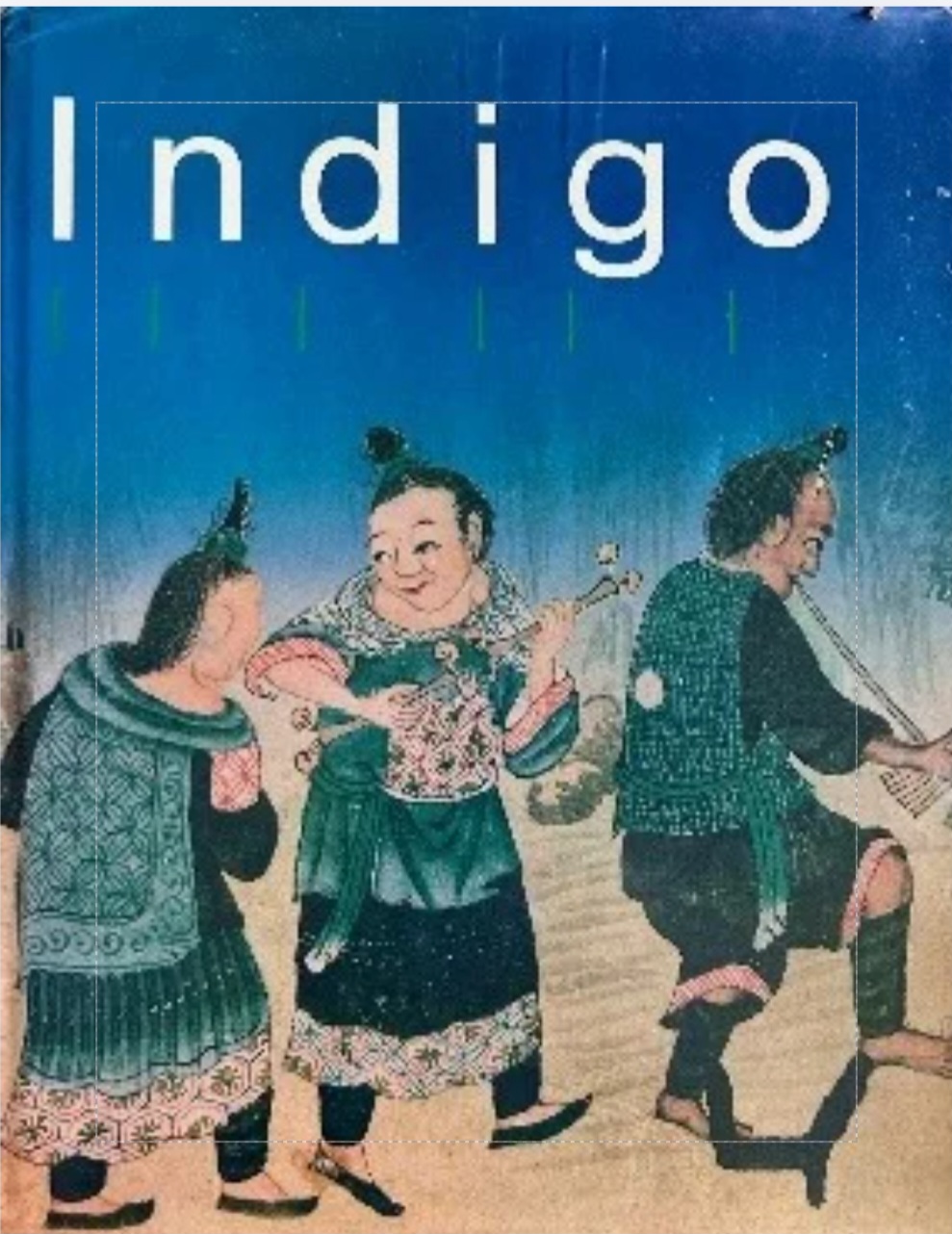
Author: Loan Oei, Stichting Indigo (Indigo Institute). 223pgs. (Dutch language). Hardcover.
Publisher: Fibula van Dishoeck, Weesp, Netherlands
This volume, authored by Loan Oei in Dutch, presents translated contributions from diverse scholars and writers who interrogate the multifaceted cultural, historical, and artistic dimensions of indigo. The text underscores indigo’s pivotal role within European textile industries and folk traditions, while also tracing its colonial entanglements in India and its significance among the Maya communities of Guatemala. Further chapters illuminate indigo’s presence in African cotton weaving, as well as its enduring cultural resonance in Javanese villages such as Kerek on the northern coast, Yogyakarta, Solo, and within the Baduy community of West Java. Its importance extends to Nusa Tenggara Timur in eastern Indonesia, where indigo continues to shape local identity and artisanal practice. Taken together, the volume offers a compelling and richly textured exploration of indigo blue as a chromatic and cultural phenomenon, charting its resonance across continents and communities worldwide.
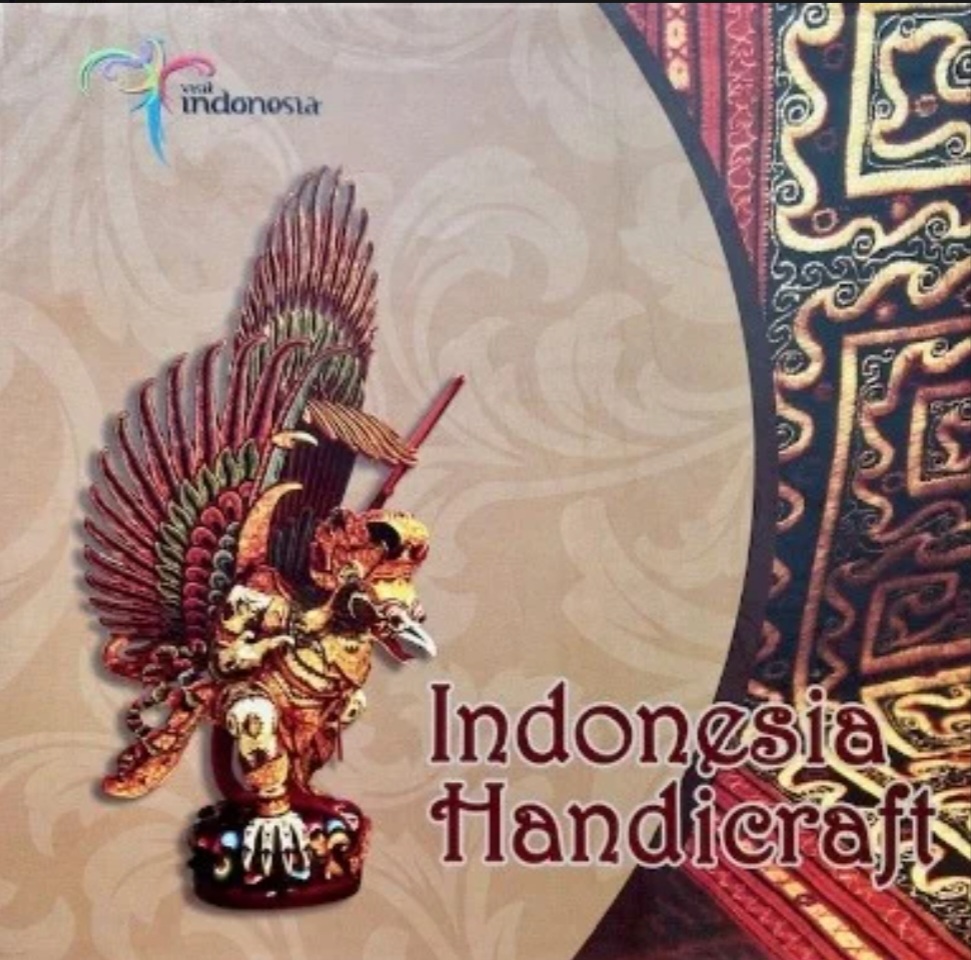
Author: Unknown, 2010, 235pg. (English). Hardcover
Publisher: Ministry of Culture and Tourism R.I., Jakarta
This coffee-table volume offers a meticulously curated selection of Indonesian handicrafts, exemplifying the nation’s rich artistic heritage and cultural diversity. Each piece reflects not only aesthetic refinement but also the profound socio-historical contexts in which these artisanal traditions have flourished. By showcasing the intricate craftsmanship and symbolic motifs embedded within these objects, the book underscores the enduring significance of material culture in shaping Indonesia’s collective identity.
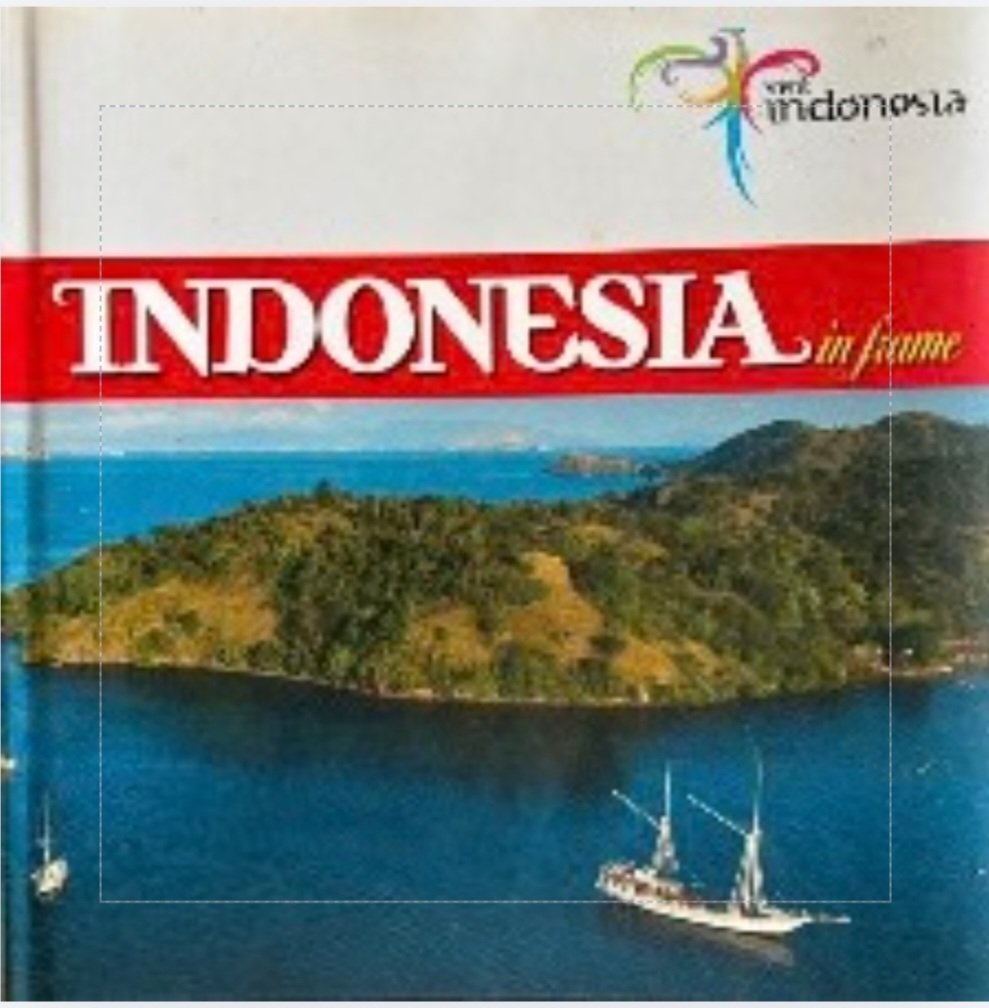
Author: unknown, 2004. 152pgs. (English), Hardcover Visit Indonesia Series
Publisher: Ministry of Culture & Tourism of Indonesia, Jakarta
As an official tourism photography coffee-table book, Indonesia in Frame exemplifies the genre of state-sponsored travel literature. It is designed less as a guidebook than as a visual manifesto, projecting Indonesia’s cultural and natural wealth to a global audience. Strengths Spectacular imagery: The full-bleed photographs—ranging from the Baliem Festival in Papua to the volcanic drama of Mount Bromo—deliver immediate aesthetic impact, aligning with the conventions of promotional travel literature. Nation branding: By foregrounding iconic sites such as the Grand Baiturrachman Mosque in Aceh and the Taman Sari Water Palace in Yogyakarta, the book reinforces Indonesia’s image as a destination of resilience, heritage, and diversity. Inspirational overview: Its sweeping coverage across the archipelago provides readers with a panoramic sense of place, capable of inspiring itineraries and sparking curiosity. Production quality: High-grade printing and design elevate the book into a collectible object, suitable for display and gifting. Weaknesses / Critique Promotional framing: As a state-sponsored campaign, the volume privileges idealized imagery over nuanced representation, glossing over social complexities and everyday realities. Textual limitation: The book offers minimal narrative or analytical commentary; readers seeking cultural critique or independent perspectives will find it lacking. Practical insufficiency: Absent maps, itineraries, or logistical guidance, it cannot function as a standalone travel resource and requires supplementation with narrative guides. Ephemeral relevance: Like many promotional volumes, it captures a snapshot in time; its resonance diminishes as tourism narratives evolve and new destinations emerge. Evaluation Within the tradition of travel literature, Indonesia in Frame operates primarily as visual persuasion rather than critical exploration. Its strength lies in projecting Indonesia’s diversity through breathtaking photography, but its weakness is the absence of interpretive depth and practical utility. It succeeds as a nation-branding artifact and coffee-table showcase, yet falls short of offering the layered cultural critique or logistical guidance that discerning travelers and scholars might expect.
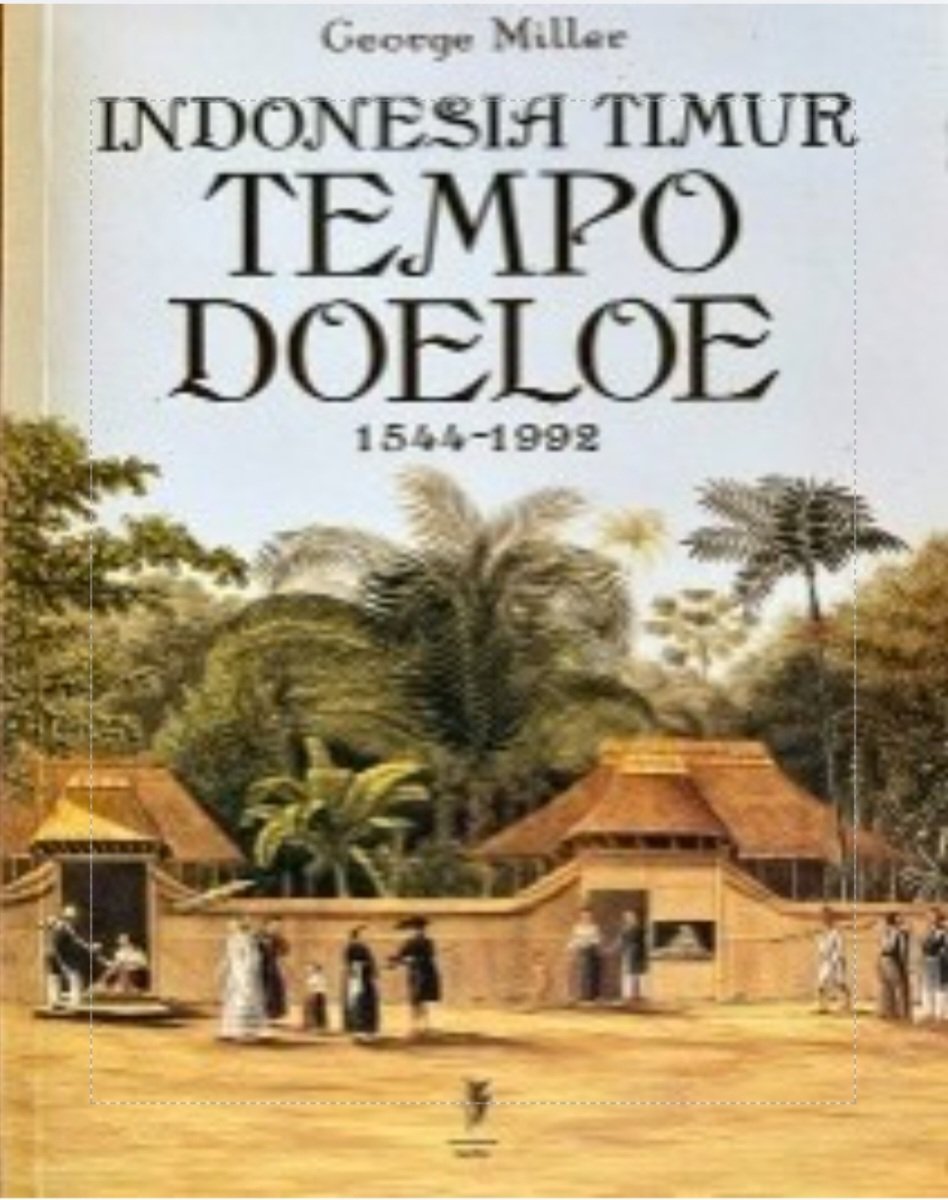
Author: George Miller, 2012, 409pgs. (Indonesian). Softcover
Publisher: Komunitas Bambu, Jakarta
Originally published under the title To the Spice Islands and Beyond: Travels in Eastern Indonesia, this volume constitutes a captivating compendium of historical accounts that collectively capture half a century of life, travel, and observation in the distinctive yet often overlooked region of Eastern Indonesia. Drawing upon journals, records, and writings from twenty‑eight diverse observers, travelers, and chroniclers, the book traces journeys through the eastern archipelago from the early spice trade era in 1544 to the late twentieth century in 1992. Beyond its historical scope, the collection offers invaluable ethnographic insight into the everyday rhythms of local communities. The narratives document encounters with village life, ritual practices, kinship structures, and maritime economies, revealing how societies in Maluku, Nusa Tenggara, and surrounding islands negotiated cultural continuity amid waves of external contact. Accounts of ceremonial exchanges, subsistence agriculture, and seafaring traditions situate the region’s peoples within broader anthropological discourses of resilience and adaptation. By foregrounding twenty‑eight distinct voices, the volume resists the imposition of a monolithic narrative, instead offering a plurality of perspectives on local societies, landscapes, and intercultural encounters. Spanning more than four centuries, it bridges the epoch of early European exploration with modern historical milestones, thereby illuminating the longue durée of Eastern Indonesia’s historical trajectory. Particular attention is directed toward communities whose cultural practices have often been marginalized in mainstream Indonesian historiography. The texts restore visibility to indigenous epistemologies—oral traditions, cosmologies, and artisanal knowledge—that shaped the social fabric of the archipelago. In doing so, the book underscores the ethnographic richness of Eastern Indonesia, situating its peoples not merely as subjects of colonial observation but as active agents in the making of regional history. Although firmly grounded in rigorous historical and scholarly curation, the entries remain accessible, vivid, and engaging, appealing to readers interested in travel writing as well as colonial and post‑colonial history. Functioning simultaneously as reference resource and evocative narrative, the volume succeeds in offering both an academic contribution to Indonesian studies and an immersive ethnographic journey through time. This version integrates ethnographic dimensions—ritual, kinship, subsistence, oral traditions—so the review not only highlights historical chronology but also foregrounds lived cultural practices.
Page 53 of 151