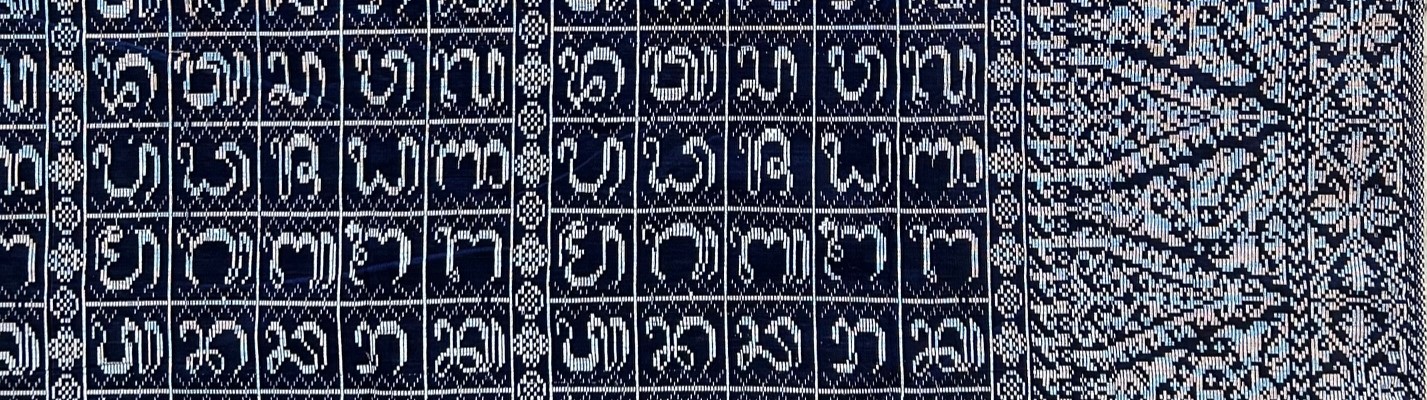

Author: Suwati Kartiwa, 1992, 84pg. (Indonesian). Softcover
Publisher: Museum Nasional, Jakarta
The volume offers a comprehensive introduction to Indonesian songket textiles, drawing upon exemplary pieces from the collections of the National Museum, Himpunan Wastraprema, and the Jakarta Textile Museum, as well as from distinguished private holdings. The survey encompasses representative works originating from diverse regions, including Sumatra, Kalimantan, Sulawesi, Bali, and both West and East Nusa Tenggara.

Author: Christina Udiani & Riza Mutia. 2019. 375 Pg. (Indonesian and English)
Publisher: DEKRANAS (The Indonesian Crafts Council), Jakarta
"The Tapestries of West Sumatra" is the first publication focused on the rich tradition of songket in many years. It showcases the largest unpublished collection of the Adityawarman Museum in Padang and provides a detailed illustrated explanation of the traditional costumes from eighteen nagari (districts) of West Sumatra.

Author: H. Kiagus Zainal Arifin & Nining I. Suryadi 2006, 96pg. (Indonesian & English). Hardcover
Publisher: Dian Rakyat, Jakarta
This book introduces the famous and splendid Songket Textile, a weaving in the supplementary weft technique, displaying bright colors and exquisite gold threads. Songket has always been part of the Sriwijaya traditions, centered in Palembang on the banks of the Musi river since millennia. The book introduces pattern structures and motif variations, and explain their meanings. The book presents colorful pictures and beautiful Songkets. Te Exhibition ran from 26 February to 26 March 1981 at the Jakarta Textile Museum.

Author: Claire & Steve Wilbur, 2003, 175pg. (English). Hardcover
Publisher: Schiffer Publishing, Atgle, Pennsylvania, USA
This volume offers a comprehensive exploration of the artistic and cultural significance of textiles drawn from the author’s personal collection. Structured across seven chapters, it provides an analytical overview of the diverse styles, motifs, and decorative techniques characteristic of Indonesian textile traditions. In addition to its scholarly examination, the book presents practical guidance for collectors, including methods for evaluating, preserving, and incorporating textiles within domestic settings. Individual chapters are devoted to batik (wax-resist dyed cloth), ikat (bind-resist dyed textiles), and woven fabrics, each examined in detail. Furthermore, Indonesian and technical terminology is elucidated in an extensive glossary, thereby enhancing accessibility for both specialists and general readers.
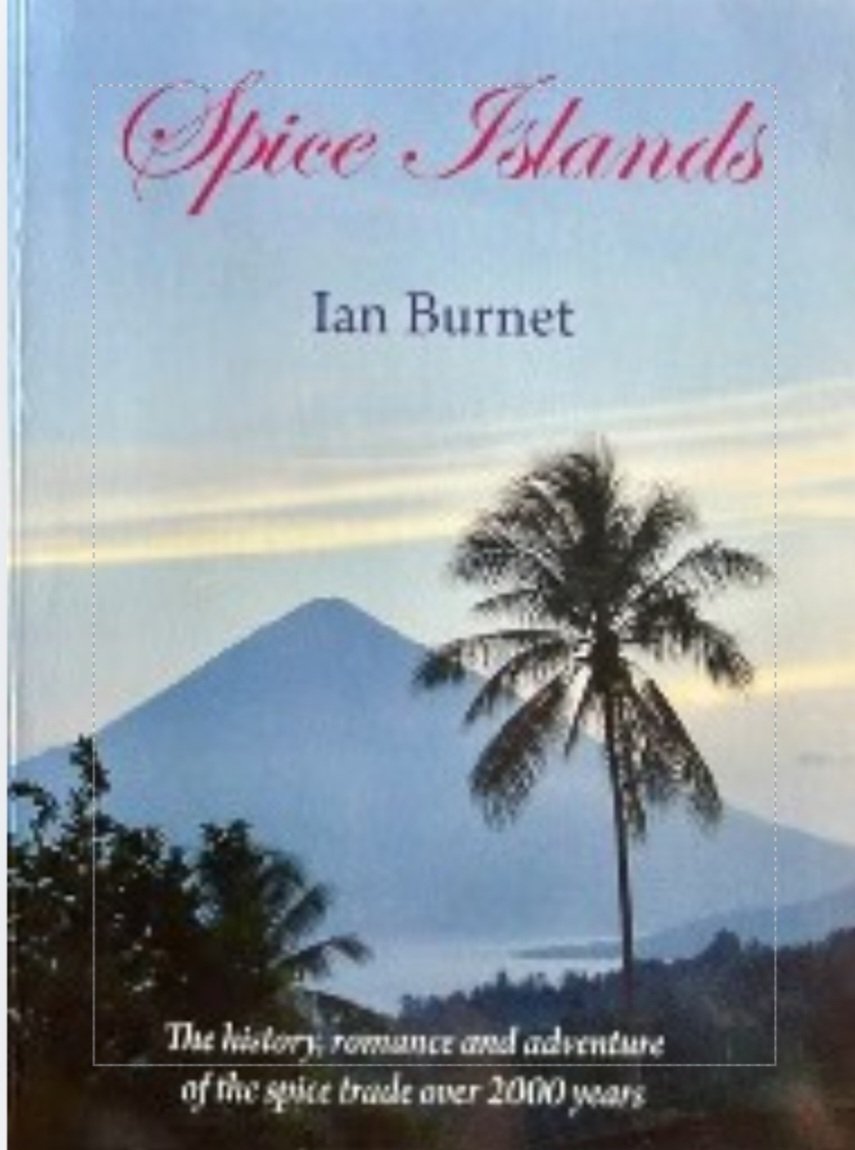
Author: Ian Burnet, 2013. 200pgs. (English). Softcover.
Publisher: Rosenberg, NSW, Australia
The volume under review is a compelling and meticulously crafted work that narrates the intertwined histories of the Maluku and Banda Islands. For centuries, these seemingly remote and diminutive islands constituted the world’s sole source of two commodities of extraordinary value: cloves and nutmeg. The book demonstrates with clarity how the trade in these rare spices profoundly reshaped global history, altering economic systems, political rivalries, and cultural exchanges across continents. The narrative begins with the early spice routes, tracing how cloves and nutmeg were exchanged across Asia and the Middle East thousands of years ago. It then situates these islands within the broader framework of maritime exploration, recounting the perilous voyages of renowned navigators such as Ferdinand Magellan, Vasco da Gama, and Sir Francis Drake, who braved treacherous oceans in pursuit of these coveted resources. The text further illuminates the fierce competition among European powers to dominate the spice trade, with particular attention to the Dutch East India Company, whose ruthless strategies ensured a rigid monopoly maintained through violence and coercion. Despite the complexity of these political and economic struggles, the author writes in a lucid, direct, and engaging style. He succeeds in transforming intricate geopolitical conflicts into a vivid and accessible narrative, thereby rendering the book both scholarly and captivating. The inclusion of exquisite historical maps enriches the reading experience, enabling readers to visualize the maritime world of the early modern era and to situate themselves imaginatively within the age of sail. Ultimately, this book is an invaluable resource for those interested in world history, geography, and the evocative tales of early sea voyages. It underscores how a seemingly insignificant seed could alter the trajectory of global commerce, reminding us that the smallest natural resources can exert transformative influence upon the course of human civilization.
Page 109 of 151