
Author: S. Ann Dunham, 2009. 379pgs. (English). Softcover
Publisher: NUS Press, Singapore & The Lontar Foundation, Jakarta
This volume represents the anthropological study authored by Ann Dunham, the mother of President Barack Obama, and stands as a testament to her profound knowledge of, and deep affection for, the Southeast Asian nation of Indonesia. The work simultaneously attests to Dunham’s integrity and intellectual rigor as a cultural anthropologist. Dunham was awarded her doctorate in 1992, based on fieldwork conducted intermittently over a fourteen-year period that examined rural industries in Indonesia, with particular emphasis on metalworking in Java. Tragically, she passed away in 1995 at the age of fifty-two, before completing revisions to her dissertation. At the request of her daughter, Maya Soetoro-Ng, Dunham’s advisor, Alice G. Dewey, together with fellow graduate student Nancy L. Cooper, edited the manuscript to produce Surviving Against the Odds. This publication serves as a tribute to Dunham’s unwavering dedication to sustaining small-scale industries, her pragmatic and non-ideological approach to research and problem-solving, and her remarkable command of historical context, economic data, and development policy.
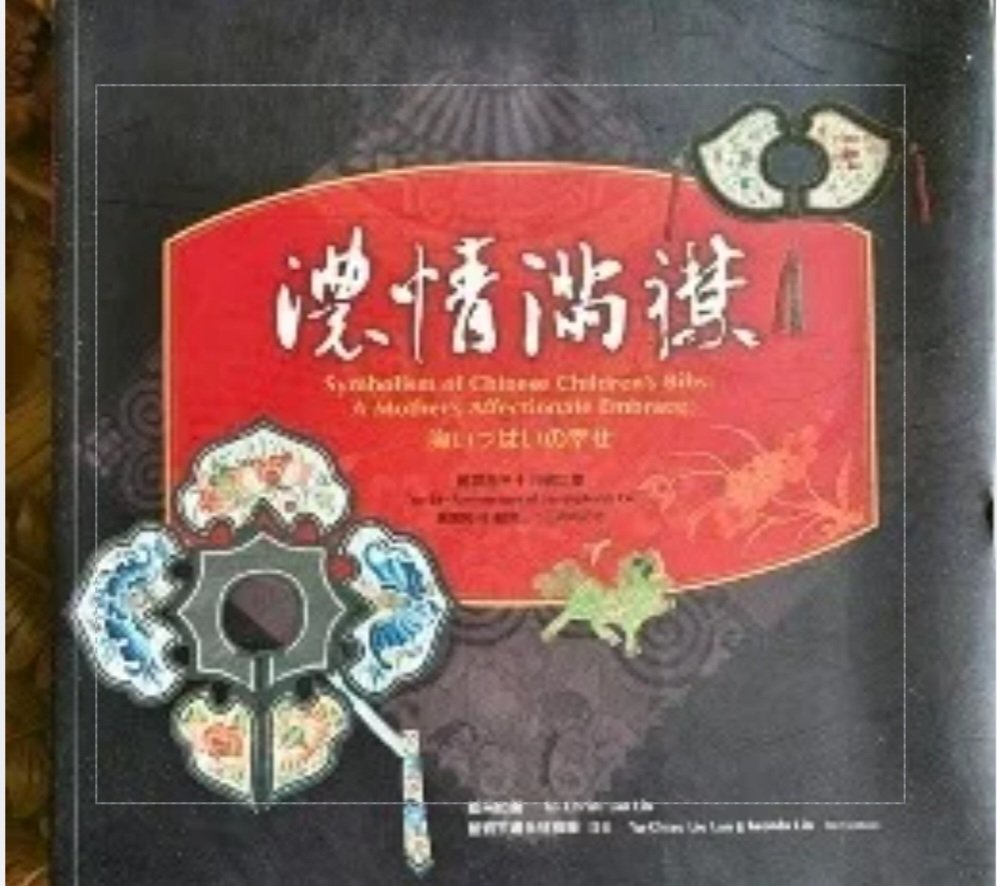
Author: Christi Lan Lin, 2006. 143pgs. (English & Mandarin), Softcover
Publisher: Eric Lin, Les Enfants Co., by the University of Indianapolis Press
This bilingual volume by Christi Lan Lin, with ethnographic research conducted in collaboration with Phyllis Lan Lin and published by the University of Indianapolis Press, offers a compelling exploration of the cultural history, artistic sophistication, and symbolic significance of traditional Chinese children's bibs. Focusing primarily on folk textiles from the late Qing Dynasty and the Republican period, the book provides a richly documented examination of an often-overlooked aspect of Chinese material culture. The authors present traditional Chinese needlework not merely as a utilitarian domestic craft but as a sophisticated visual language through which women expressed profound parental affection, aspirations for their children's future, and concerns for their wellbeing. In a historical context marked by high infant mortality rates, garments such as hats, shoes, and bibs were imbued with protective symbolism intended to shield children from illness, malevolent spirits, and misfortune. These textiles functioned simultaneously as articles of clothing, ritual objects, and repositories of familial hopes. A major strength of the volume lies in its systematic interpretation of decorative motifs drawn from the natural world, folklore, cosmology, and popular belief. The authors demonstrate how embroidery served as a medium through which blessings and protective wishes were encoded into everyday objects. Animal imagery occupies a prominent role within this symbolic repertoire. The tiger, for instance, was believed to repel evil influences and safeguard children, while the pig symbolized prosperity, abundance, and security. The mouse, in contrast, represented fertility and the hope for a large and flourishing family. Equally significant are the botanical motifs that appear throughout these textiles. The peony conveys wealth, honor, and auspicious fortune; the lotus embodies purity, spiritual refinement, and moral virtue; and the peach symbolizes longevity and immortality. Through such imagery, ordinary garments became visual expressions of cultural values and parental aspirations. The book also examines geometric and structural symbolism embedded in the design of children's bibs. Distinctive forms, including five-petaled floral arrangements representing the traditional Five Blessings, as well as geometric configurations derived from adult yunjian (cloud-collar) garments, reveal the complex cultural meanings embedded within textile construction. These design elements demonstrate how symbolism operated not only through imagery but also through garment form and spatial organization. The volume's greatest contribution is its preservation and documentation of a fragile tradition of Chinese folk art. It constitutes an invaluable resource for art historians, textile scholars, anthropologists, museum professionals, and collectors of Asian decorative arts. By foregrounding vernacular embroidery traditions that have often been overshadowed by studies of imperial court costume, the book broadens our understanding of Chinese textile heritage and everyday material culture. Particularly noteworthy is the book's extensive visual documentation. Richly illustrated with high-quality color photographs, the volume allows readers to examine intricate stitching techniques, silk threadwork, compositional balance, and structural symmetry in remarkable detail. The bilingual presentation in both English and Mandarin further enhances accessibility, making the work valuable to both international and Chinese-speaking audiences. The authors also provide important cultural context regarding the practical and symbolic functions of children's bibs. Traditional beliefs held that protecting a child's chest and navel area from exposure to "cold wind" was essential for maintaining health and preventing illness. Consequently, bibs occupied a significant place within childcare practices, where medicinal beliefs, spiritual protection, and textile craftsmanship intersected. `One limitation of the volume is its highly specialized focus. For general readers, the exclusive concentration on children's bibs may appear overly narrow, particularly when compared to broader surveys of Chinese textile traditions. As a result, the book functions more effectively as a reference work, visual encyclopedia, and specialized study of folk material culture than as a narrative-driven historical account. Nevertheless, this specificity is also one of its strengths, allowing for a level of depth and detail that would be difficult to achieve within a more general survey. Overall, this volume is a significant contribution to the study of Chinese folk textiles and vernacular visual culture. Through its careful documentation, ethnographic insights, and rich photographic record, it preserves a remarkable textile tradition while illuminating the complex interplay of art, symbolism, maternal devotion, and cultural belief embedded within everyday objects. The book stands as an important scholarly resource and a valuable testament to the creativity and cultural knowledge embodied in traditional Chinese embroidery.

Author: Maria Wronska-Friend, 2008, 255pg. (English & Polish). Hardcover
Publisher: Gondwana, Warsawa, Poland
The book presents a comparative exploration of batik traditions from both Indonesia and Poland, highlighting the cultural dialogues embedded within textile art. In Chapter 1, Maria offers a nuanced account of the Javanese cosmological worldview, situating it within the broader framework of fifteenth-century Java. Her discussion encompasses the symbolic role of spices, the intricate artistry of textiles, and the encounters with foreign traders, thereby illustrating how material culture and intercultural exchange shaped the island’s historical trajectory.

Author: Dinny and Nina Yusuf, 2016. 55pg. (English)
Publisher: Toraja Melo, Jakarta
In her foreword, Judi Achjadi acknowledges the essential support provided by Toraja Melo in Adonara and Lembata. The Sole Oha exhibition powerfully showcases the textiles of these regions on a global platform while preserving their distinct local identity. Toraja Melo is committed to enhancing the income of local weavers, directly benefiting their families. The initiatives led by Toraja Melo are invaluable and deserving of strong support.

Author: Unknown, 38pg., 2003 (Indonesian and English), Softcover
Publisher: Asia Link, University of Melbourne, Austraia
This booklet represents a collaborative endeavor between Asia Link at the University of Melbourne, the Museum and Gallery of the Northern Territory, and several distinguished Australian foundations. It showcases contemporary Amarasi textiles alongside a curated series of limited-edition prints, each featuring traditional Amarasi motifs rendered on handmade paper. By integrating indigenous botanical knowledge, ancestral design traditions, and the creative ingenuity of the Amarasi community, the exhibition constitutes a modern rearticulation of an ancient craft heritage.
Page 111 of 151