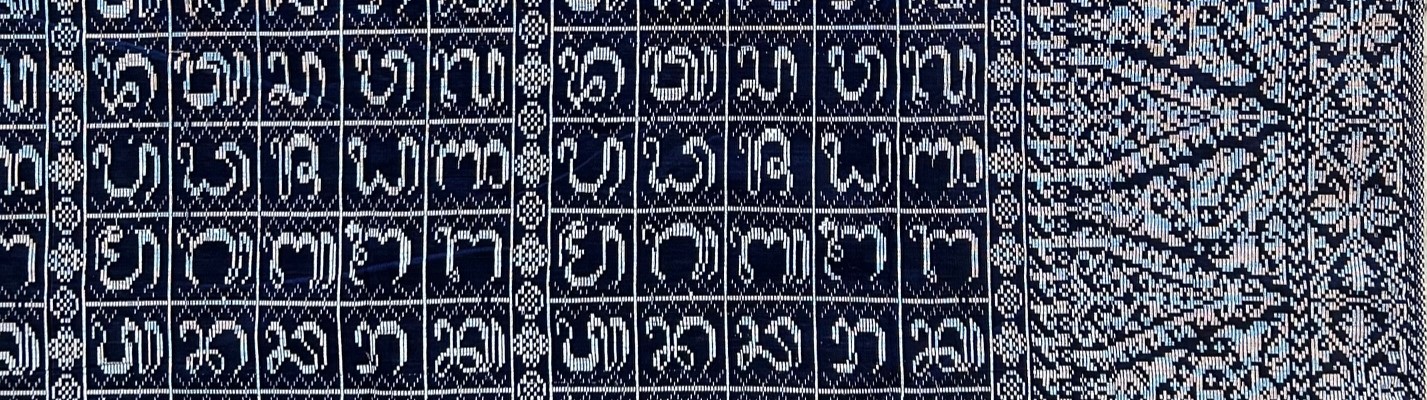

Author: Ruth Barnes, 2007, page 15-18. Photocopied version
Publisher: the Oxford Textile Group, Ashmolean Museum, Oxford, United Kingdom
The three-page article authored by Ruth Barnes of the Ashmolean Museum examines the celebrated artifact known as the Bronze Weaver. This diminutive yet profoundly symbolic statue depicts a mother engaged in the act of breastfeeding her child while simultaneously seated at a weaving loom. Discovered on the island of Flores, the piece is believed to date to approximately the sixth century. Its acquisition by the National Gallery of Australia underscores both its cultural significance and its enduring value as a testament to the intersection of artistry, domesticity, and maternal devotion in early Southeast Asian societies.
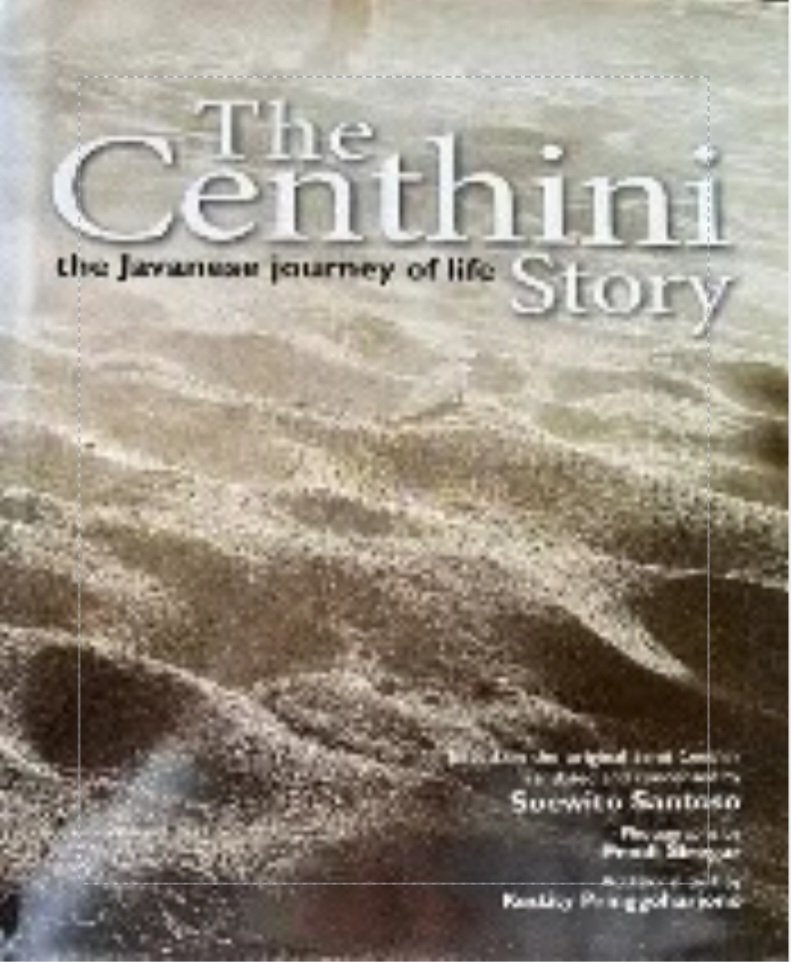
Author: Soewito Santoso, 2006. 400pgs. (English). Hardcover
Publisher: Marshall Cavendish Editions,
The book constitutes a fascinating and accessible distillation of one of the world’s most monumental literary achievements. It condenses the Serat Centhini—a nineteenth‑century Javanese magnum opus spanning twelve volumes and more than three thousand pages—into a readable four‑hundred‑page historical epic. In doing so, it provides an essential gateway for English‑speaking audiences into the mystical traditions, philosophical currents, and historical narratives of Java. Set against the backdrop of 1635, the narrative commences with the fall of the Giri kingdom under the military campaign of Sultan Agung. Three noble siblings—Prince Jayengresmi, Prince Jayengsari, and Princess Rancangkapti—are compelled to flee their ancestral home. Amidst the ensuing chaos, Prince Jayengresmi becomes separated from his younger siblings, initiating a decade‑long odyssey across the breadth of Java in pursuit of reunion. Their journeys lead them through sacred forests, hidden caves, volcanic summits, and ancient ruins, where they encounter ascetic hermits, reclusive sages, and Islamic scholars (guru pesantren). Each encounter functions as a didactic episode, transforming the physical voyage into a profound inner pilgrimage toward kejawen‑Islamic enlightenment. Santoso’s adaptation succeeds admirably as an engaging travel narrative, enriched by evocative photography, yet it necessarily entails significant compromises. The original Serat Centhini was conceived as a veritable encyclopedia of Javanese knowledge, encompassing architecture, medicine, divination, ritual practice, and ecological ethics. Condensing the text to a mere tenth of its original scale inevitably results in the omission or summarization of much of this encyclopedic richness. Moreover, the Javanese manuscript is famously uninhibited, treating erotic knowledge and sensual pleasure as integral, non‑taboo dimensions of human spirituality. Modern translations, particularly those intended for Western readerships, often attenuate this aspect, employing metaphor or sanitization to render the material more conservative. Nevertheless, the book has been widely praised by literary enthusiasts as a spirited act of cultural preservation. It is simultaneously a wonder tale and a compendium of Javanese wisdom, originally commissioned by the Surakarta court during a period of intensifying Dutch encroachment. In this context, the text embodies a collective urgency—a cultural rescue mission undertaken by its authors to safeguard knowledge against colonial erasure. For readers interested in Southeast Asian history, mysticism, and classical epics, The Centhini Story offers a breathtakingly visual introduction. It strips away the daunting scale of the original while preserving a soulful narrative of survival and spiritual awakening, thereby rendering one of Java’s most profound cultural legacies accessible to a global audience.

Author: Unknown 2017. 69pg. (English and Chinese)
Publisher: China National Silk Museum, Hangzhou
This book is an essential guide for visiting the museum, now with an expanded section showcasing looms from around the world. Don't miss the opportunity to explore this impressive addition!
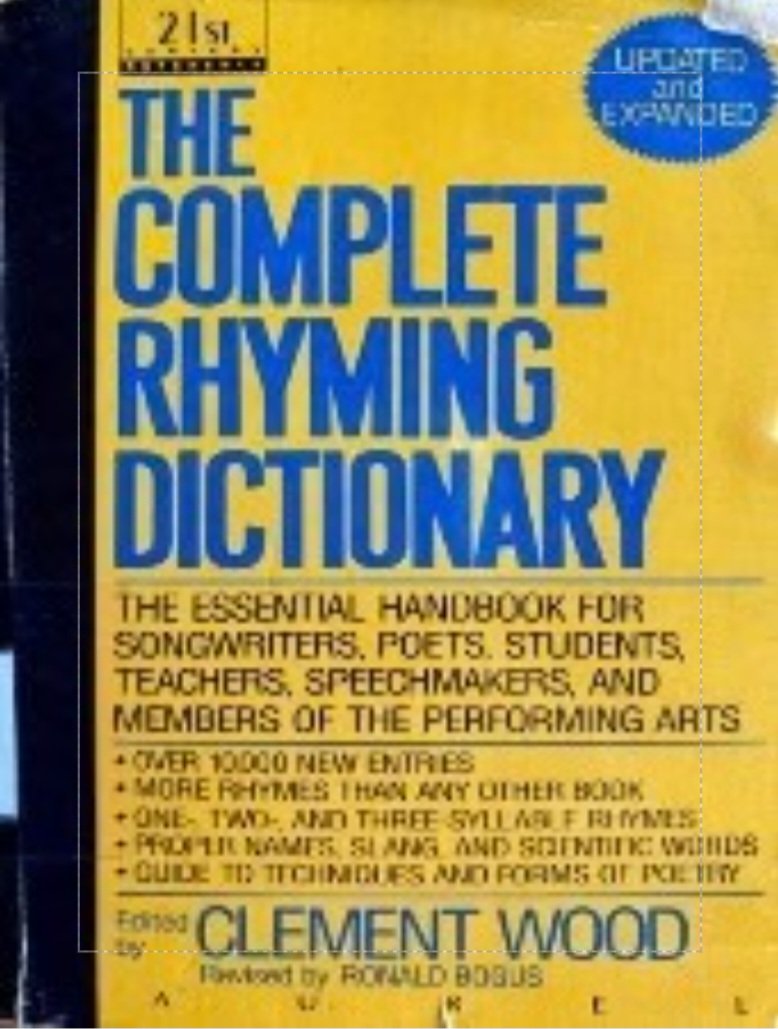
Author: Clement Wood (Ed.), 1992. 705pgs. (English). Softcover
Publisher: Dell Publishing Group, New York
The Complete Rhyming Dictionary and Poet’s Craft Book constitutes a seminal reference work, widely regarded as one of the most ambitious guides ever produced for practitioners of the literary arts. First published in 1936, it is celebrated not merely as an exhaustive index of more than 60,000 rhyming words, but also as a passionate and deeply opinionated treatise on the history, metrics, and mechanics of English verse. Over successive decades, the text has been revised and expanded to incorporate slang, proper names, and scientific terminology. Yet modern reviewers frequently note a pronounced divide between the brilliance of Wood’s original composition and the later, more utilitarian editions. Unlike conventional dictionaries, which present words in undifferentiated alphabetical order, Wood’s work is bifurcated into two distinct sections: a pedagogical manual and a specialized directory. The former provides a meticulous historical account of poetic forms, systematically analyzing rhythm, meter, and phonetics, while the latter organizes rhymes according to vowel sounds, consonance, and syllabic structure. This innovative arrangement facilitates the identification of sight rhymes, vowel rhymes, consonantal rhymes, and multi-syllabic patterns spanning one to three syllables. The updated editions, encompassing more than 10,000 new entries, now total over 60,000 rhyming pairs, rendering the work exceptionally robust for poets, songwriters, and orators. Literary critics have long remarked upon the eccentric contradictions embedded in Wood’s approach. On the one hand, he provides detailed schemata for fixed poetic forms such as sonnets, villanelles, and sestinas; on the other, he explicitly contends that such forms represent antiquated constraints, suitable only for minor writers. Wood’s biases are neither concealed nor understated: he asserts that poetry itself ages, and that certain classical structures lose their efficacy as vehicles for serious modern expression.
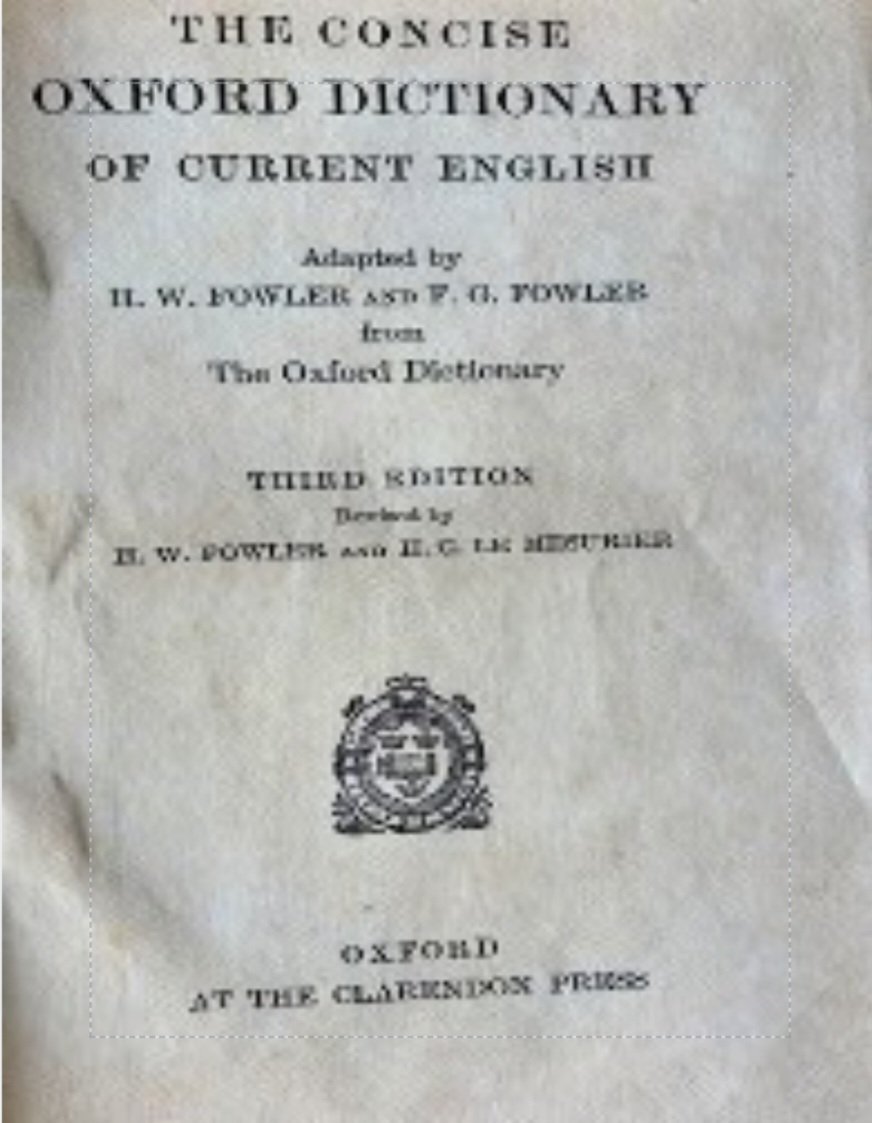
Author: revised by H.W Fowler and H.G. Le Mesurier, 1938. 1507pgs. English. Hardcover
Publisher: Oxford University Press, Humphry Milford, publisher to the University
The book represents a revision grounded in the conventions of 1930s English vocabulary and usage, reflecting the linguistic norms of its era. Its reliance on the foundational multi-volume Oxford Dictionary underscores the centrality of that work in shaping modern lexicographical practice. By drawing upon this authoritative source, the revision not only preserves the historical register of English but also exemplifies the broader scholarly movement of the early twentieth century, which sought to codify and standardize language as a marker of cultural continuity and intellectual rigor.
Page 124 of 151