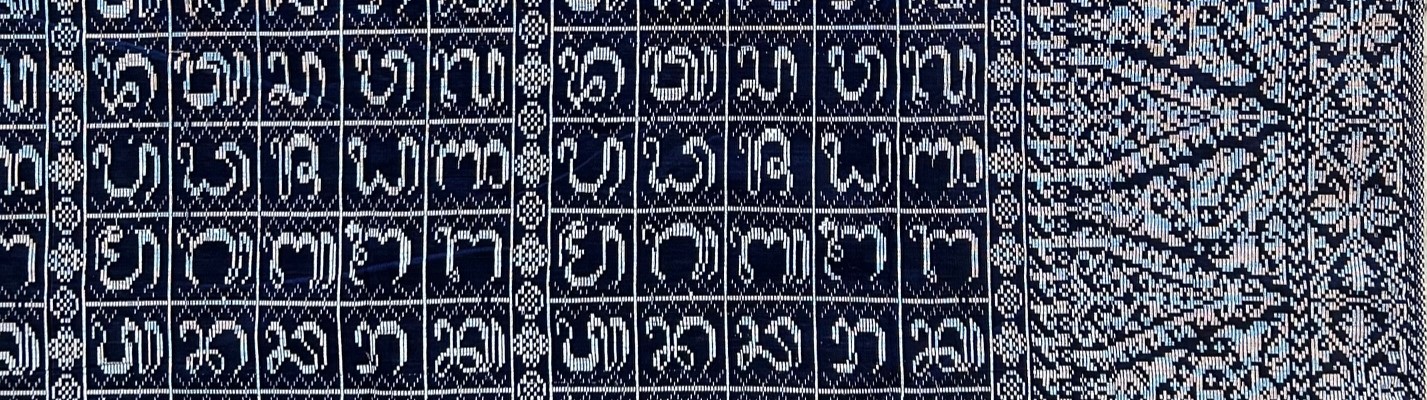

Author: Tran Tan Vinh, 2017, 163pg. (Vietnamese & English). Hardcover
Publisher: Vietnam News Agency Publishing House, Ha-noi, Vietnam
This pictorial volume offers an introduction to the Cotu ethnic community of Vietnam, who inhabit the Truong Son mountain range in Tây Nguyên, the Central Highlands. The Cotu people continue to safeguard and transmit the ancestral traditions, cultural practices, and spiritual values that constitute their collective identity. As one of the officially recognized 45 ethnic groups in Vietnam, the Cotu exemplify the resilience of indigenous heritage in the face of modernization, maintaining a living connection to their historical roots while contributing to the diverse cultural mosaic of the nation.

Author: Didit Pradito, Herman Jusuf, Saftiyaningsih Ken Atik, 2010. 145pgs. (Indonesian & English). Softcover
Publisher: Gramedia, Jakarta
Batik is a textile art distinguished by its intricate ornamental patterns and vibrant colors, achieved through the traditional process of applying wax and dye. Among the diverse regional styles, the Sundanese batik—particularly those produced in the Priangan region of West Java and the northwestern area of Banten Province—occupies a distinctive place in Indonesia’s cultural heritage. The people of Priangan, who speak in accordance with Sundanese culture, have long associated their homeland with spiritual and aesthetic ideals. The very name Priangan derives from Parahyangan, meaning “abode of the gods” or “citizens of the heavens,” a term that conveys notions of beauty, sanctity, and transcendence. This book seeks to present the legacy of Priangan batik as a cultural treasure, embodying not only chromatic richness and ornamental sophistication but also profound reservoirs of indigenous knowledge. The aim of this publication is to foster national awareness of the importance of cultural identity as expressed through material culture. By foregrounding endangered forms of Priangan batik in art exhibitions and scholarly discourse, the project endeavors to cultivate a renewed sense of heritage and stimulate cultural revitalization among the wider public.
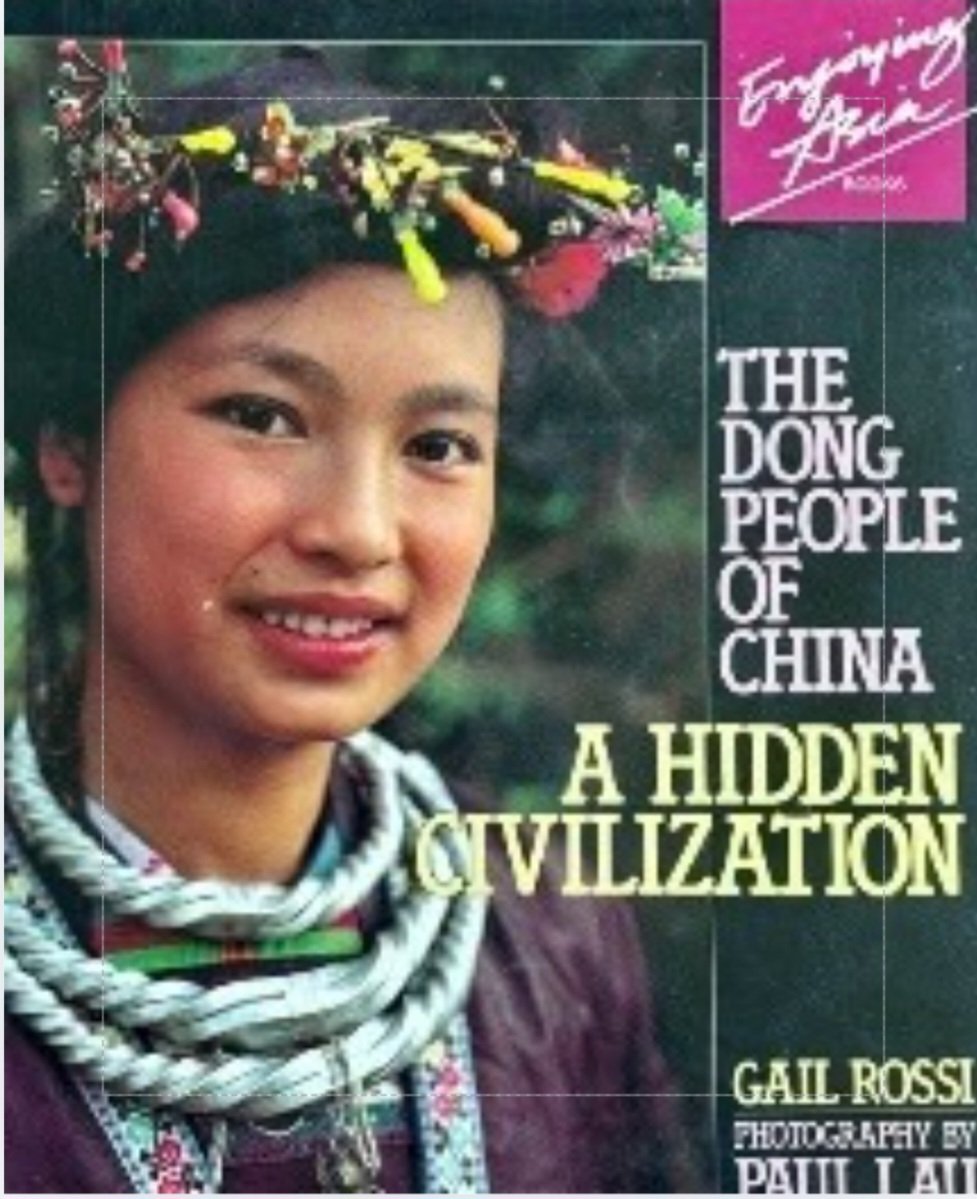
Author: Gail Rossi, 1991. 97pgs. (English), Softcover Enjoying Asia Books.
Publisher: Hagley & Hoyle, Singapore
This volume constitutes a highly visual and engaging photographic introduction to one of China's most culturally distinctive yet comparatively underdocumented ethnic minority communities, the Dong, also known as the Kam. Rather than presenting a densely academic analysis, the book functions as an accessible and richly illustrated cultural survey, capturing a valuable ethnographic snapshot of Dong society at a pivotal historical moment, just prior to the transformative effects of modern infrastructure development and accelerating digital globalization on China's rural landscapes. The volume's most compelling feature is its extensive collection of full-colour photographs by Paul Lau. These images offer an intimate and nuanced portrayal of the everyday lives, ceremonial practices, and sartorial traditions of the Dong people. Particular emphasis is placed on the community's remarkable indigenous architectural heritage. Readers are introduced to the iconic Wind and Rain Bridges, covered structures that serve both practical and communal functions, as well as the imposing multi-tiered Drum Towers that form the architectural and social focal points of Dong villages. Through these visual representations, the book effectively demonstrates the sophistication of Dong engineering, aesthetic sensibilities, and communal organization. The accompanying text by Gail Rossi provides a concise yet informative overview of the Dong people's textile arts, renowned polyphonic choral traditions known as the Kam Grand Choirs, and the agricultural practices that sustain communities situated within the valleys of Guizhou, Hunan, and Guangxi. Rossi highlights the crucial role of geographical isolation in preserving the cultural integrity of these communities, illustrating how their relative seclusion enabled distinctive traditions, belief systems, and artistic practices to endure across generations. Collectively, the text and imagery offer a valuable introduction to the cultural heritage of the Dong people, documenting a way of life that has since undergone significant social and economic transformation.

Author: Orathai Pholdi, 2006. 34pg. (English)
Publisher: Office of Agricultural Museum and Culture @ Kasetsart University, Bangkok
Ms. Orathai Pholdi serves as the director of the Agricultural Museum and Culture at Kasetsart University in Bangkok. Contrary to common belief, silk is not solely a product of Chinese innovation; evidence clearly shows that the Tai people were the first to produce silk. This remarkable achievement dates back to the Neolithic Tai, who established the Lungshan culture around 4,500 years ago. The practice of sericulture has roots that extend deep into Thai history, demonstrating a long-standing tradition that continues to this day. The booklet decisively presents the origins of the Tai people and details their diverse subgroups, including the Tai Yai, Tai Kheun, Black Tai, Red Tai, White Tai, Tai Phuan, Tai Yuan, Tai Lao, Tai Isan, Southern Tai of the Siwichai kingdom, and Tai Leu of the Sip Song Pan Na kingdom. Additionally, it emphasizes the unique styles of each ethnic group, effectively highlighting the rich diversity that defines Southeast Asia.

Author: Rosemary Crill, 2015. 248pg. (English)
Publisher: V & A Museum, London
The volume starts with a detailed exploration of the various materials, techniques, and dyeing processes involved in creating these luxurious fabrics. It emphasizes the central role that cloth plays in Indian life and culture. The book aims to surprise, inspire, delight, and inform readers by showcasing an extraordinary range of materials, along with presenting significant historical masterpieces.
Page 125 of 151