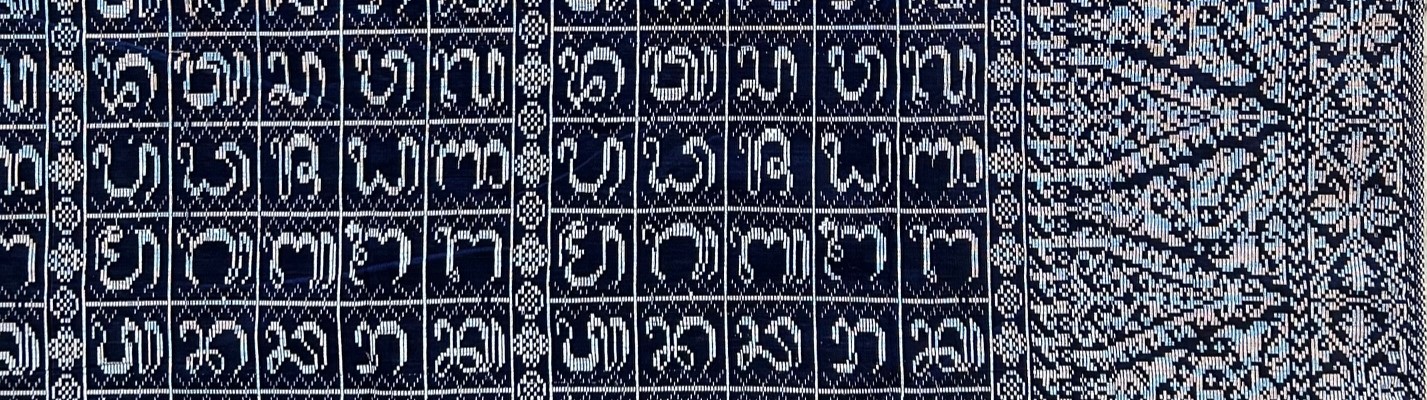

Author: Ruth Barnes, 1988. 159pg. (English). Hard Cover. Photocopied version.
Publisher: E.J. Brill, Leiden, Netherlands
The work of Dr. Ruth Barnes is considered a foundational study in the field of Eastern Indonesian textiles, noted for its in-depth analysis based on fieldwork. Barnes provides detailed information on the textiles and their cultural significance, including an accurate understanding of the value placed on the precision of the Lamaholot weavings. This book is one of the first reference books on textiles of eastern islands in the Archipelago. It presents Ikat as textile decoration, preparation of cotton and dyeing, the loom, the Ikat process, and Ikat as costume. A book not to be missed by ethnographers, weavers, and collectors of Indonesian ikat weavings.
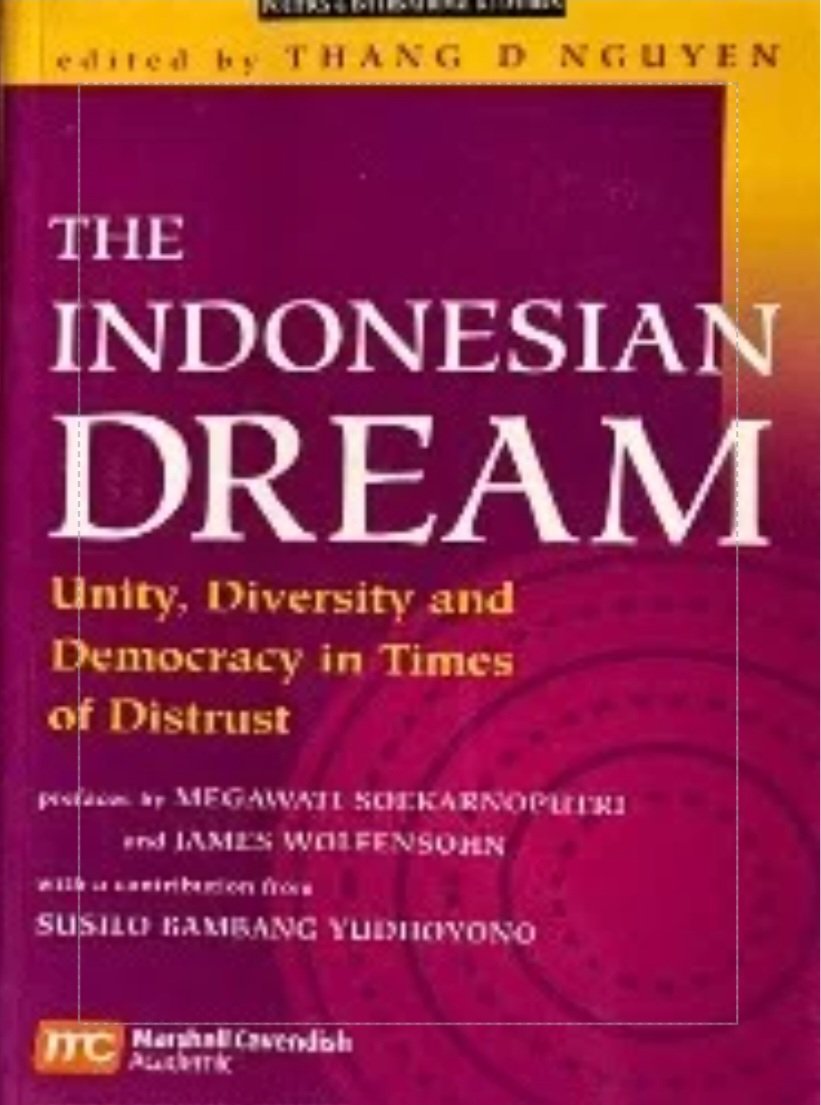
Author: Thang D, Nguyen (ed.), 2004. 258pgs. (English). Softcover
Publisher: Marshal Cavendish Academic, Singapore
The volume, edited by Jakarta-based columnist Thang D. Nguyen, constitutes a comprehensive, multi-disciplinary anthology that interrogates Indonesia’s complex socio-political and economic landscape during the critical post-Suharto Reformasi era. Emerging directly from the Unity in Diversity Forum convened in December 2003, this twenty-three–chapter compendium functions as a roadmap for how the world’s third-largest democracy might reconcile its foundational motto Bhineka Tunggal Ika (Unity in Diversity) with the institutional challenges of systemic transition and pervasive public cynicism. The anthology’s credibility is reinforced by distinguished prefatory contributions from Megawati Soekarnoputri (then President of Indonesia) and James Wolfensohn (then President of the World Bank). Its structure organizes the chapters into several thematic pillars: Trust and Tri-sector Leadership — examining how renewed collaboration among government, business, and civil society is essential to navigating democratic growing pains. Democratic Transformation — assessing voter behavior, political party formation, and institutional restructuring after decades of authoritarian rule. Economic Challenges — featuring incisive critiques by leading experts such as Hal Hill on trade, financial stabilization, and the decline of agriculture. Legal Reform and Rights — analyzing the formidable obstacles to establishing transparent rule of law across a fragmented, heterogeneous archipelago. By convening voices from academia, the corporate sector, and public governance, the volume offers a multi-dimensional perspective rather than a narrowly academic one. Its identification of institutional distrust as Indonesia’s primary obstacle remains salient for contemporary political analysis. Chapters devoted to education and technology further delineate pathways toward sustainable human development. As with many compiled forum volumes, the contributions vary in style: some chapters resemble elite policy addresses, while others present rigorous, data-driven scholarship. Published in 2004, the text inevitably omits subsequent developments, including direct presidential elections and the emergence of digital civil spaces. Nevertheless, The Indonesian Dreams endures as a valuable historical benchmark for researchers, political scientists, and policymakers examining Southeast Asian transitions. It captures both the fragile anxieties and the profound democratic optimism of an archipelago striving to transform its foundational philosophy into functional political reality.

Author: Unknown, 2003. Photocopied version
Publisher: Museum Nasional Indonesia, Jakarta
Papers included in the Proceedings: Harry Darsono. (Fashion Artistry) Toeti Kakiailatu. (Outward Appearances as Symbol and Function.) Geneviève Duggan.(Sacred Weavings of the Island of Savu) Suwati Kartiwa. (Tradition of Nusantara Ikat Weaving.) Itie van Hout. (Time of the Weave of Life.) Hertini Adiwoso. (Symbols on some Indonesian textiles.) Herwig Zahorka. (The “Palang” design on ceremonial Indonesian Textiles and its cultural Historic Background), represented with archeological monuments – and the purpose to use those penis inserts until today. Bayu Niti Permana. )Textile Collection in Museum Conservation aspects, in storage & display.) Filomena Reiss. (Rare and New Textiles of the orang Baduy.) Marianne Hulsbosch. (The Influences and meaning of traditional Christian dress in Religious context.) Krista Knirck Bumke. (Languages of Patterns.)
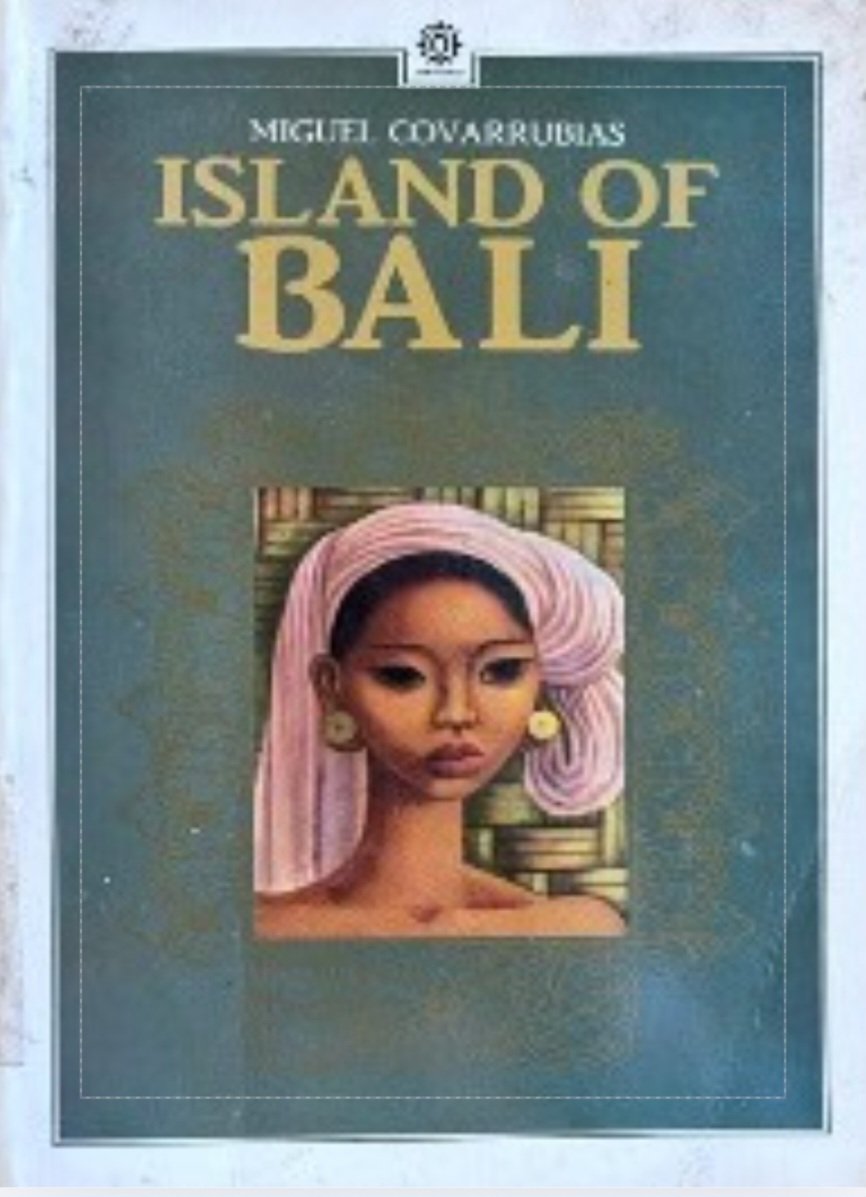
Author: Miguel Covarrubias, 1972. 405pgs (English). Softcover
Publisher: Oxford University Press, UK
First published in 1937, Island of Bali endures as a beautifully illustrated classic that documents traditional Balinese culture on the cusp of mass tourism. Its author, Miguel Covarrubias—a distinguished Mexican painter, caricaturist, and anthropology enthusiast—arrived on the island in the early 1930s with his wife, Rose, an accomplished photographer. The couple resided in Bali for three years, during which Covarrubias fused his artistic sensibility with a profound ethnographic curiosity. The volume unfolds across twelve richly detailed chapters, offering a panoramic survey of Balinese life. Covarrubias examines village organization, caste hierarchies, linguistic registers, and agricultural practices. He devotes extended attention to temple festivals, ritual offerings, witchcraft, funerary rites, and the elaborate cremation ceremonies that punctuate Balinese social life. Equally significant is his documentation of the island’s performing arts: gamelan orchestras, classical dances such as the legong and baris, and the wayang kulit shadow theatre. A defining strength of the book lies in its visual dimension. Ninety expressive drawings by Covarrubias, complemented by works of local Balinese artists, are interwoven with 114 striking half-tone photographs captured by Rose Covarrubias and five full-color paintings by the author himself. This interplay of text and image elevates the work beyond mere description, rendering it a multidimensional cultural record. Although written from the vantage point of a cosmopolitan outsider, the book has been lauded by modern anthropologists and Balinese readers alike for its empathetic tone, ethnographic precision, and enduring relevance. It remains not only a seminal artifact of intercultural encounter but also a timeless resource for scholars and admirers of Balinese heritage.
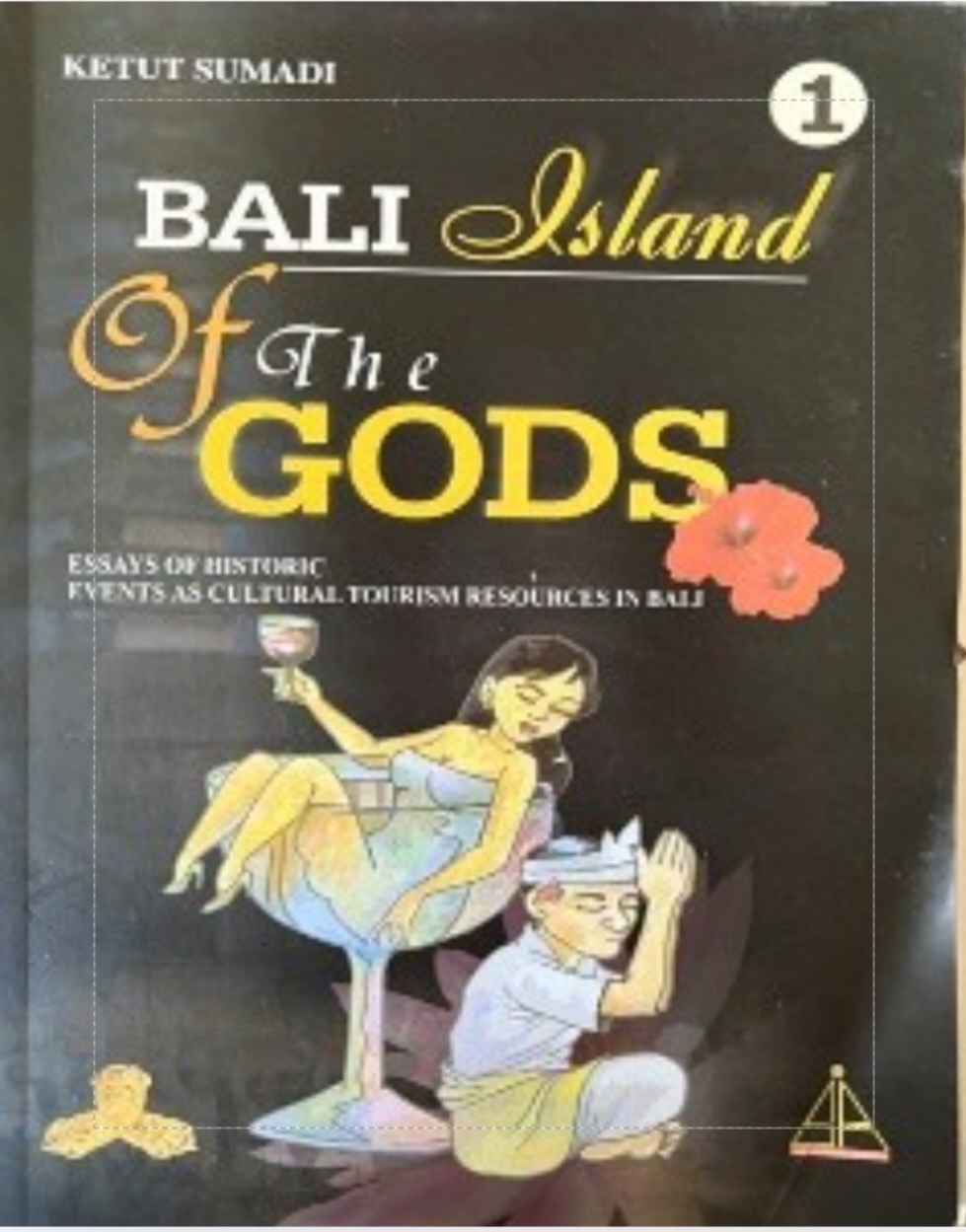
Author: Ketut Sumadi, 2011. 138pgs. (English). Softcover
Publisher: Tri Hita Karana, Denpasar, Bali
The volume presents a series of essays addressing a wide spectrum of cultural and ecological subjects, including the iconography of Balinese statues, the symbolic role of animals, and the natural landscapes of beaches, mountains, and the sea. Subsequent sections examine ritual observances such as Rambut Sedana, Tumpek Landep, Tumpek Bubuh, Tumpek Wayang, Piodalan, and Tumpek Krulut. Further essays explore material and symbolic practices, including the art of gebogan (ritual offerings), the calendrical system of wuku wayang, veneration of the goddess Saraswati, the celebration of Galungan, and the cultural significance of teba, the Balinese family garden. Collectively, these contributions illuminate the intricate interplay between ritual, environment, and spirituality, offering a holistic perspective on Balinese cosmology and cultural identity. This book is valuable not only for younger generations seeking to understand their heritage, but also for visitors who wish to experience Bali more meaningfully.
Page 127 of 151