

Author: Unknown. 2003. 120pg. (Japanese and English)
Publisher: Fukuoka Art Museum, the Shoto Museum of Art, Tokyo
This is a catalog of Indonesian Textiles from the Eiko Kusuma Collection held in the Fukuoka Art Museum and the Shoto Museum of Art in 2002.
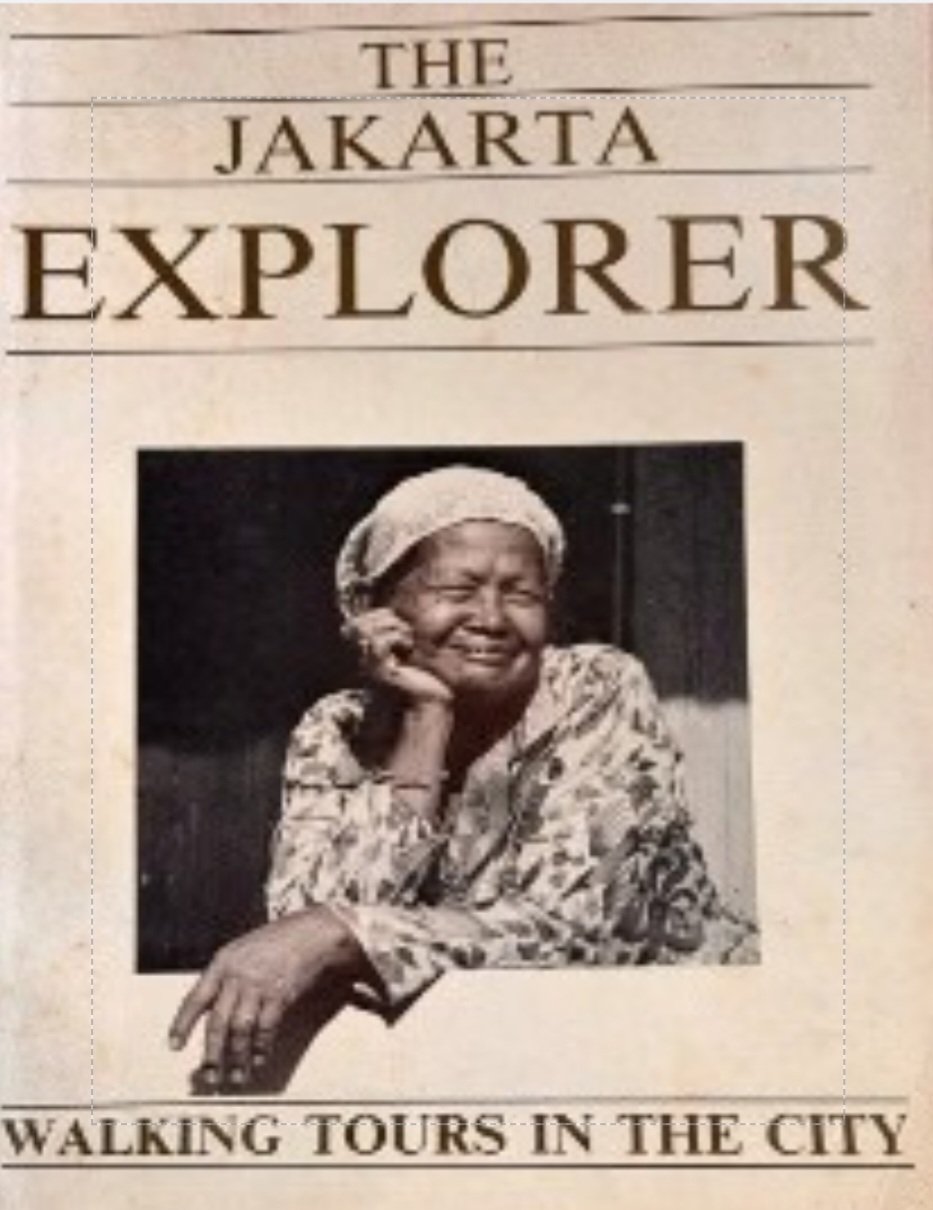
Author: Jane Beith James & Susannah R.H. Hirst (Eds.)1991. 250pgs.(English)Softcover
Publisher: Indonesian Heritage Society, Jakarta
This volume, published by the Indonesian Heritage Society, constitutes a highly regarded guidebook to Jakarta, offering self-guided tours enriched with historical context and cultural insight. Conceived as both a practical resource and an interpretive companion, it delineates precise routes through the capital’s most emblematic districts, framing the city’s transformation from colonial maritime hub to modern metropolis. The itineraries previewed within the text draw inspiration from the Jakarta Explorer, emphasizing core geographical zones and their layered histories: Old Batavia & Kota Tua: Fatahillah Square, once the nucleus of Dutch colonial administration, remains encircled by 18th-century edifices such as the Jakarta History Museum and the iconic Toko Merah. Sunda Kelapa Port: A living maritime museum where traditional phinisi vessels continue to dock, evoking Indonesia’s enduring seafaring heritage. Kali Besar Canal: Once a bustling VOC trade artery of the 17th century, now partially restored as a public promenade. Glodok Chinatown: Narrow alleys and vibrant markets at Petak Sembilan, offering traditional remedies and culinary specialties. Historic Temples: Dharma Bakti (Kim Tek Ie), founded in 1650, stands as one of Jakarta’s oldest Chinese temples. Central Jakarta Civic Core: The monumental Istiqlal Mosque and neo-Gothic Jakarta Cathedral face each other as architectural embodiments of national unity. National Monument (Monas): The 132-meter obelisk dominates Merdeka Square, commemorating Indonesia’s struggle for independence. While the guidebook remains a valuable introduction for first-time visitors, its utility is compromised by the rapid infrastructural and cultural transformations of Jakarta in the decades since its publication. Several critiques emerge: Urban Development: The book predates the expansion of new cultural districts, modern museums, and revitalized public spaces that now define Jakarta’s identity. Heritage Conservation: Restoration projects at Kota Tua, Kali Besar, and Sunda Kelapa have advanced significantly, rendering descriptions in the volume incomplete or outdated. Cultural Shifts: The text emphasizes colonial and early post-independence legacies but omits contemporary cultural expressions, creative industries, and evolving urban communities. Touristic Relevance: As Jakarta’s transport systems, skyline, and civic infrastructure have changed dramatically, the routes outlined no longer reflect the lived experience of navigating the city. The guidebook thus functions less as a current navigational tool and more as an archival snapshot of Jakarta’s cultural landscape at the time of its publication. Its enduring value lies in documenting a transitional moment in the capital’s heritage discourse, but readers must supplement it with updated resources to grasp the city’s present dynamism.
Author: Judi Achjadi, 1998. 120pgs, (English). Softcover
Publisher: Government of the Capital City of Jakarta.
This comprehensive guidebook, presented in English and enriched with full-color illustrations, offers an in-depth exploration of the Jakarta Textile Museum. It encompasses the historical narrative of the building itself, the foundation responsible for initiating the collection, and a scholarly introduction to the interrelationship between textiles and cultural identity. The museum’s collection showcases a diverse array of decorative techniques, including woven ornamentation, ikat patterning, supplementary-thread embellishment, and non-woven methods of adornment. Visitors are further introduced to the intricate processes of batik production, tie-dye techniques, embroidery, and the artistry of ready-made garments. Collectively, these exhibits illuminate the profound aesthetic, technical, and cultural dimensions of textile traditions across Indonesia and beyond.
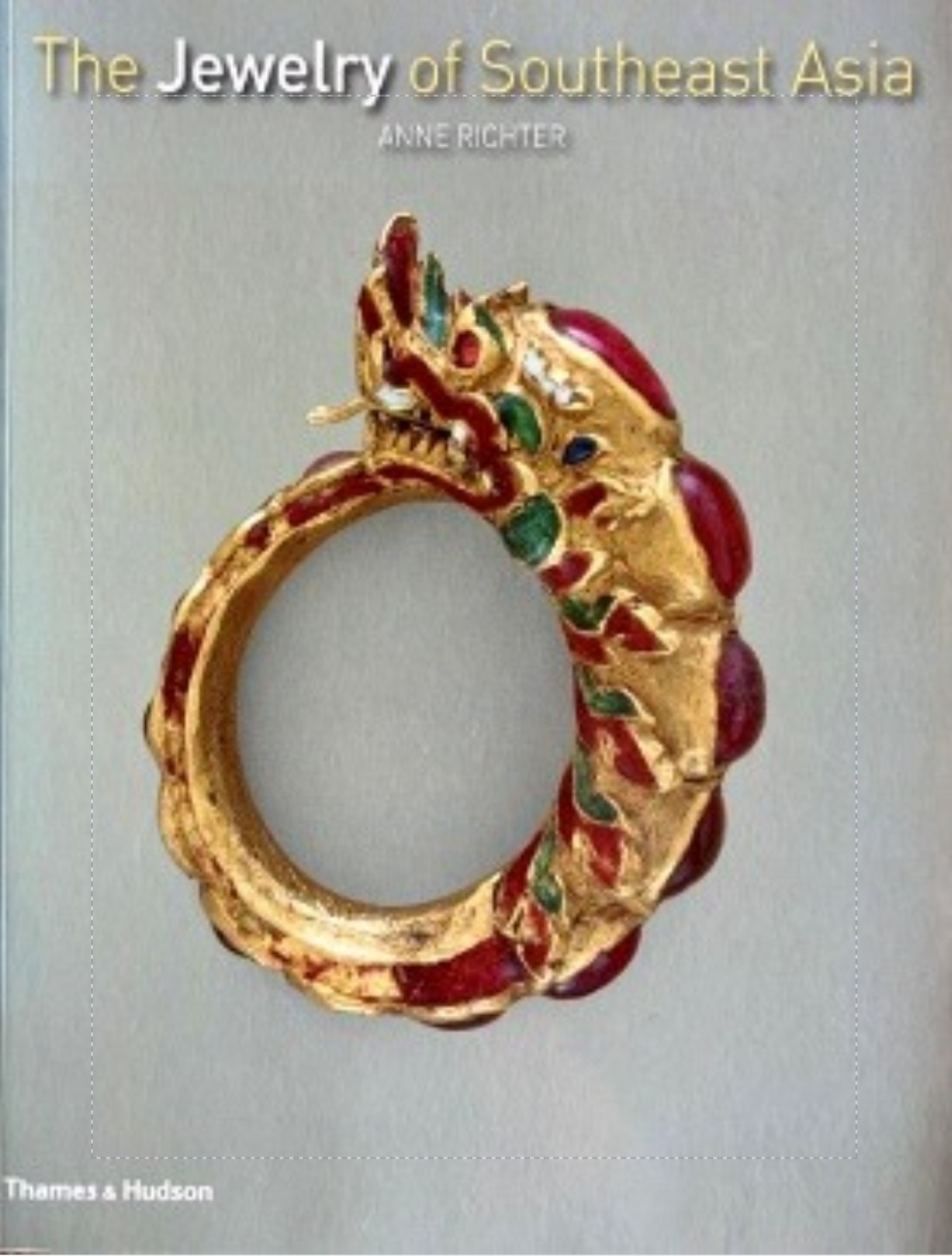
Author: Anne Richter, 2010. 160pgs. (English). Softcover.
Publisher: Thames and Hudson, London
This volume constitutes a richly illustrated and culturally nuanced study of regional adornment across Southeast Asia. Its scope extends from the resplendent regalia of Thai royalty, wrought in gold of extraordinary craftsmanship, to the intricate ornaments of Vietnam’s hilltribe communities, each piece embodying layers of social meaning. The text positions jewelry not merely as decorative art but as a prism through which to apprehend the region’s diverse cosmologies, historical trajectories, and systems of belief. Organized geographically, the book traces the evolution of jewelry traditions across nine nations, situating adornment within broader contexts of history, social custom, and cultural identity. Richter’s analysis transcends aesthetic appreciation, elucidating how design motifs are inextricably linked to patterns of trade, political organization, and religious practice. The appendices further enrich the study, offering a meticulously compiled catalog of gemstones, metals, shells, and other materials indigenous to the region, complemented by an extensive bibliography that underscores the scholarly depth of the work.
Author: David van Duuren, 1998. 95pgs. (English). Hardcover
Publisher: Pictures Publisher, Wijk en Aalburg, the Netherlands
Van Duuren’s study of the keris occupies a distinctive position within the corpus of Indonesian weapon ethnography, straddling the line between accessible reference work and cultural exegesis. While the ninety-six-page format necessarily imposes concision, the text succeeds in foregrounding the keris as a nexus of ritual practice, social identity, and metaphysical belief. Its methodological strength lies in the author’s ability to render the esoteric craft of the empu intelligible to a broad readership without erasing its spiritual gravitas. From an ethnographic perspective, the book’s most compelling contribution is its articulation of the keris as a polyvalent artifact. Van Duuren demonstrates that the blade functions simultaneously as weapon, heirloom, and cosmological anchor, thereby situating it within the broader anthropology of material culture. The emphasis on “proto-keris” forms and regional variants underscores the dynamic historical evolution of the object, challenging static or essentialist readings of Indonesian tradition. Yet the work is not without limitations. Its reliance on translation and its concise scope risk flattening the complex local epistemologies that surround the keris. The narrative privileges a dichotomy between “earthly” craftsmanship and “cosmic” significance, which, while illuminating, may inadvertently reproduce a Western analytical tendency to bifurcate material and spiritual domains. Indigenous perspectives often resist such compartmentalization, viewing the keris as an indivisible embodiment of lineage, status, and metaphysical potency. Moreover, the text’s accessibility—praised by collectors and “krisologists”—comes at the expense of deeper engagement with the socio-political contexts in which the keris circulates. Questions of colonial knowledge production, regional courtly rivalries, and the weapon’s role in contemporary identity politics remain underexplored. A more robust ethnographic critique would interrogate how the keris mediates power relations, both historically under Dutch colonialism and within present-day Indonesian heritage discourse. In sum, van Duuren’s volume is invaluable as an introductory synthesis, bridging technical description with cultural interpretation. However, its scholarly utility lies less in exhaustive analysis than in opening pathways for further research. For anthropologists and art historians, the book serves as a reminder that the keris is not merely an object of aesthetic fascination but a living artifact embedded in ritual, memory, and contested narratives of heritage.
Page 128 of 151