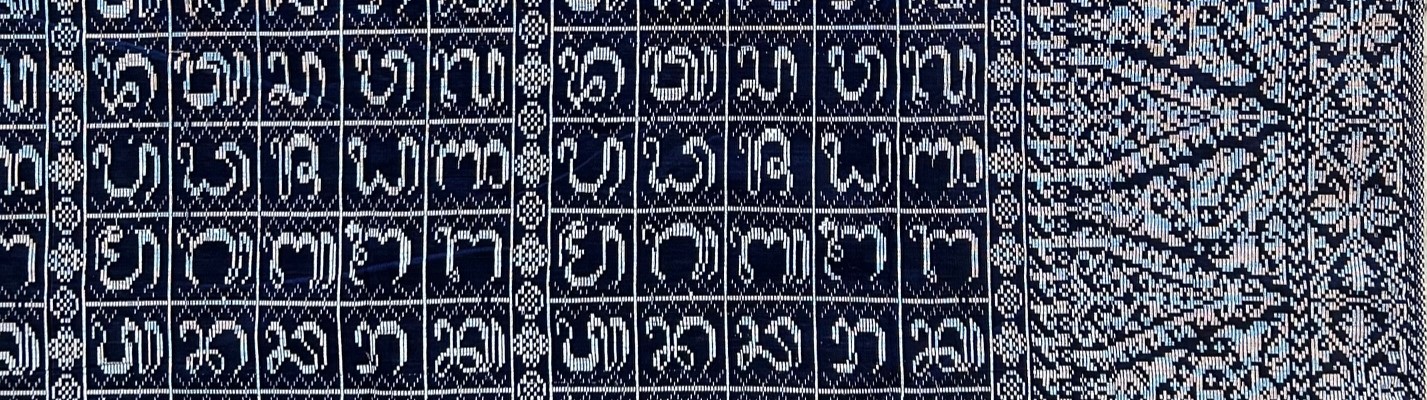

Author: Neneng Iskandar & Benny Gratha, 2014. 16pg. (Indonesian)
Publisher: Himpunan Wastraprema, Jakarta
This catalog presents a remarkable collection of textiles that are over 100 years old and no longer in production. It features ancient textiles from Lampung and Palembang, along with exquisite songket from Gresik (East Java), Cirebon, Solo, and Pekalongan. Each entry not only highlights these unique fabrics but also delves into the rich stories behind their creation and explains the reasons for their discontinuation.

Author: Judi Achjadi, Benny Gratha, 2013, 81pg. (Indonesian and English). Softcover.
Publisher: Museum Tekstil Jakarta
The exhibition Wastra Sumba, held from 9 to 20 October 2013, presented a distinguished selection of textiles from the collection of the Clemson family, who resided in Indonesia between 1974 and 1983. This curated display not only highlighted the aesthetic and cultural richness of Sumbanese weaving traditions but also underscored their historical significance within the broader context of Indonesian material culture. Accompanying the exhibition was an insightful essay by Judi Achjadi, which examined the intricate ceremonial practices of Sumba, including wedding rituals, funerary observances, and pahola—a symbolic mock battle associated with rice-planting rites. Achjadi’s contribution provided a critical ethnographic lens through which the textiles could be understood, situating them within the lived experiences and ritual frameworks of the Sumbanese people.
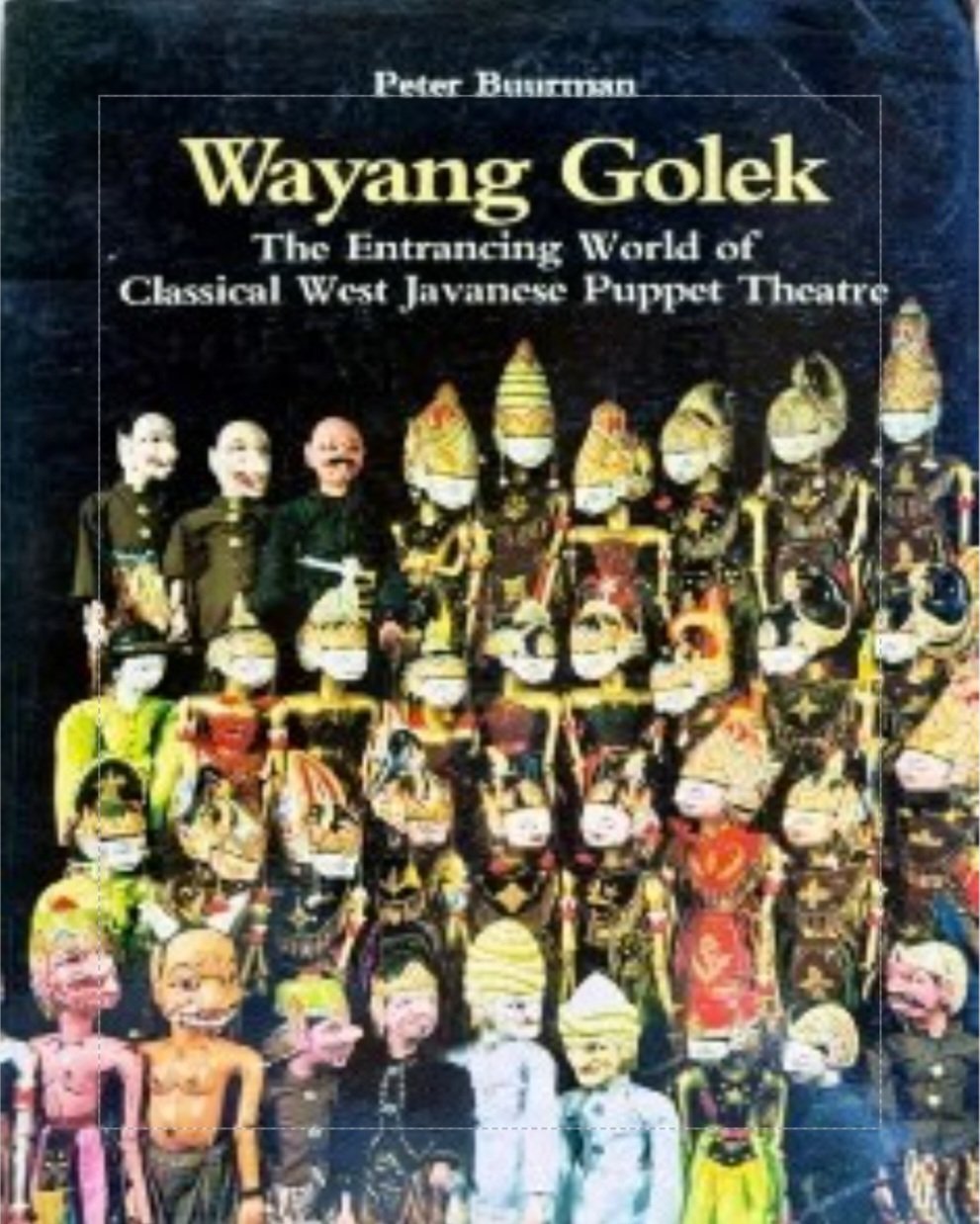
Author: Peter Buurman, 1991. 152pgs. (English), Softcover
Publisher: Oxford University Press, Oxford, UK
The volume constitutes a richly illustrated, object-centered study devoted to the wooden rod-puppets (wayang golek) of West Java. It is praised for its visual depth and meticulous artifact cataloguing, functioning primarily as a guide to the physical craft rather than as an analysis of live performance traditions. The publication features striking photography alongside detailed descriptions of individual carved figures, foregrounding the distinct iconography, headgear, facial physiognomy, and sartorial styles that differentiate specific characters. By emphasizing the puppets as tangible art objects, the book provides a valuable gateway into Sundanese craftsmanship and the aesthetic traditions underpinning these figures. Its focus, however, remains largely static, privileging the puppets as collectible artifacts rather than situating them within the dynamic performative matrix of the dalang (master puppeteer) and the musical ensemble that animates them. Scholars have noted this curatorial orientation, observing that the text is geared more toward collectors, art historians, and textile or material-culture enthusiasts than toward general readers seeking a deeper engagement with theatrical theory or performance practice. Ultimately, the volume enriches the visual and ethnographic appreciation of wayang golek as a craft tradition, while leaving the performative, ritual, and philosophical dimensions of the theatre to be explored elsewhere. Its contribution lies in documenting the artistry of carved wooden puppets as cultural artifacts, thereby complementing—though not replacing—studies that foreground the living dynamics of performance and the interpretive authority of the dalang.
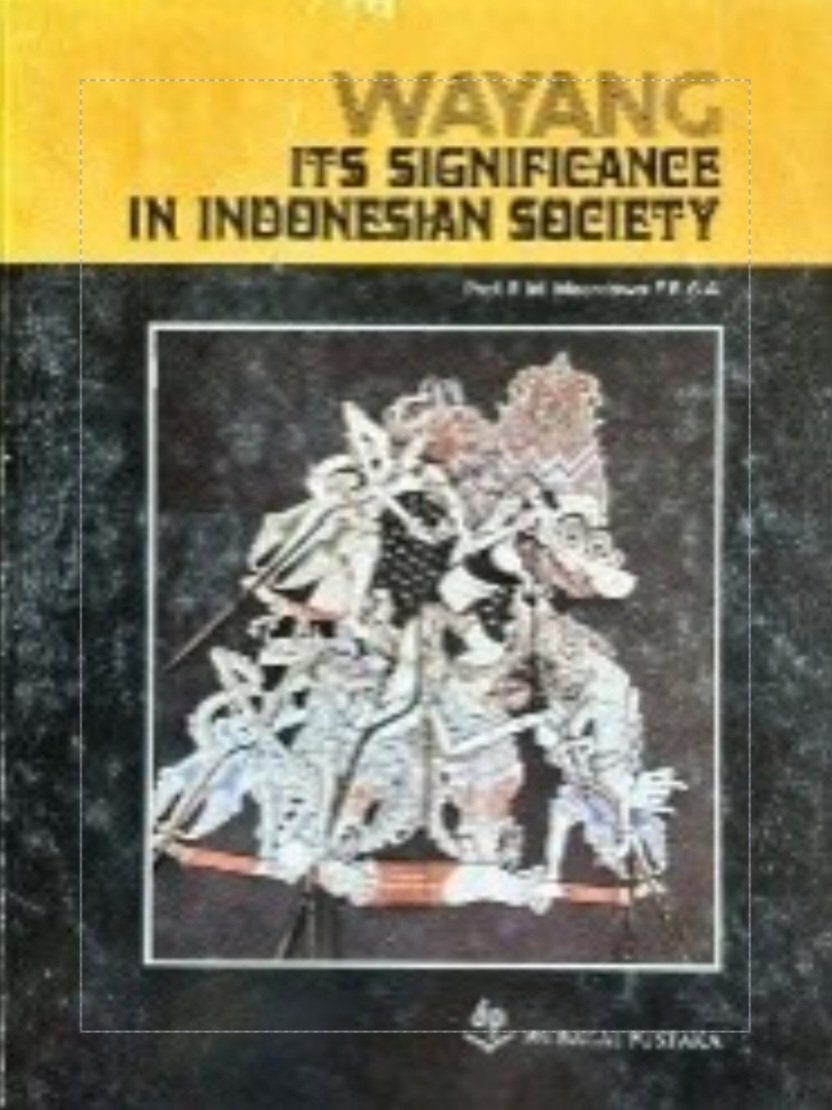
Author: Prof. R.M. Moerdowo, 1982. 91pgs. (English). Hardcover
Publisher: Balai Pustaka, Jakarta
The volume constitutes a valuable ethnographic lens into the Javanese shadow-puppet theatre (wayang kulit), portraying it not merely as an aesthetic performance but as a living moral compass, a repository of collective wisdom, and the spiritual heartbeat of Javanese and Indonesian identity. The text situates wayang within a longue durée of cultural syncretism: it traces continuities from indigenous ancestor veneration to the narrative grandeur of Hindu epics such as the Mahābhārata and Rāmāyaṇa, and later to the ethical frameworks introduced through Islamic teachings. In this way, the theatre becomes a palimpsest of layered traditions, embodying the historical negotiations of belief systems across centuries. Ethnographically, the figure of the dalang—the master puppeteer—emerges as a pivotal cultural broker. He is simultaneously philosopher, ritual officiant, and community leader, whose authority extends beyond the stage into the moral and spiritual life of the village. His interpretive voice guides audiences toward ethical discernment, reinforcing values of harmony, restraint, and social equilibrium. The dramatization of heroic and villainous archetypes functions as a pedagogical device, encoding lessons of right conduct, communal responsibility, and the cultivation of self-control. The book underscores how wayang operates as a social institution, binding communities together through shared narratives and ritualized performance. Puppets are not trivial objects of play but sacralized cultural instruments, imbued with cosmological significance and serving as vehicles for transmitting ancestral memory. The illustrations provided enrich this ethnographic portrayal, offering visual testimony to the intricate craftsmanship and symbolic potency of the puppets themselves. At ninety-one pages, the volume is concise and best read as an introductory survey rather than a comprehensive monograph. Yet its brevity does not diminish its ethnographic value; rather, it opens an accessible gateway into the cosmology, moral philosophy, and cultural resilience embedded within the wayang tradition. It demonstrates how art, ritual, and narrative converge to sustain the cohesion of society and perpetuate the living heritage of Indonesia.

Author: Ardian Purwoseputro, 2014. 292pg. (English)
Publisher: Afterhours Books, Jakarta
A dynamic new generation of dollmakers and puppeteers from the non-Chinese community has unequivocally transformed Potehi into a vibrant multicultural art form. The author confidently identifies this variant as "Wayang Potehi Jawa," marking its clear departure from traditional puppetry found in China and elsewhere. This evolution solidifies Indonesia as a powerful center for cross-cultural exchange, where puppets proudly display their exquisite hand-embroidered clothing.
Page 147 of 151