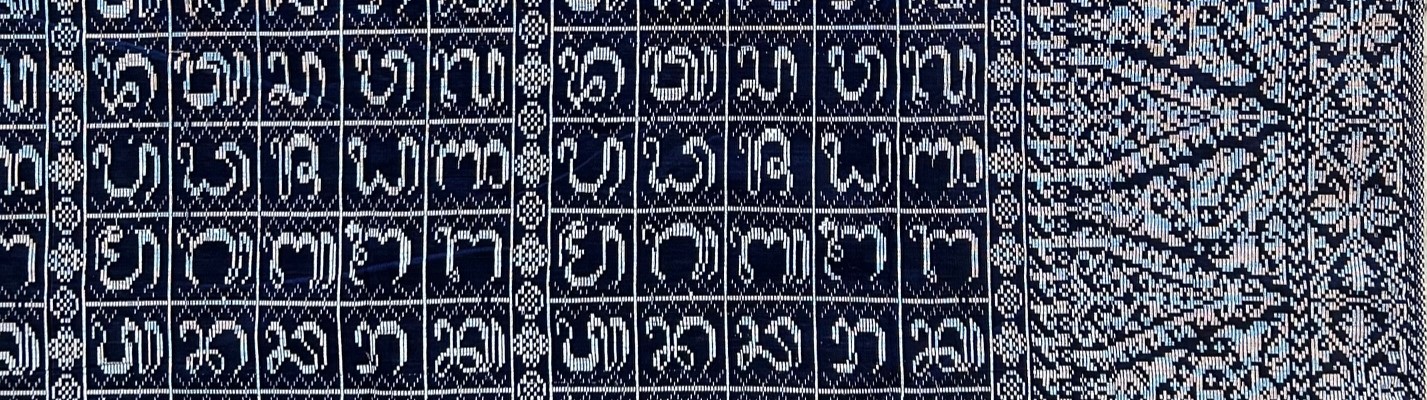

Author: GKBRAA Paku Alam, Dr. Sudibyo, Dr. Sri Ratna Saktimulya. 2023. 164 pg. (in Indonesian)
Publisher: G.D. Publishers, Vietnam
This informative book features 45 ethnic groups of Vietnam, explaining their population, language, the habitation area, origin, history, production activities, trade, diet, clothing, houses, transportation, daily organization, marriage, birth, funeral, beliefs & religion, their literature and artistic activities.
Author: Luisa Caruso, Peter Jones, Jane Mason, & Geofrey Stalker. 2011, 672pgs. (English) Hardcover
Publisher: Dorling Kindersley (DK) Publishings, London
The DK Visual Dictionary series, published by DK Publishing, constitutes a widely esteemed reference work distinguished by its pedagogical clarity and visual accessibility. Through the integration of high-resolution photographs, meticulously annotated labels, and thematically organized layouts, the series facilitates the acquisition of vocabulary and the comprehension of object structures. Its utility is particularly pronounced for visual learners, students, and individuals engaged in language acquisition. The volumes present subject matter arranged by thematic domains—such as science, astronomy, natural history, and quotidian life—thereby enabling readers to contextualize terminology within coherent conceptual frameworks. The design allows users to identify unfamiliar lexical items by visually referencing corresponding images, while bilingual editions further enhance learning by directly associating foreign-language terms with pictorial representations. It should be noted, however, that the series functions primarily as a lexical and visual lookup tool rather than as a source of extended narrative exposition or discursive analysis.
Author: Jean Cloude Corbeil & Ariane Archambault, 2007. 984pgs. Hardcover
Publisher: QA International, Canada
The volume constitutes a comprehensive pictorial dictionary meticulously designed to cultivate vocabulary and expand general knowledge. It encompasses more than 12,000 lexical entries systematically organized into 17 thematic domains, ranging from astronomy and earth sciences to the world of plants, animals, human studies, food and culinary practices, domestic architecture, do-it-yourself and gardening, clothing, jewelry and personal adornment, art and architecture, communication technologies and office equipment, transportation, energy, science, society, and sports and competitions. Each entry is accompanied by a precise definition and an illustrative image, thereby reinforcing semantic comprehension and facilitating visual association. This dual modality—textual explanation paired with pictorial representation—renders the dictionary not merely a lexical repository but also an educational instrument that bridges linguistic acquisition with conceptual understanding.

Author: Bruce W. Carpenter, 1997, 208pgs. (English). Hardcover
Publisher: Periplus Editions, Singapore
The volume emerges as a seminal critical biography, distinguished by its visual richness and ethnographic acuity. It interrogates the oeuvre of the Dutch pioneer, whose sustained engagement with Bali beginning in 1904 yielded a corpus of over one thousand sketches accompanied by incisive commentary. These materials constitute not merely aesthetic renderings but ethnological documents that preserve the fragile landscapes, ritual architectures, and artisanal practices of a society negotiating the threshold between precolonial continuity and the disruptive forces of modernization. Nieuwenkamp’s itinerant methodology—traversing the island by bicycle, foot, and horse—embodied a form of embodied ethnography, situating the artist as both participant and observer. His fieldnotes on monumental artifacts such as the Moon of Pejeng and Goa Gajah underscore a scholarly attentiveness to the symbolic and cosmological dimensions of Balinese material culture. The work thus functions as a primary reference for interrogating the modalities through which early European visitors perceived, catalogued, and interacted with indigenous epistemologies. Crucially, the text illuminates the reciprocal dynamics of cultural encounter. At Pura Maduwe Karang, local artisans inscribed Nieuwenkamp’s presence into the temple’s iconographic repertoire, depicting him astride a bicycle in stone relief. This act of representation exemplifies the dialogical interplay between Balinese communities and foreign interlocutors, destabilizing simplistic binaries of colonizer and colonized. Rather than passive subjects of observation, Balinese artisans actively reconfigured the ethnographic gaze, embedding the foreign visitor within their own visual and ritual economy. From an ethnological perspective, the biography foregrounds the entanglement of art history, colonial encounter, and indigenous agency. It situates Nieuwenkamp’s practice within broader discourses of early twentieth-century ethnography, where visual documentation operated simultaneously as aesthetic pursuit and anthropological record. The text thereby contributes to ongoing debates regarding the politics of representation, the construction of “tradition” under colonial scrutiny, and the enduring significance of Balinese cultural landscapes as sites of negotiation between external perception and local self-fashioning.

Author: Ann & John Summerfield, 1999, 362pg. (English), Softcover. Fowler Museum - Textile Series no.4
Publisher: UCLA Fowler Museum of Cultural History, California, USA
Embellished with highly sophisticated gold, silver, and silk ornamentation, the ceremonial textiles of the Minangkabau people of West Sumatra exemplify extraordinary refinement. Their production is so intricate that even the most accomplished weaver may complete only a few centimeters in a single day at the loom. The woven motifs embedded within these exquisite cloths embody the Minangkabau adat—the indigenous philosophical system that prescribes roles and norms governing social conduct, ritual practice, and speech. This richly illustrated volume brings together the scholarship of thirteen contributing authors, nine of whom are Minangkabau, to examine ceremonial attire, textile motifs, fibers, weaving techniques, traditional architecture, ritual practices, jewelry, music, dance, literature, and historiography. It has become the definitive reference on Minangkabau songket textiles, offering both ethnographic insight and aesthetic appreciation.
Page 145 of 151