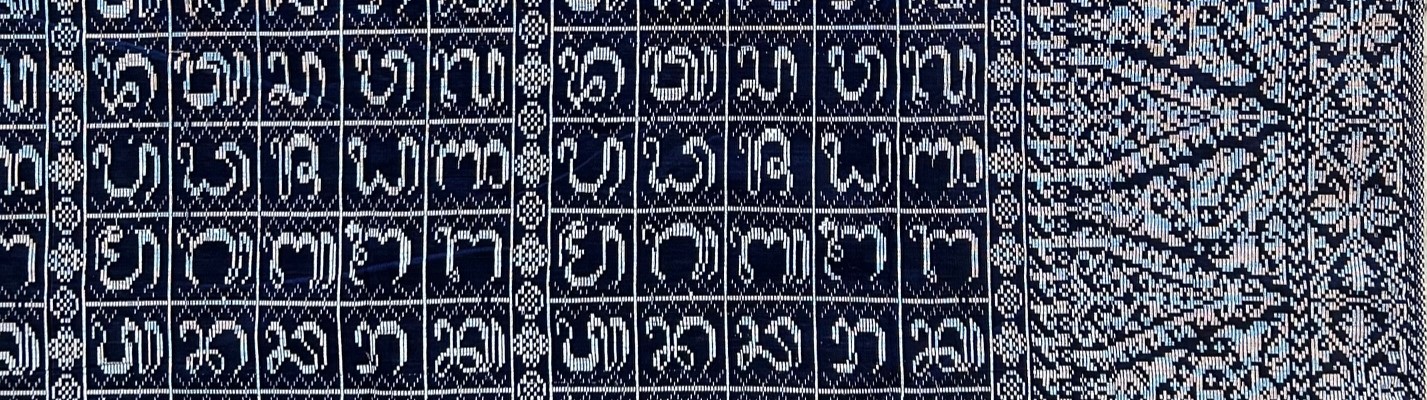

Author: Hj. B.R.A. Mooryati Soedibyo, 2006. 124pg. (English)
Publisher: Grasindo, Indonesia
The book "Costumes of the Surakarta Hadiningrat Court" provides a definitive overview of the diverse costumes worn by the royal family, showcasing both their daily attire and the special garments used for palace ceremonies. It clearly delineates the dress codes for the prime minister, abdi dalem, palace dancers, soldiers, regents, and other court officials. This essential work offers readers a powerful glimpse into the opulent lifestyle that characterized Javanese sultans in the past.
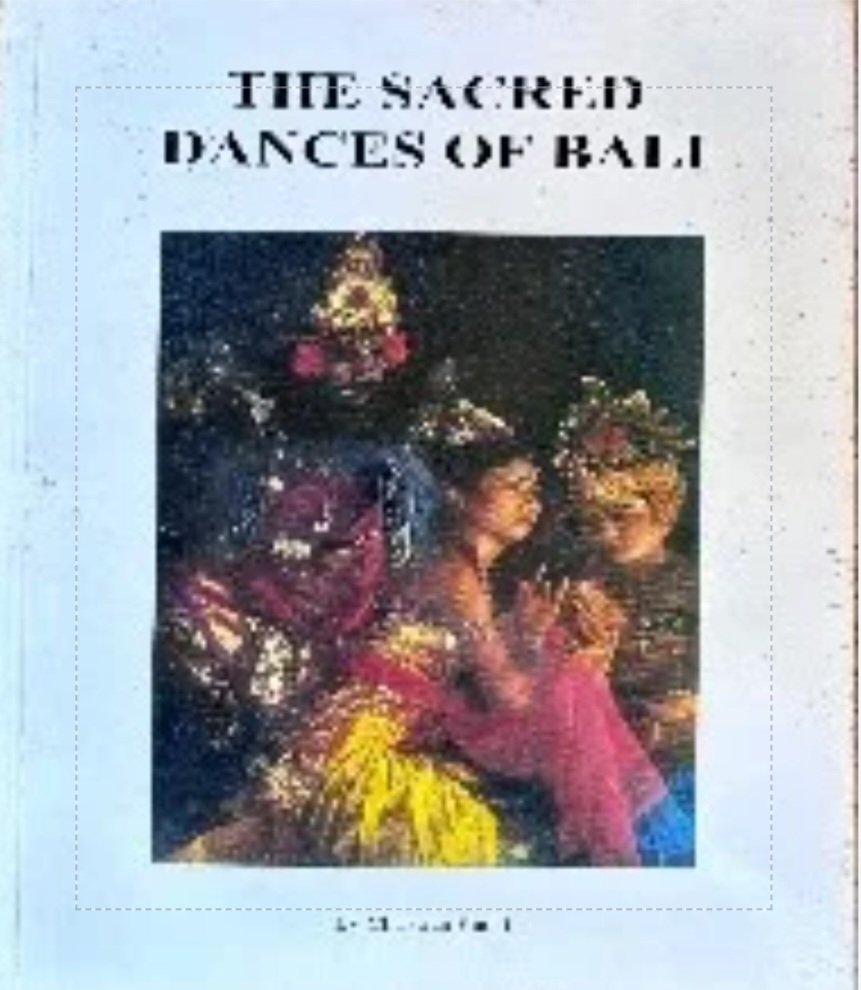
Author: Christian Racki, 1998. 122pgs. (English). Softcover
Publisher: Buratwangi, Denpasar, Bali
The Sacred Dances of Bali constitutes a visually arresting and culturally resonant exploration of ritual movement on the island. The volume foregrounds the profound spiritual essence of Balinese sacred performances (wali), ceremonies that remain largely inaccessible to casual visitors and are seldom staged for external audiences. Its narrative emphasizes dances conceived as offerings to deities and ancestral spirits, rather than spectacles for tourist consumption, thereby situating performance within its authentic ritual matrix. The book is distinguished by striking black‑and‑white photography that captures the intensity of performers’ expressions, the sanctity of ceremonial attire, and the liminal trance states that mark the threshold between the visible (sekala) and unseen (niskala) dimensions of ritual life. These images underscore the precarious continuity of ancient village traditions amid the pressures of modernization and cultural commodification. What emerges is an intimate and reverent portrayal of Balinese ritual practice, one that privileges visual testimony over textual exegesis. While the volume succeeds as a photographic art book—offering powerful imagery that evokes the numinous atmosphere of sacred dance—it does not provide sustained academic or ethnographic analysis. Consequently, its contribution lies less in comprehensive anthropological study than in its capacity to render the unseen dimensions of ritual visible to a wider audience. From the perspective of cultural sustainability, the book’s documentation acquires heightened significance. Balinese sacred dances are not merely aesthetic performances but integral components of a living heritage system, wherein ritual, community, and ecological balance are interwoven. The photographic record thus functions as a form of cultural safeguarding, preserving visual traces of practices that risk attenuation under the dual forces of tourism and globalization. By foregrounding the fragile equilibrium between continuity and transformation, the volume implicitly raises questions about how intangible cultural heritage can be sustained in the face of economic pressures and shifting social values. In this sense, The Sacred Dances of Bali contributes to broader discourses on heritage preservation and intangible cultural heritage, offering a poignant reminder that sustainability extends beyond ecological concerns to encompass the endurance of ritual knowledge, communal identity, and spiritual practice. The book’s strength lies in its ability to evoke the urgency of safeguarding these traditions, even if it stops short of providing the analytical frameworks that might situate them within global debates on cultural resilience.
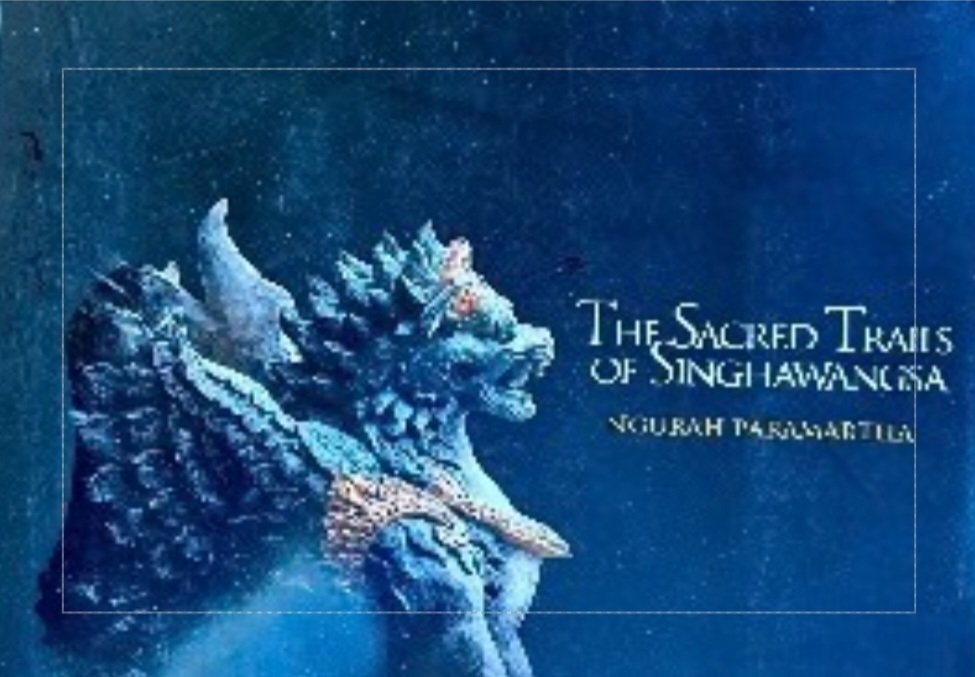
Author: Ngurah Paramartha, 2018. 151pgs. (English). Softcover
Publisher: Literasi Singhasari Foundation & Komunitas Gigir Manuk, Bali
This volume unfolds as a rigorous investigative journey into Bali Kuno (ancient Bali) and its profound civilizational entanglements with East Java. Highly esteemed among regional historians and cultural preservationists, the work bridges oral folklore, material artifacts, and spiritual lineages, thereby illuminating the continuum of cultural memory across the archipelago. The text meticulously traces the geopolitical and spiritual interconnections between ancient Bali, the Singhasari polity, and the later Majapahit empire. It documents the migration of Javanese royalty, ascetic traditions, and architectural idioms across the Bali Strait, revealing the layered processes of cultural transmission. Paramartha’s scholarship foregrounds the remnants of the “Lion” lineage (Singha or singhawangsa), mapping how historical figures inscribed both physical and spiritual legacies upon the landscapes of North Bali—particularly Singaraja and Buleleng—as well as East Java. A significant portion of the book examines ancient gates (Singhadwara) and temples such as Pura Penyusuhan, interpreting them as visual “time tunnels” (lorong waktu) that disclose the socio‑religious structures of early communities. The narrative highlights the traditions of the Bali Mula (indigenous Balinese), underscoring the resilience of their customs alongside incoming Javanese influences. Paramartha’s contribution is lauded for its focus on localized Balinese history—dimensions often marginalized in mainstream Indonesian historiography. Through close readings of temple inscriptions, geographical markers, and genealogical records, the book offers a valuable reference for scholars investigating the evolution of Balinese Hinduism and regional polities. Far from a dry chronicle, the narrative unfolds as an investigative trail, connecting physical ruins to esoteric meanings and thereby appealing to cultural enthusiasts attuned to the mystical substrata of Balinese heritage. Published by the Yayasan Literasi Singhasari, the work functions as both a collector’s item and an academic resource. Its dense references to ancestral lineages (wangsa) and archaic Javanese‑Balinese terminology render it richly rewarding for serious historians, though potentially demanding for casual readers. The Sacred Trails of Singhawangsa thus emerges as a vital piece of independent historical literature: it rescues forgotten regional narratives from obscurity and charts a vivid, sacred cartography of how the “Lion” civilization indelibly shaped the spiritual and cultural fabric of contemporary Bali.
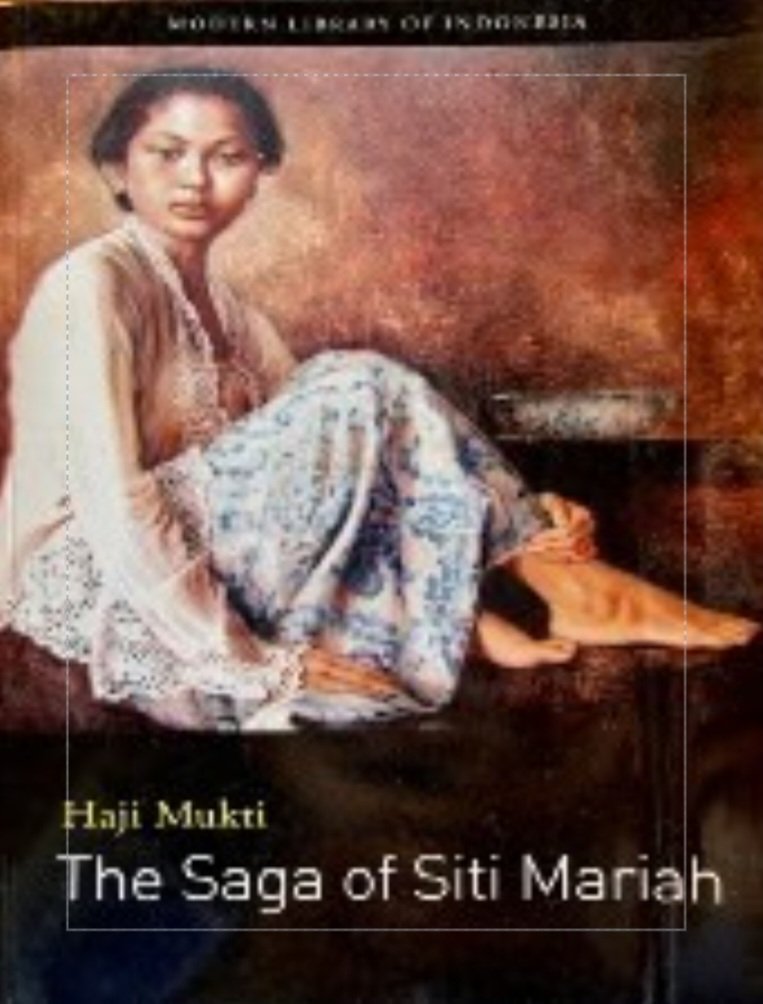
Author: Haji Mukti, 2013. 387pgs. (English) Soft Cover Modern Library of Indonesia
Publisher: Lontar Foundation, Jakarta
The Saga of Siti Mariah (Hikayat Siti Mariah) constitutes a seminal artifact within the corpus of pre-Indonesian literature. First serialized between 1910 and 1912 and subsequently reintroduced to wider readerships through Pramoedya Ananta Toer, the text occupies a distinctive position as the only major novel to document, with ethnographic and socio-economic acuity, the coercive realities of the Cultuurstelsel—the Dutch forced cultivation system operative between 1830 and 1890. An authoritative English translation has been published by the University of Hawai‘i Press, ensuring its accessibility to global scholarship. Situated within the colonial sugar economy of Java, the narrative traces the turbulent trajectory of Siti Mariah (Urip), whose personal ordeals serve as a lens through which broader systemic dynamics are revealed. Her life story unfolds as a tragic yet resilient chronicle of endurance, interwoven with a heterogeneous cast of characters: indigenous retainers (jongos pribumi), Dutch industrial magnates, concubines (nyai), and agricultural laborers. The text foregrounds betrayal, juridical inequity, and structural violence, yet consistently emphasizes the protagonist’s pursuit of survival and familial restoration. The novel functions as a critical exposé of colonial economic extraction. It delineates the mechanisms by which Javanese peasantry were impoverished to sustain European capital accumulation. Haji Mukti’s authorship—whether pseudonymous or authentic—provides a rare internalized perspective on gendered vulnerability under colonial rule. Women are depicted as commodified within domestic hierarchies, deprived of juridical agency, and subjected to transactional objectification. Importantly, the narrative resists reductive binaries of “colonizer versus colonized.” It underscores the complicity of indigenous elites and overseers in perpetuating exploitation, while simultaneously portraying select European figures with empathy and reformist sensibilities. This nuanced moral spectrum recalls the precedent of Multatuli’s Max Havelaar, situating greed and virtue as trans-cultural human attributes rather than racially determined traits. Formally, the novel exemplifies hybridity. Composed in low Malay (Melayu lingua franca), it reflects the vernacular register of urban and mercantile communities prior to the codification of modern Indonesian. Its stylistic architecture fuses the episodic conventions of the Malay hikayat with the psychological realism characteristic of European narrative traditions. Although contemporary readers may perceive its pacing as protracted and its character networks as expansive, the affective intensity remains consistently compelling. The text’s historiographic value is considerable. It bridges oral-epic traditions and emergent modern Indonesian literature, offering a primary cultural document of colonial trauma predating the Indonesian National Awakening. The unresolved identity of Haji Mukti—whether historical individual or literary construct—further enhances its scholarly intrigue. As both narrative and artifact, The Saga of Siti Mariah provides indispensable insight into the socio-economic, gendered, and linguistic dimensions of colonial Java. Ultimately, this volume transcends the category of historical romance. It constitutes a vital testimony of human resilience under imperial machinery, rendering it essential for historians, literary scholars, and students of postcolonial studies.
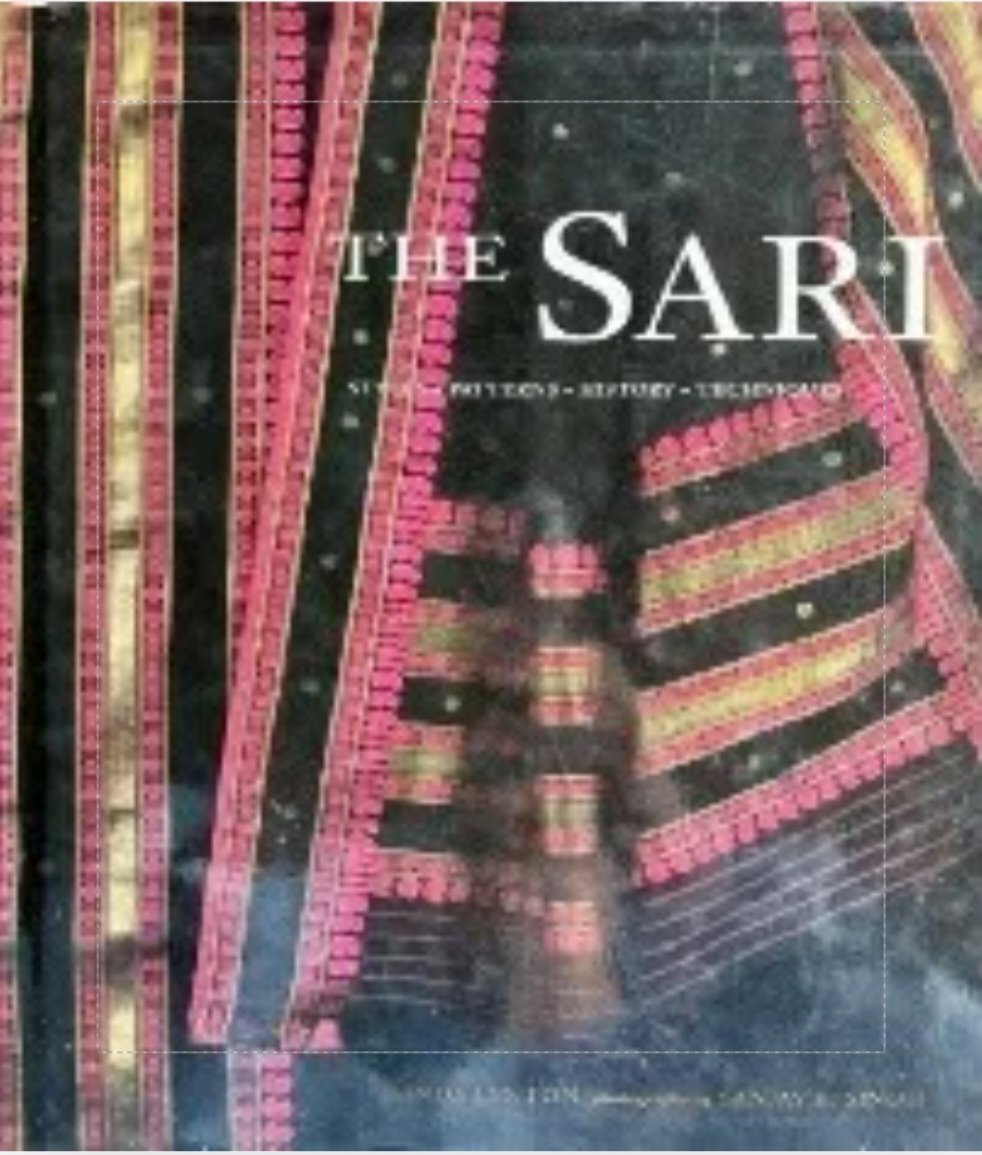
Author: Linda Lynton, 1995. 208pgs. (English). Hardcover
Publisher: Thames and Hudson, London
This volume is widely acknowledged as a landmark and deeply researched masterwork in the historiography of South Asian textiles. Organized into six geographical sections—covering the western, eastern, northeastern/Himalayan, eastern Deccan, southern, and western Deccan regions of India—the book provides a comprehensive survey of regional weaving traditions and sartorial practices. It features more than two hundred striking illustrations and photographs, including rare close-ups and previously unpublished examples drawn from remote communities. Complementing these visual materials are structural diagrams and schematics for over forty distinct sari types, which illuminate the technical sophistication of loom preparation, weaving structures, and patterning systems. The inclusion of an extensive glossary, regional terminology, translations, maps, a detailed chronology, and a bibliography further enhances its scholarly utility, positioning the work as both a reference compendium and a cultural archive. The volume succeeds in bridging the domains of high fashion, historical evolution, and regional weaving techniques without reducing the craft to mere aesthetic spectacle. It captures the diverse social, material, and regional variations of the unstitched garment across the Indian subcontinent, situating the sari as both a quotidian garment and a bearer of cultural identity. The diagrams, in particular, break down complex weaving and patterning layouts in ways that appeal simultaneously to researchers, textile historians, and contemporary designers. Geographically, the emphasis rests heavily on traditional Indian production centers, leaving comparatively less space for contemporary diasporic shifts and global reinterpretations of the sari. Moreover, the dense inclusion of local technical terms and historical chronologies, while invaluable for specialists, may prove challenging for casual readers seeking only light fashion inspiration. Nonetheless, the scholarly rigor and ethnographic depth of the work firmly establish it as an indispensable contribution to the study of South Asian textile heritage. The volume is widely regarded as a landmark, deeply researched masterwork on South Asian textile history. The book is divided into six geographical sections covering the West, East, Northeast/Himalayas, eastern Deccan, south and western Deccan of India. It features over 200 striking illustrations and photographs, including rare close-ups and previously unpublished pieces from remote communities. In addition it also includes structural diagrams and schematics for more than 40 distinct sari types. It contains an extensive glossary, regional terminology, translations, maps, a detailed chronology and a bibliography. The volume bridges high fashion, historical evolution, and regional weaving techniques without oversimplifying the craft. Furthermore it captures the diverse social, material and regional variations of an unstitched garment across the Indian subcontinent. Diagrams breakdown complex weaving and patterning layouts in way that appeals to both researchers and modern designers. Geographically it focus heavily on traditional Indian production centers, leaving less room for contemporary international diasporic shifts. The heavy inclusion of local technical terms and historical chronologies can feel dense for casual readers looking for light fashion inspiration.
Page 132 of 151