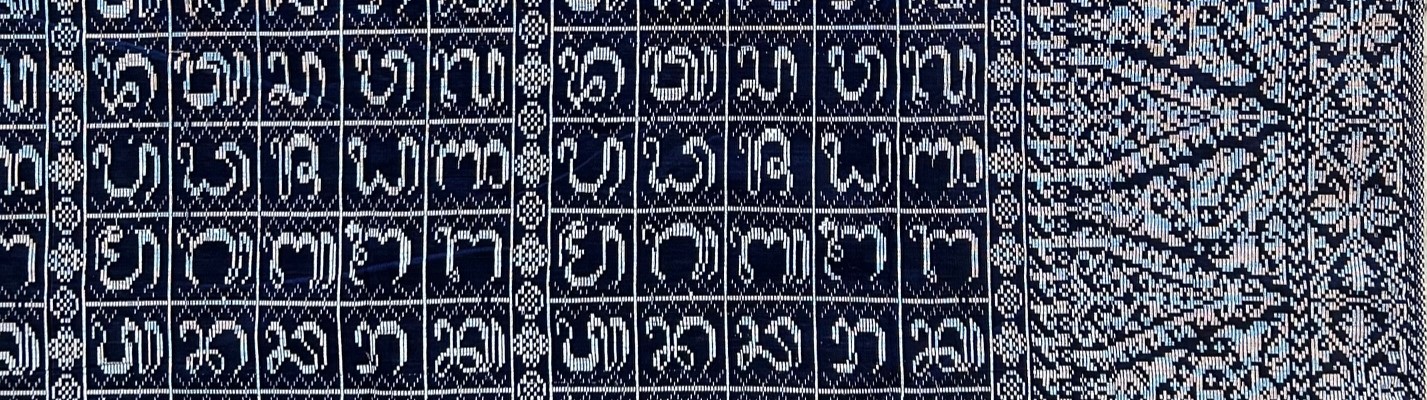

Author: Secretary of State for Arts and Culture in Timor Leste, 2015.
Publisher: Timor Aid 2015. Pg. (English Portuguese, and Tetun)
This book is published in a series on the traditional textile production of Lautem, one of the 13 municipalities of Timor Leste.

Author: Lynda Angelica N. Reyes, 1992, 166 pg. (English). Softcover
Publisher: University of the Philippines Press, Diliman, Quezon City
This book discusses the indigenous fabrics and clothing of the Bagobo, Mandaya, and Bilaqan animist groups in Mindanao, Southern Philippines, set against the background of their cultural life. The research focuses on the specimens of the three groups which form a part of the collection of traditional textiles in the Field Museum of Natural History of Chicago. Describing the different methods and techniques employed in the manufacture of these traditional textiles. The study also relates their functions in the day-to-day lives of the Bagobo, Mandaya, and Bilaan. Most of their textiles have intricate designs, and embroideries incorporating geometrical patterns and representational figures of human beings, plants and animals with the images of man, and the crocodile as the dominant motif. This work fills the need for art historians, anthropologists, sociologists and other social scientists for an authoritative study of traditional textiles as art form.

Author: Urs Ramseyer, 2009, 208pg. (English). Softcover.
Publisher: Museum der Kulturen, Basel, Switss
Tenganan Pegringsingan , the ‘Theatre of the Universe’ in East Bali, has attained world wide fame through its unique textiless, the sacred double ikat cloth of Tenganan is a symbol and a trademark for a divinely created world, and a ritual community which understands its settlement, created following a divine design, as a representation of the cosmos reduced in size. Within the framework of a comprehensive, richy illustrated monograph, and against a backdrop of global change, the author concerns himself with the cosmic and sacred theatre of Tenganan, with its history, its social, economic and cutural conditions and with its ritual performances.
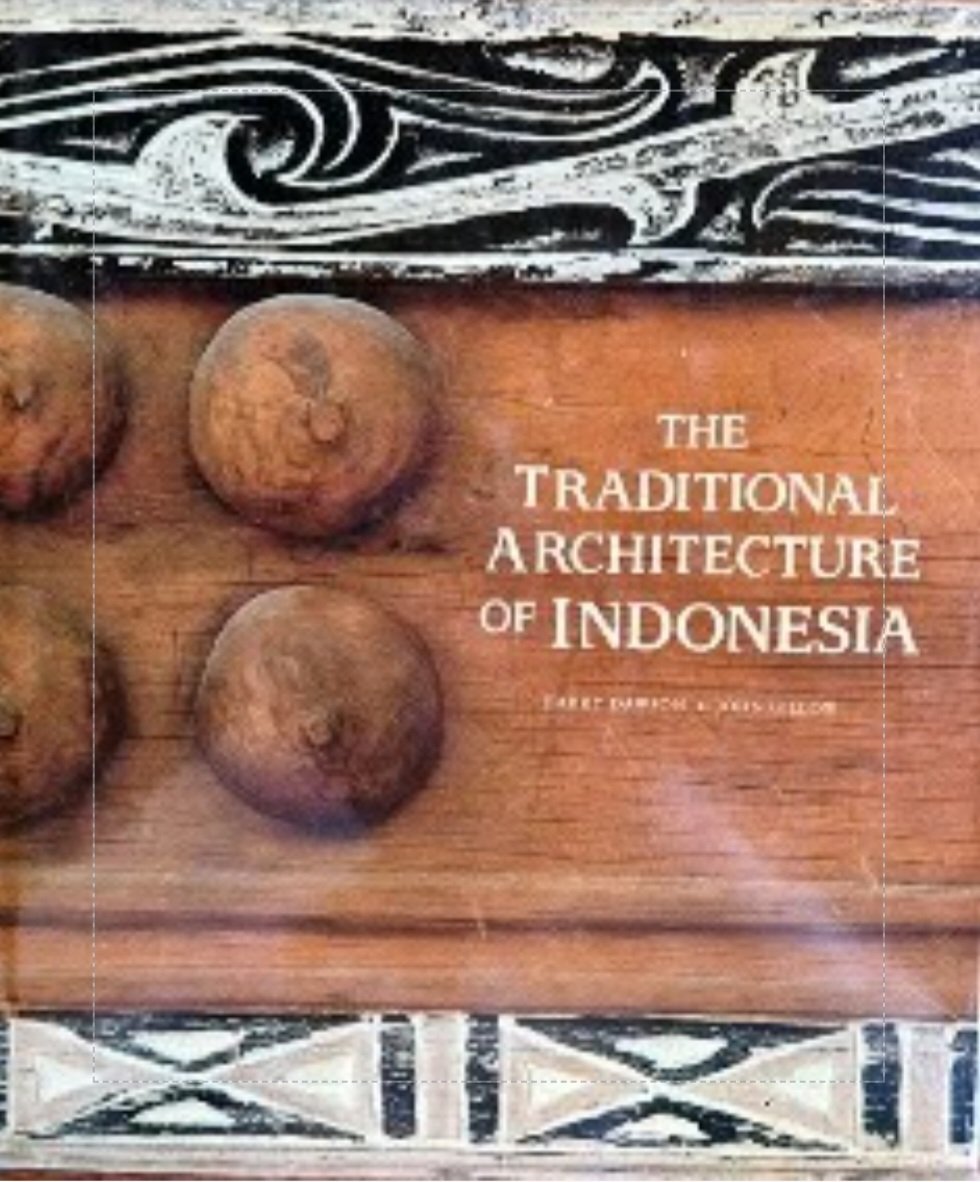
Author: Barry Dawson & John Gillow, 1994. 192pgs. (English). Hardcover
Publisher: Thames & Hudson, London
This volume constitutes a richly illustrated visual survey of the Indonesian archipelago’s vernacular architecture. Integrating field research with nearly two hundred striking photographs, it documents endangered regional house forms, ritual structures, and domestic spaces. The book features vivid color photography of village settings, monumental peaked roofs, and intricately carved wooden details across multiple islands. Beyond visual representation, it elucidates how dwellings function simultaneously as spiritual entities and communal focal points, deeply intertwined with ritual practice and social life. Particularly noteworthy is its attention to indigenous engineering ingenuity, such as the use of pegs and wedges in lieu of nails to produce earthquake‑resilient joints. While the text offers accessible descriptions suitable for general readers, it does not attain the rigorous analytical depth demanded by architectural historians or specialists. Ultimately, the volume serves as a poignant cultural record—a bittersweet snapshot of vernacular traditions increasingly imperiled by the encroachment of modern concrete construction.
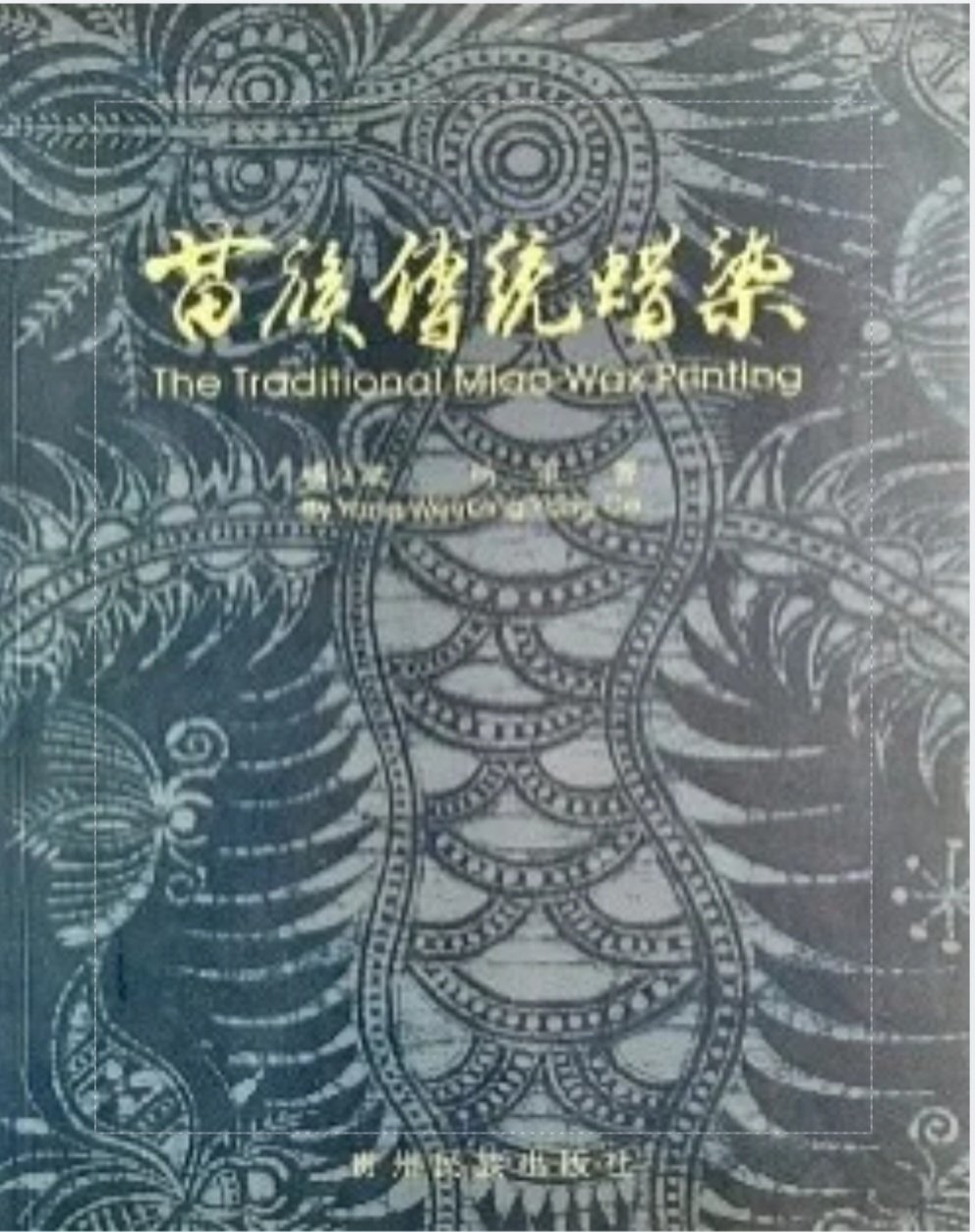
Author: Yang Wenbing Yong Ce, 2002. 117pgs. (English & Mandarin). Softcover
Publisher: unknown
This volume constitutes a seminal contribution to the fields of ethnographic research and textile art history. Co-authored by the distinguished textile collector and scholar Yang Wenbing, the book serves as an indispensable record of the Miao nationality's intangible cultural heritage, offering a comprehensive examination of the sophisticated la xie (wax-resist batik) traditions preserved primarily within the southwestern Chinese provinces of Guizhou and Yunnan. Rather than presenting the craft as a static vestige of the past, Yang conceptualizes Miao wax printing as a dynamic visual language and a repository of living history. Central to the book's argument is the assertion that, in the absence of a standardized written script throughout much of Miao history, textiles functioned as vital mnemonic and documentary media. Embodied within their intricate patterns are collective memories of ancestral migrations, cosmological narratives, clan identities, and social organization, effectively transforming cloth into an alternative archival system through which cultural knowledge has been transmitted across generations. The book is methodically organized, guiding readers through the complete material, technical, and symbolic life cycle of Miao textile production. Botany and Materiality The opening sections explore the ecological foundations of the craft, emphasizing the cultivation of wild indigo (Dian Lan) and the sourcing of organic beeswax. Yang demonstrates how local environmental knowledge and sustainable resource management underpin the production process, situating textile-making within a broader framework of human-environment interaction. Technical Mastery Particularly compelling is the detailed analysis of the technical processes involved in wax-resist batik production. The author provides an in-depth examination of the ladao, a double-walled copper wax knife used to create remarkably fluid geometric and organic motifs. Equally illuminating are discussions of indigo-vat fermentation, dye chemistry, and the boiling procedures through which the wax is removed, revealing the striking blue-and-white compositions characteristic of Miao textiles. These sections successfully bridge practical craftsmanship and technical scholarship, making specialized knowledge accessible without sacrificing precision. Symbolism and Totemic Imagery The volume's most intellectually engaging contribution may lie in its extensive documentation and interpretation of Miao visual symbolism. Yang catalogues a rich repertoire of motifs, elucidating the ancestral and cosmological significance of emblematic figures such as the Creation Butterfly (Mai Bang), bronze-drum patterns, and regional variations of the ox-headed dragon. Through this analysis, the textiles emerge not merely as decorative objects but as sophisticated visual narratives that encode collective memory, spiritual beliefs, and cultural identity. Art historians and ethnographers have long regarded the volume as an exceptional example of field-based documentation. Yang Wenbing's perspective is uniquely informed by his decade-long commitment to collecting museum-quality ethnic minority textiles and engaging directly with the communities that produce them. Rather than imposing a detached external framework, the study foregrounds the communal, gendered, and intergenerational dimensions of the craft. Particular emphasis is placed on the oral transmission of knowledge from mothers to daughters, highlighting textile production as both a foundational social practice and a significant marker of cultural continuity. If the work has a limitation, it lies less in its methodology than in its historical context. Published in 2002, the volume understandably does not address contemporary challenges such as commercialization, heritage tourism, mass-market reproduction, or the emergence of AI-assisted forms of synthetic cultural appropriation and design plagiarism. Nevertheless, this absence does little to diminish its scholarly value. As a foundational reference and documentary archive, Miao Wax Printing remains an essential resource for textile historians, ethnographers, museum professionals, fashion scholars, and researchers of China's ethnic minority cultures. Richly illustrated and meticulously researched, the book succeeds not only as a study of a textile tradition but also as a profound exploration of how material culture can function as a vessel of historical memory, cultural resilience, and collective identity.
Page 134 of 151