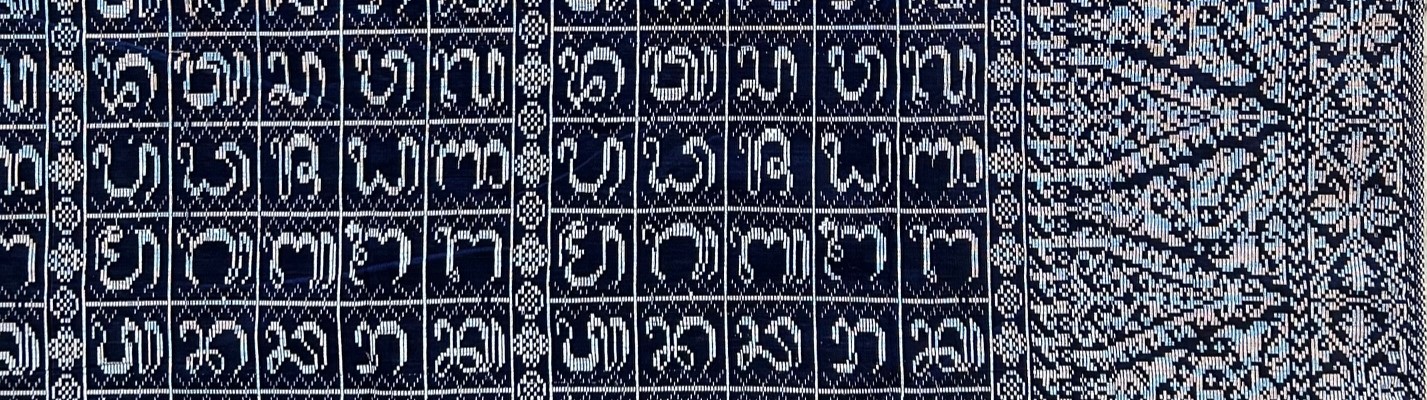

Author: Jane Puranananda, editor, 2007. 215pgs. (English). Softcover
Publisher: River Books, Thailand
This volume presents the Proceedings of the 2007 J.W. Thompson Symposium, with a thematic focus on the cultural and symbolic dimensions of Southeast Asian textiles. Bhutan: -Form and Function in Bhutanese Textiles Cambodia: -Spirit Ships and Vessels of the Soul Indonesia: -Indian Figurative Textiles in Indonesia; -Barkcloth Skirts from Southwestern Borneo; -Talismanic Textiles in Islamic Southeast Asia Myanmar: -Shan Expressios of Power and Protection; -Structure and Status in Chin Textiles; -Naga Textiles; Mon Ancestral Textiles Laos: -Spirit Skirts of the Lao-Tai People; -Textiles in Contemporary Phuthai Society Thailand: -Monk’s Robes in Rural Northeastern Thailand; -The Role of Women in a Buddhist Society Vietnam: -Religious and Status-Marking Functions of Textiles among the Tai Peoples of Vietnam Collectively, these papers illuminate the intricate interplay between material culture, ritual practice, and social identity across diverse Southeast Asian communities. The symposium underscores textiles not merely as utilitarian artifacts, but as profound conveyors of cosmological meaning, social hierarchy, and cultural continuity.

Author: Susan Conway, 2006, 211pg. (English). Hardcover
Publisher: River Books, Bangkok, Thailand
The central focus of this volume is the Shan States, a region of Burma distinguished by its picturesque hills and valleys, situated in the heart of present-day Myanmar. The author provides a meticulous examination of the traditional attire of both Shan men and women, offering insights into the cultural symbolism embedded within their garments. In addition, the narrative extends to the political and social structures of the Shan, with particular attention to the role of princes and the architectural grandeur of their palaces. The text further explores the rich tapestry of Shan artistic expression, encompassing craftsmanship, aesthetic traditions, and the dynamics of regional trade that shaped the socio-economic fabric of the states. The focus of this book is on the Shan States, part of Burma with beautiful hills and valleys in the center of present-day Myanmar. The author reveals the male and female dress of the Shan and also talks about Princes, palaces, and Shan arts, crafts and trade are discussed

Author: Puan Puti Reno Sativa Sutan Aswar, 2017. 368pg. (English)
Publisher: Yayasan Warna-Warni Foundation, Jakarta
The Songket is not just a traditional fabric; it stands as a vital symbol of the Minangkabau people's cultural dignity. Its intricate motifs powerfully convey ancestral hopes, and the use of gold and silk threads firmly embodies profound values. To ensure its sustainability, Songket must be accessible and embraced by everyone. With over 21 years of dedicated research and innovation, the author is determined to revitalize this craft. By implementing new techniques and diversifying raw materials, she will make Songket more affordable, ensuring it becomes a practical choice for everyday wear.
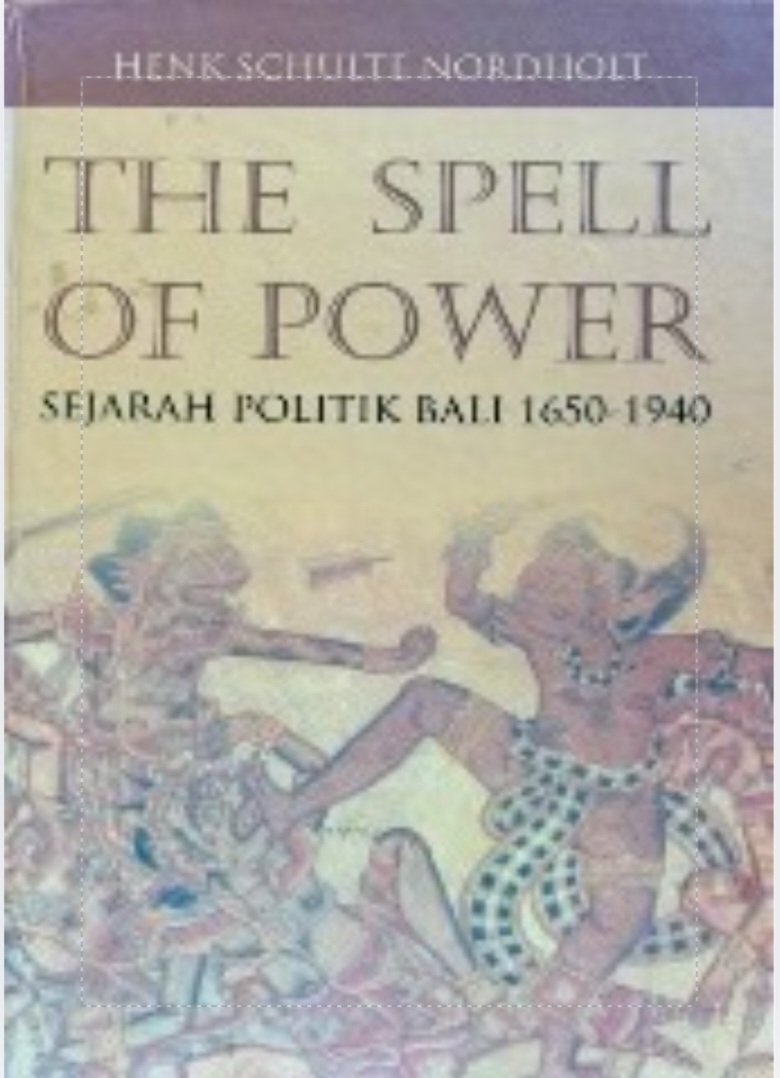
Author: Henk Schulte Nordholt, 1996. 482pgs. (Indonesian), 2nd edition 2006. Hardcover
Publisher: KITLV Jakarta & Pustaka Larasan, Jakarta
The Spell of Power emerges as a seminal historiographic intervention, charting the rise, crisis, and dissolution of the Mengwi dynasty while situating its trajectory within the broader architecture of Balinese political life. The author’s methodological choice of collective biography allows for a nuanced interrogation of power relations, foregrounding the delicate equilibrium between local leadership, temple networks, ritual sovereignty, irrigation taxation, and the exigencies of warfare. What distinguishes this volume is its meticulous archival synthesis: Dutch colonial documentation is interwoven with Balinese oral traditions, genealogical accounts, and temple-based historiography. This methodological hybridity not only enriches the evidentiary base but also destabilizes reductive colonial narratives, reframing Balinese statecraft (negara) as a ritualized, decentralized, and performative system of governance. From a curatorial perspective, the text functions as both historical reconstruction and interpretive lens. It illuminates how bureaucratic interventions by the Dutch paradoxically “traditionalized” kingship, embedding ritual authority within codified colonial frameworks. This paradox underscores the dynamic interplay between external imposition and indigenous adaptation, a theme that resonates across Southeast Asian histories of state formation. As a foundational work, The Spell of Power provides scholars, curators, and cultural historians with a critical apparatus for understanding the ritualized dimensions of political authority in Bali. It invites reflection on how archival voices—colonial and indigenous alike—can be curated to reveal the layered textures of sovereignty, ritual, and resilience in pre-colonial and colonial contexts.
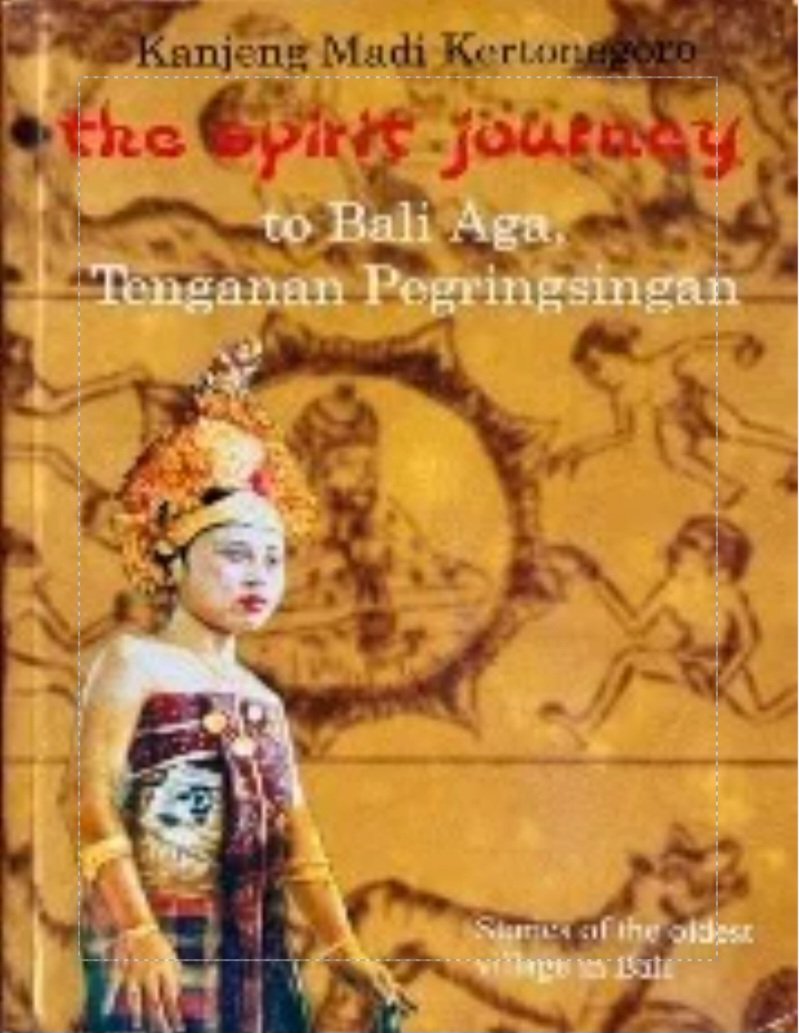
Author: Kanjeng Madi Kertonegoro, 1986. 14pgs. (English). Softcover
Publisher: Daya Putih Press, Bali
The booklet serves as a combined storytelling and artistic showcase of traditional Balinese culture, deep focusing on the ancient village traditions of the Bali Aga in Tenganan Pegeringsingan. Rather than a standard lineair narrative it walks the reader through traditional folklore, sacred rituals and community life using vivid paintings alongside descriptive text. It offers an intimate respectful and rustic window into the indiginous spiritual worldview of one of Bali’s oldest pre-Hindu communities. Reviewers and collectors praise the book for its authentic artistic representation and rare depiction of Tenganan’s distinct cultural heritage.
Page 133 of 151