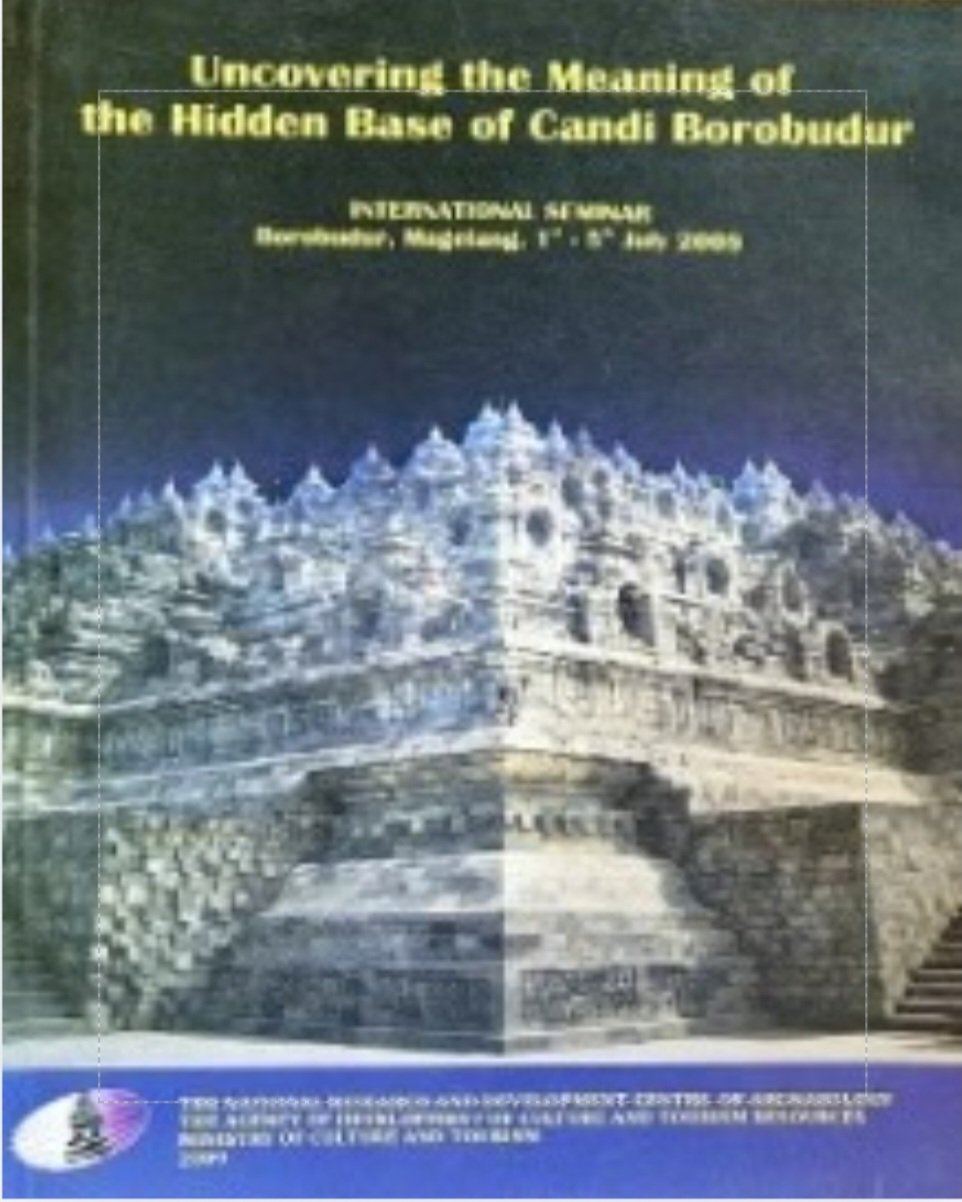
Author: various contributors, 2009. 382pgs. (English). Softcover. Proceedings
Publisher: The National Research and Development Centre of Archaeology, Ministry of Culture and Tourism, Jakarta
This volume constitutes a scholarly proceedings publication issued by the Pusat Penelitian dan Pengembangan Arkeologi, compiling research presented at the 2008 international seminar in Magelang, Indonesia. The collected papers concentrate on the 160 concealed relief panels at the base of Borobudur, which depict the Karmawibhaṅga—the Buddhist doctrine of cause and effect. Several contributors propose that the sculptors may have drawn upon textual sources such as the Lokaprajñapti and the Vairocanābhisaṃbodhi Tantra in addition to the Karmawibhaṅga, thereby suggesting a more complex exegetical framework guiding the iconographic program. The essays collectively examine how these carvings embody ninth-century Javanese creativity, social organization, sartorial practices, and representations of flora and fauna. The volume is organized into thematic sections encompassing historical analysis, religious texts, daily life, and photographic documentation. This structure underscores the multidimensional significance of the reliefs, situating them at the intersection of art history, archaeology, and cultural anthropology. As a resource, the book holds considerable value for advanced students of Buddhist art and Indonesian archaeology. It effectively challenges reductive interpretations that rely on a single textual source for the base reliefs, thereby advancing scholarly discourse on Borobudur’s iconography. Nevertheless, as a compilation of seminar papers—accessible through the National Library of Australia catalogue and digital repositories such as Scribd—it functions more as a technical anthology than as a unified narrative. Its strength lies in the diversity of perspectives, though this very multiplicity precludes the coherence of a monographic study.

Author: Saroni Asikin, 2008, 146pg. (Indonesian). Softcover
Publisher: Citra Prima Nusantara Semarang
The book examines the stylistic features and discursive traditions of batik in Semarang, a city once renowned for its distinctive textile artistry. Batik Semarang-16, a collective of young artisans, seeks to revitalize the historical motifs of Semarang while simultaneously introducing innovative designs inspired by their own creative vision. In doing so, they not only preserve cultural heritage but also contribute to the evolving narrative of batik within contemporary society.

Author: Nina and Dinny Jusuf, 2014. 116 pg. (Indonesian)
Publisher: Yayasan Toraja Melo, Jakarta
In the Torajan language, "Untannun Katuoan" means "weaving life." To enhance the prosperity of Torajan families, the Toraja Melo Foundation has first documented the weaving practices of Toraja women belonging to various work groups in South Sulawesi.
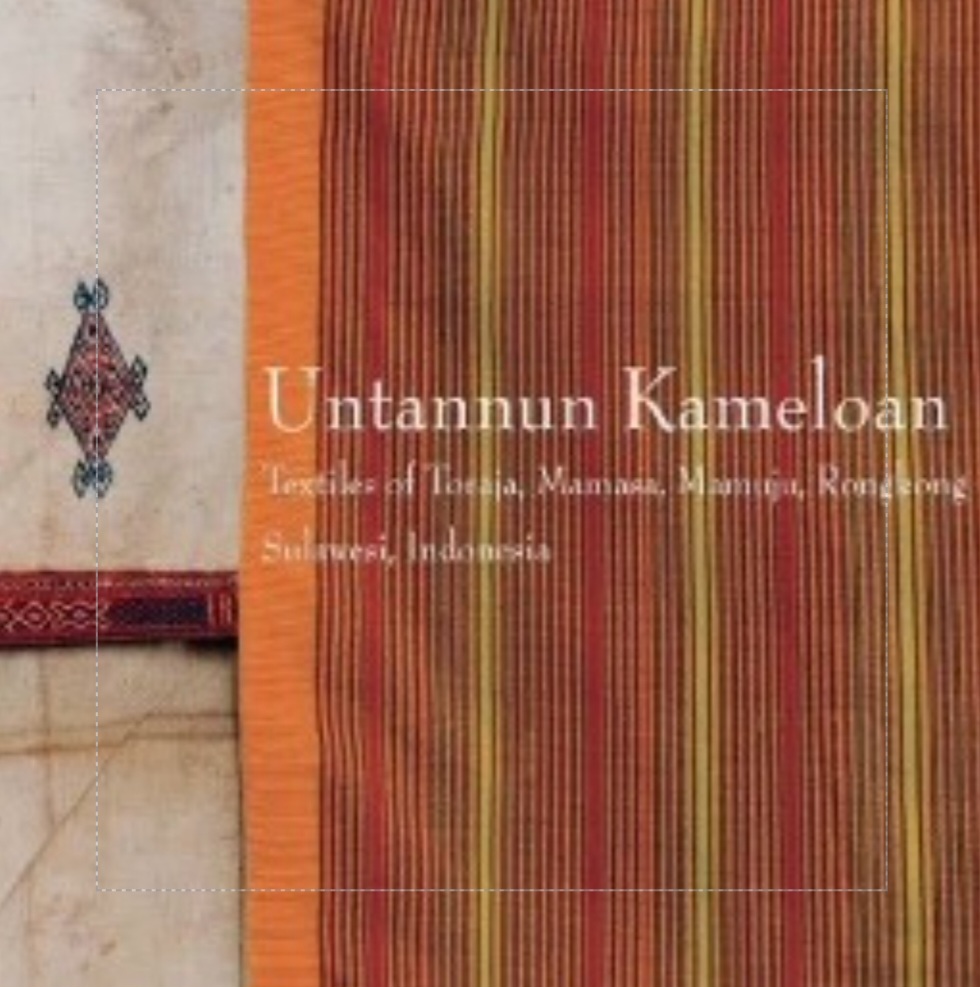
Author: Judi Achjadi & Keiko Kusakabe, 2012. 90pgs. (English). Softcover
Publisher: Toraja Melo & Jakarta Textile Museum
This catalog was produced to accompany an exhibition showcasing the rich textile traditions of Central Sulawesi, particularly those of the Toraja, Mamasa, Mamuju, and Rongkong communities. The author begins by situating textiles within the continuum of human experience—examining fabrics employed in daily life, those reserved for funerary contexts, and those integral to ritual practice and commercial exchange. Of particular note is the discussion of card weaving, a technique now verging on extinction, which is meticulously documented for its historical and cultural significance. The volume also includes a compelling contribution by Keiko Kusakabe on mud-dyeing, an ancient and labor-intensive method that exemplifies the enduring relationship between natural resources and aesthetic expression. Furthermore, the role of Toraja Melo—a foundation dedicated to supporting Toraja weavers—is highlighted. By facilitating the marketing of traditional textiles and encouraging their adaptation into contemporary products such as handbags and purses, the foundation fosters intergenerational dialogue and ensures that these artisanal practices remain relevant to younger audiences.

Author: Maria Wronska-Friend, 2007, 62pg. (Polish & English). Softcover. Catalog
Publisher: Manggha Museum of Japanese Art and Technology, Krakow, Poland
The catalog presents a distinctive encounter between Indonesian batik from the collection of the Polish connoisseur Feliks Jasieński and scholarly perspectives. It features critical essays contributed by Rudolf G. Smend of Cologne, Germany, Maria Wrońska-Friend, and Małgorzata Martini, each offering nuanced insights into the cultural and artistic significance of the works.
Page 143 of 151