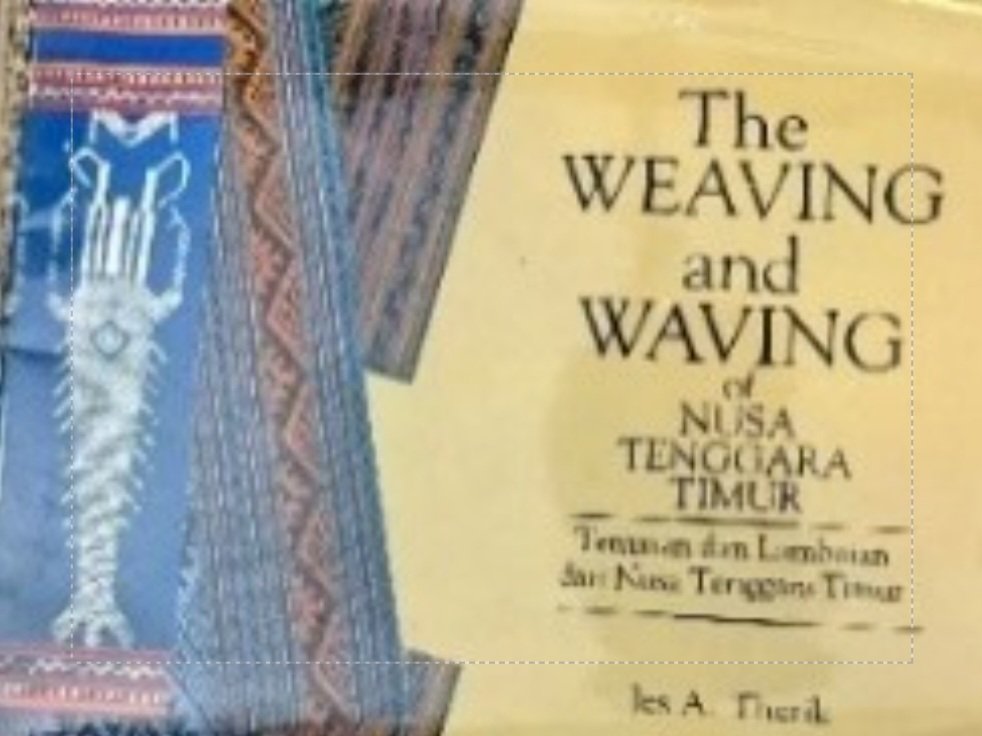
Author: Jes A. Therik, 1990. 16pgs. (Indonesian and English). Softcover. Catalog
Publisher: Taman Mini Indonesia - East Nusa Tenggara Pavilion, Jakarta
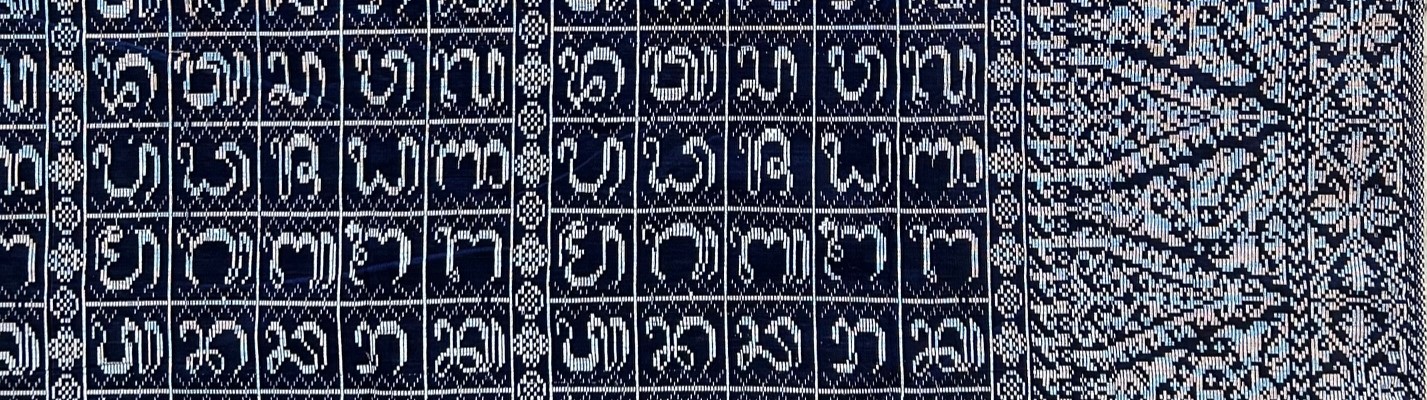
This catalog documents the weaving techniques of East Nusa Tenggara, a region renowned for its diverse textile traditions. Ethnographic records indicate that every kingdom, ethnic group, region, and island has developed distinctive motifs, woven on body-tension looms and transmitted across generations. Weaving in daily life is not considered a primary occupation; rather, the processes of spinning thread, tying motifs, dyeing, and weaving are seasonal activities, typically undertaken during the dry season. The communal production of textiles often results in variations of character, color, and typology, reflecting the collaborative nature of the craft. Expert practitioners are able to distinguish textiles from different regions—for instance, differentiating a Sumba cloth from an Ende textile—by carefully observing the motifs employed. In terms of ornamentation techniques, East Nusa Tenggara weaving can be broadly categorized into three principal forms: ikat weaving, songket weaving (here referred to as “sotys”), and buna weaving. Ikat weaving: This technique involves binding sections of the yarn with raffia strings prior to dyeing, thereby reserving certain areas from color penetration. Once woven, the undyed portions reveal the intended motifs in striking contrast against the dyed background. Songket weaving (“sotys”): This method requires lifting warp threads with palm-leaf ribs and bamboo sticks during preparatory work. The use of palm ribs facilitates the emergence of planned motifs within the thread arrangement, producing intricate geometric patterns. Buna weaving: Distinguished by the insertion of supplementary colored threads, buna weaving allows artisans to create complex motifs with added chromatic richness. Together, these techniques embody the cultural identity of East Nusa Tenggara communities, serving not only as aesthetic expressions but also as markers of social identity.
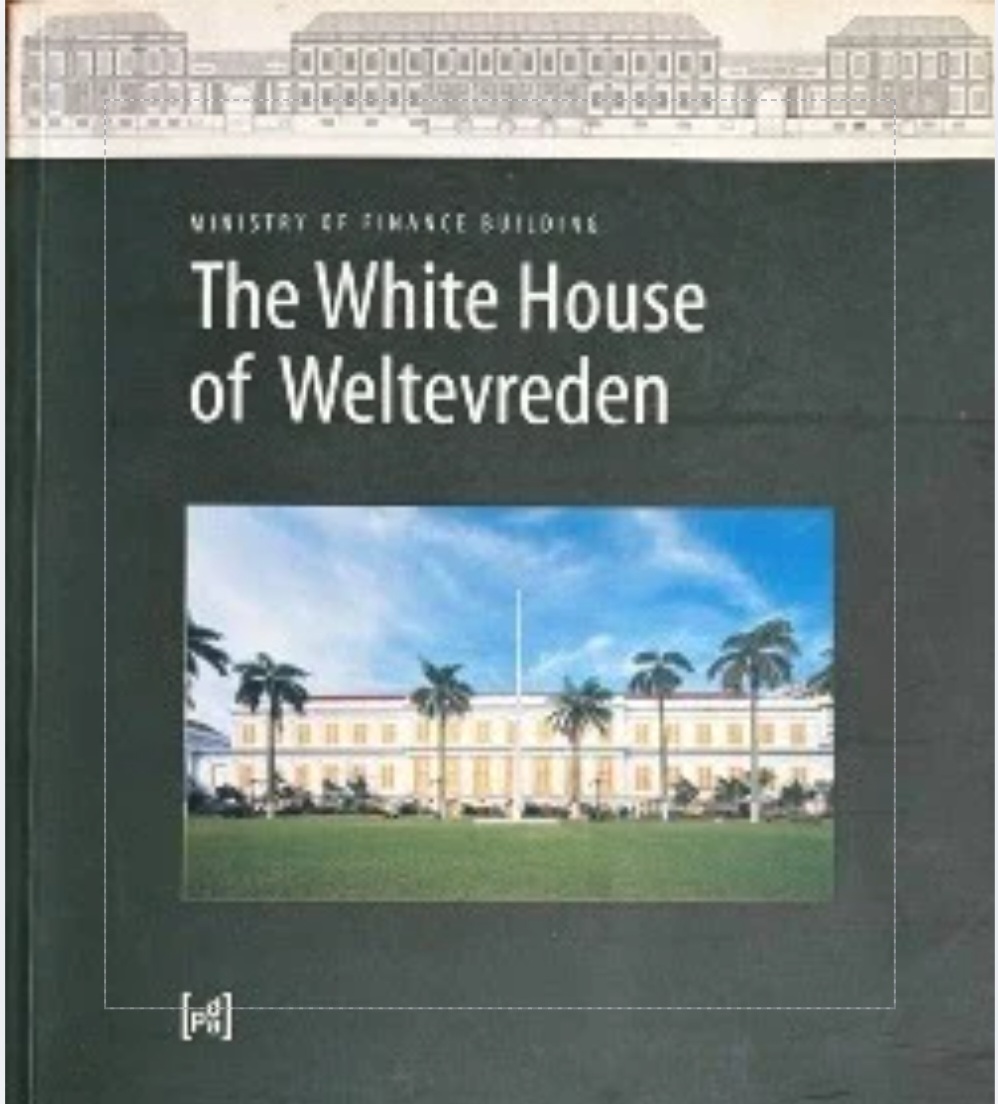
Author: Devina S. Radhitya, Febriyanti Suryaningsih, Mireille van Reenen, Nadia Purwestri, 2005. 64pgs. (English), Softcover.
Publisher: Pusat Dokumentasi Arsitektur (PDA)
The volume meticulously reconstructs the historical trajectory of the A.A. Maramis Building in Central Jakarta, once colloquially referred to as the White House. It offers a comprehensive examination of the edifice, originally erected in 1809 as the envisioned palatial seat of the Governor General under Herman Willem Daendels. Serving as both historical narrative and architectural documentation, the book traces the building’s evolution across centuries. It presents an incisive analysis of its neo-classical design, attributed to Lieutenant Colonel J.C. Schultze in 1828, enriched by rare archival photographs and precise architectural drawings. Beyond its aesthetic and structural significance, the building embodies profound cultural resonance, functioning today as the headquarters of the Indonesian Ministry of Finance. By bridging colonial architectural heritage with the modern apparatus of state administration, the work establishes the building as a living monument. It thus emerges as an indispensable resource for historians, architects, and heritage scholars, illuminating the nexus between Indonesia’s colonial past and its contemporary governance.
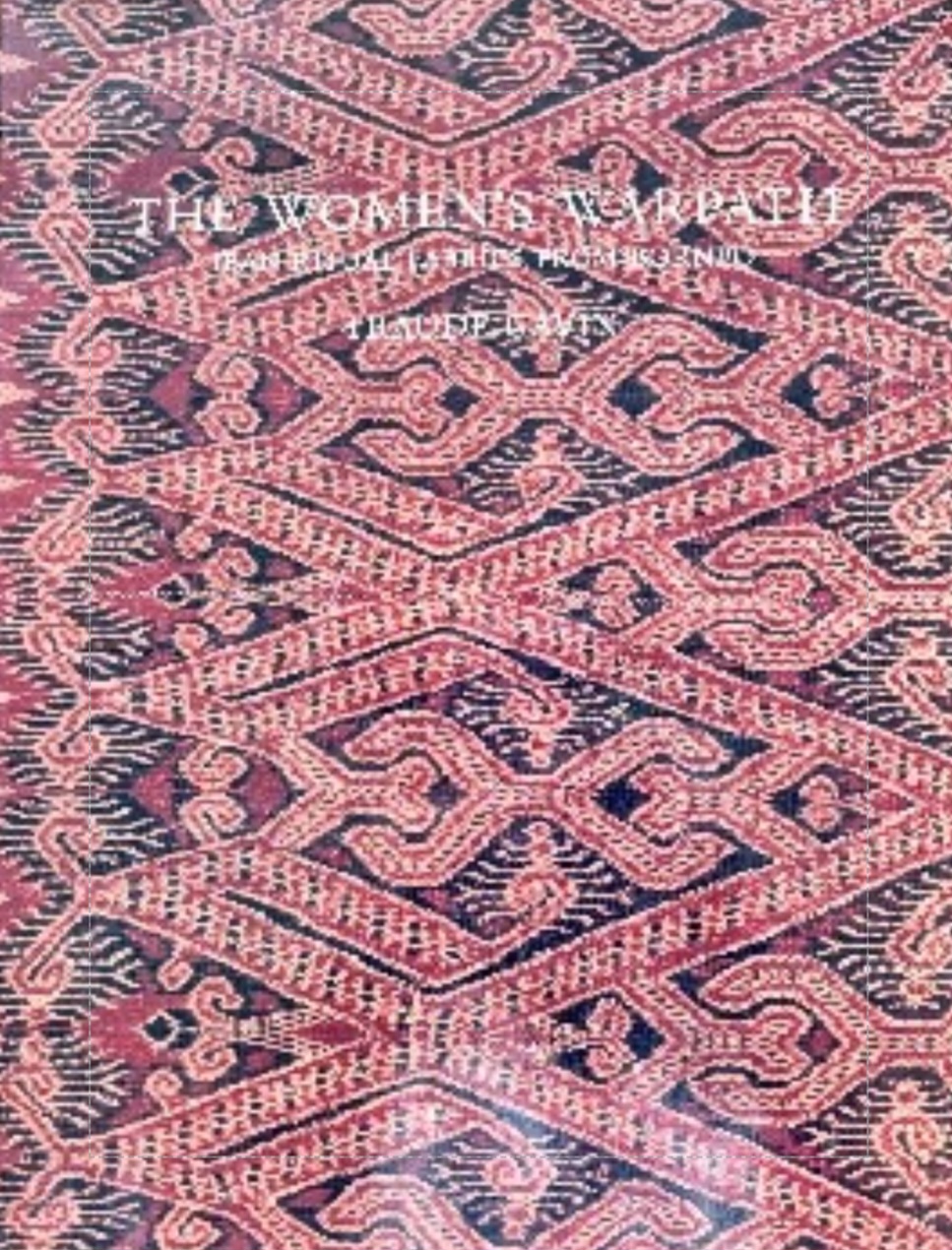
Author: Traude Gavin, 1996, 99 pgs. (English). Softcover
Publisher: UCLA Fowler Museum of Cultural History, Los Angelos, USA
This authoritative and richly illustrated volume, published by the UCLA Fowler Museum, offers a penetrating examination of the textile traditions of the Iban people of Southeast Asia. It explores how indigenous weavers conceptualize their own ritual practices and fabrics, situating cloth not merely as material culture but as a locus of cosmological meaning. Dr. Gavin, through years of sustained primary fieldwork, deliberately distances her scholarship from the conventional lens of the “primitive art collector.” Instead, she foregrounds the Iban’s own epistemologies—how they understand, produce, and mobilize their intricately wrought textiles within ritual and social life. The title itself gestures toward the interwoven dimensions of physical and spiritual journeys, historically associated with headhunting and male warfare, while simultaneously illuminating the female domain. Within this sphere, Iban women enact their own metaphorical “warpath” through the creation of powerful pua kumbu—ritual textiles that embody agency, potency, and ancestral resonance. The book is distinguished by its wealth of visual documentation, including color plates, cartographic renderings, and detailed diagrams. These materials elucidate the technical processes of ikat dyeing, the semiotics of pattern analysis, and the broader cultural significance of cloth as a medium of ritual efficacy and social identity.

Author: Linda S. McIntosh, 2019. 342pg. (English)
Publisher: River Books, Bangkok
"Thread and Fire", Textiles and Jewellery from the isles of Indonesia and Timor explores the centuries-old trade network in this equatorial region. The volume showcases over 300 art pieces from the Francesco Capelo Collection, gathered over twenty years and now part of Casa Asia Coleçāo Francisco Capelo in Lisbon.

Author: Jane Purarananda, editor, 2004. 181pgs. (English). Softcover
Publisher: River Books, Thailand.
This richly illustrated and visually compelling volume, published in 2004, offers a comprehensive exploration of textile traditions across six Southeast Asian nations: Cambodia, Indonesia, Laos, Myanmar, Thailand, and Vietnam. Beyond its aesthetic appeal, the book serves as a scholarly resource, presenting the research and perspectives of distinguished academics and art historians. Their contributions emerged from a landmark symposium convened by the Bangkok-based James H. W. Thompson Foundation, an institution renowned for its dedication to the preservation and study of Asian textile heritage. The book of proceedings contains the follownig papers: Cambodia: -Gillian Green (The Textiles of the Khmer Court, Angkhor, Origins, Innovations, and Continuities) -Bernard Dupargne (Weaving in Cambodia) Indonesia: -Hellen Jessup, (Motif and Meaning in Indonesian Textiles) -Marie- Helen Guelton (The Use of the Pahudu String model. Lau Pahudu Weaving from East Sumba_ Laos: -Mattiebelle Gittiger (Textiles forr te Living and the Dead: A Lao Case) Karen A. Bunyaratawej (Baby or Elephant Cloth: Wrappers in Laos and Thailand) Myanmar: -Susan Conway (The Saopha at Home and Abroad: Shan Court Dress in the 19th Century) Thailand: -John Guy (Fit for a King: Indian Textiles and Thai Protocol) -Susan Conway (Lan Na Male Dress in Peace and War) -Sonboon Thanasook (Chuan-tani or Lima Cloth: Cloth in the Lower Region of Southern Thailand) Vietnam: -Emmanuel Guilon (The Representation of Textiles in Cham Sculptures) -Gerald Moussay (Cham Weaving in Vietnam) -Christine Hemmet (Traditional Costumes of the Hmong in Vietnam)
Page 135 of 151