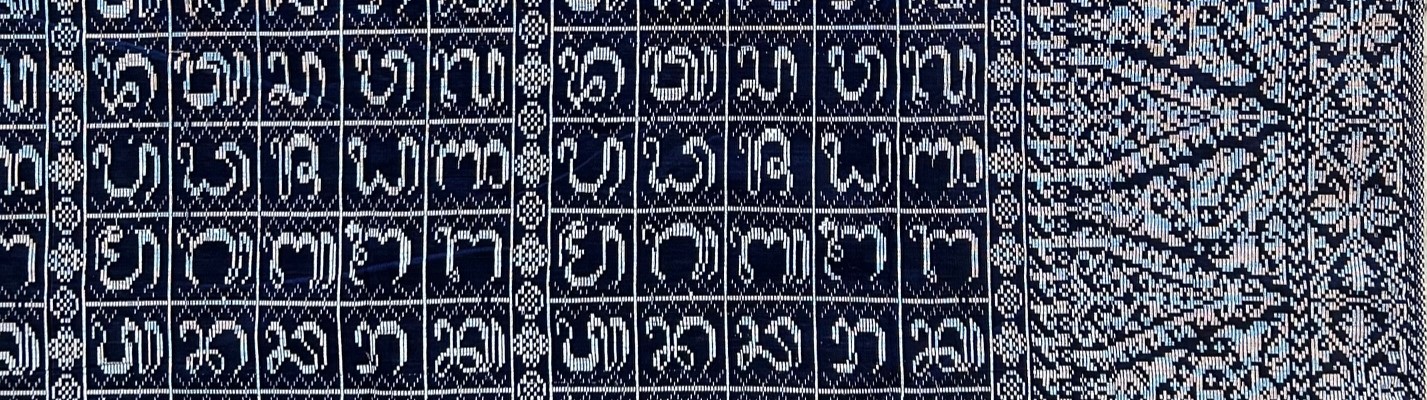

Author: Unknown, no year, 100pg. (English). Hardcover
Publisher: The Siam Society under Royal Patronage, Bangkok
The book is an attempt to summarize general knowledge on textile use and production in traditional culture through various regents of the Kingdom since ANCIENT TIMES. The intention of the book is to provide a profile of Thai textile art and assist a better understanding of the Thai people, along with the wish to preserve the gracious weaving heritage of Southeast Asia. The content provides historical background based on archaeological finds in the country and various materials and technical know-how employed in creating textile crafts. Each geographical region of Thailand and its ethnic composition nurture characteristic features of weaving in pictoresque northern, northeastern, central and peninsular southern regions.. Diffusions with the neighbouring cultures of Burma. Laos, Cambodia and Malaysia, also enrich the textile traditions of the Thais. The textile culture includes, the past practice of importing specific fabrics designed for aristocratic functions, court wear and royal ceremonies from China and India.

Author: Thirabhand Chandracharoen, 2004. 142pgs. (English). Softcover.
Publisher: The James W.H. Thompson Foundation, Bangkok
he catalog from the Exhibition “Tied Together” was presented at the Jim Thompson Center for Textiles and the Arts. This catalog centers on Khmer, Lao, and Thai mudmee ikat textiles. It offers a scholarly introduction to the fabrics and the regions from which they originate, followed by detailed accounts of the preparation processes—including the use of cotton, silk, and natural dyes. The volume further includes an essay examining the weavers and textile traditions of Isaan, the sartorial practices of the Siamese court, and the ceremonial use of Som Pak Poom (court attire). Authored by Thiraband Chandracharoen, curator at the Suanpathum Palace of Her Royal Highness Princess Chakri Sirindhorn of Thailand, the catalogue situates these textiles within their broader cultural and historical contexts.

Author: Datin Amar Margaret Linggi, 2001. 170 pg. (English), softcover
Publisher: Tun Jugah Foundation, Kuching Serawak
The book provides a overview and comprehensive description of Iban Ikat weaving. It also traces the intricate procedures and rituals of the weavers who produce these famous cloths. The study also presents an impressive collection of ikat, with a sophisticated knowledge of plants and their chemical properties, preparation of cotton threads to absorb natural dyes, and the use of the backstrap loom, and 70 color photographs of cloths that were displayed at the Museum of Art of the College of William and Mary, Virginia, USA in 1998.

Author: Noelle Tan, Veronica, & Zuzarte, 2004, 64pg. (English). Softcover
Publisher: Apex Club of Singapore
Baba Peter Wee, a distinguished fourth-generation Baba, stands as a recognized authority on the Peranakan way of life, its cultural traditions, and historical legacy. His profound passion for heritage preservation inspired him to establish the Katong Antique House in 1970. Over the course of twenty-five years, he meticulously curated and restored an extraordinary assemblage of Peranakan artifacts, transforming the space into a veritable repository of cultural memory. From floor to rafter, the gallery is adorned with exquisite emblems of Peranakan identity — porcelain, intricately carved furniture, heirloom jewelry, rare photographs, and the iconic sarong kebaya, among many other treasures. Katong Antique House holds the distinction of being Singapore’s first private Peranakan gallery, serving not only as a site of aesthetic appreciation but also as a locus of cultural education and historical continuity. This book constitutes a pictorial celebration of Baba Peter Wee’s unparalleled collection, showcasing more than forty antique sarong kebayas, shoes, and accessories. It is both a tribute to his lifelong dedication and a testament to the enduring vibrancy of Peranakan heritage.
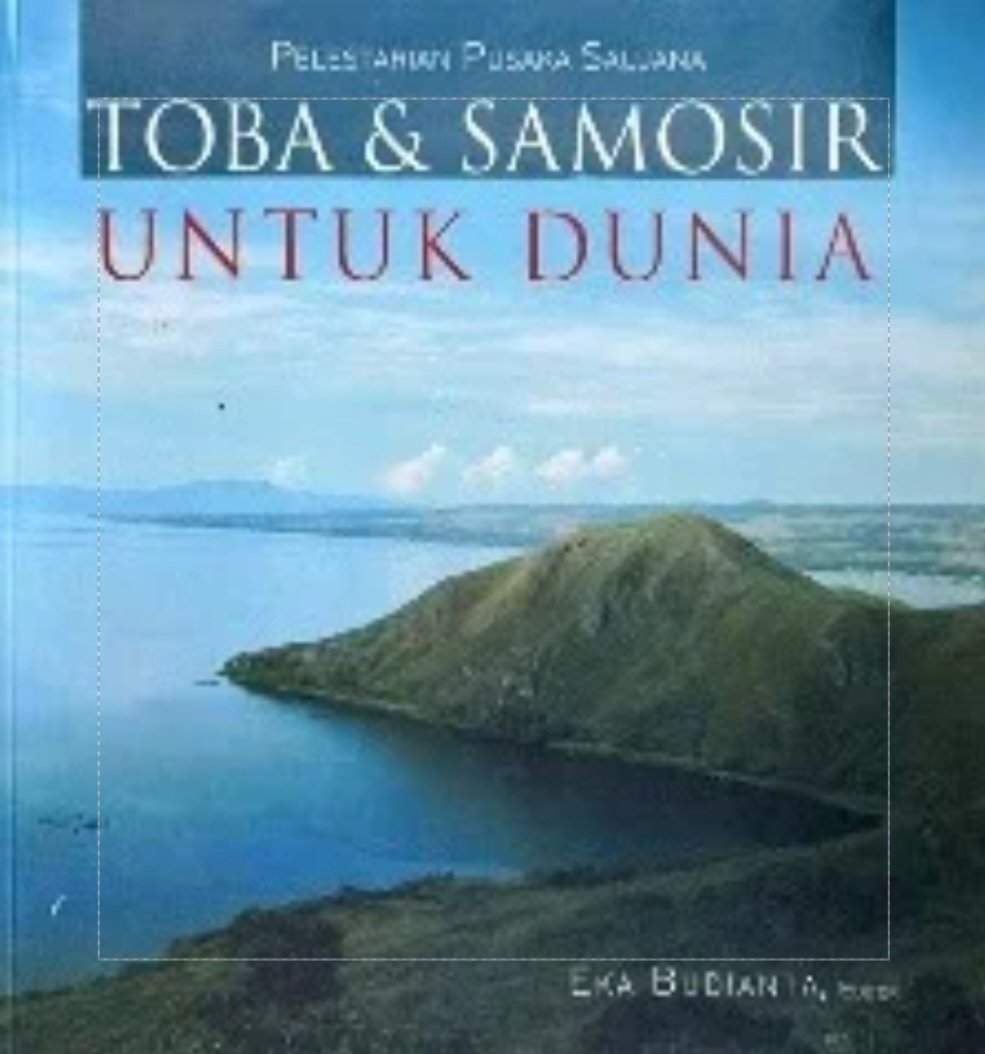
Author: Eka Budianta (Ed.) 2011. 127pgs. (Indonesian). Softcover
Publisher: Badan Pelestarian Pusaka Indonesia (BPPI), Jakarta
Rather than foregrounding the mythical folklore traditionally associated with the region, this volume positions itself as a critical advocacy text for environmental and cultural conservation. It examines Lake Toba and Samosir Island through the conceptual lens of saujana—the cultural landscape understood as a multi-layered, inseparable bond between nature and human culture. The essays articulate how the geological wonder of the Lake Toba volcanic caldera is intrinsically entwined with the ancestral traditions, architectural forms, and spiritual life of the Batak Toba people. The book addresses both local and global audiences with a provocative question: “Do we truly love Toba?” In doing so, it underscores how unchecked commercial development imperils the natural landscape, while advocating for mindful, community-led, and sustainable eco-tourism as an alternative to generic commodification. The invocation of the phrase “untuk Dunia” (“for the world”) emphasizes that Toba and Samosir are not merely regional Indonesian assets but global heritage sites deserving recognition, research, and protection at an international level. By shifting away from purely economic metrics or romanticized travel narratives, the text reframes preservation of the region as an urgent socio-cultural imperative. Edited by Eka Budianta under the auspices of BPPI, the collection bridges academic conservation strategies with accessible, civic-minded environmental discourse. While its institutional advocacy orientation may render the heritage terminology (pusaka saujana) dense for readers seeking light travel writing or exhaustive historical analysis, the book remains indispensable for those engaged in environmental conservation, Indonesian heritage studies, or community-based tourism. Ultimately, the volume reconceptualizes one of the world’s most spectacular volcanic lakes not merely as a scenic backdrop but as a living ecosystem demanding immediate, collective protection. It stands as both a scholarly intervention and a civic call to action, situating Lake Toba within the global discourse on cultural landscapes and sustainable heritage stewardship.
Page 136 of 151