
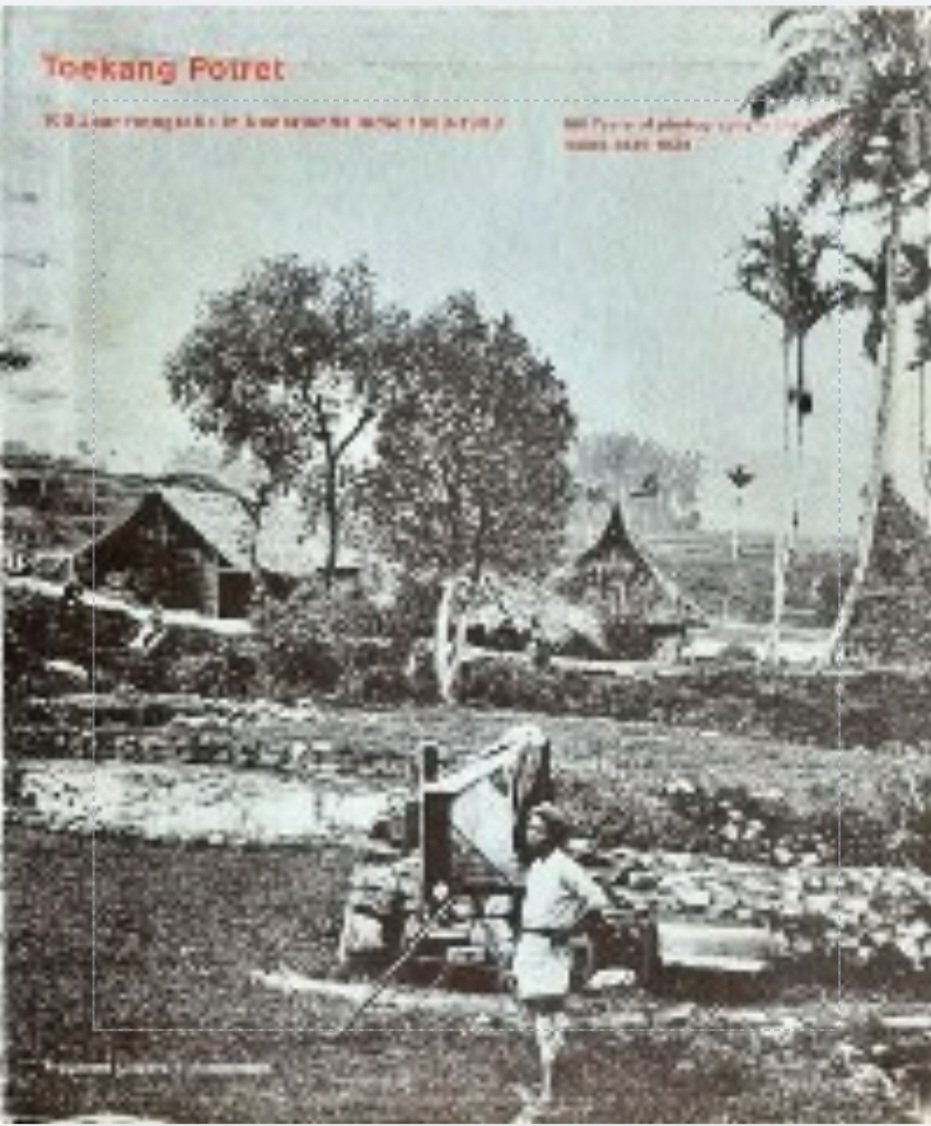
Author: Anneke Groeneveld, Paul Faber (eds.) 1989. 192pgs. (Dutch & English). Softcover
Publisher: Fragment, Amsterdam on behalf of Museum voor Volkenkunde, Rotterdam.
The book was published in conjunction with an exhibition under the same name at the Museum voor Volkenkunde, Rotterdam. The volume constitutes a vital and meticulously curated visual archive that traces the evolution of photography, the shifting contours of society, and the complex colonial perspectives in the Dutch East Indies across a century. The book not only documents the technical and artistic transitions—from the earliest daguerreotypes of 1839 to the flourishing of amateur photography by 1939—but also foregrounds the role of local itinerant portrait photographers, known as Toekang Potret. These practitioners significantly shaped modes of visual self-representation within the archipelago, offering indigenous communities a means to negotiate identity and modernity through the photographic medium. Acclaimed by historians and scholars of Southeast Asia, the work is distinguished for moving beyond mere nostalgia. It integrates critical essays with rare photographic plates, thereby situating images within broader discourses of colonial modernity, ethnographic record-keeping, and cultural transformation. The essays interrogate photography not simply as an aesthetic practice but as a potent instrument of colonial governance, social documentation, and cultural negotiation. In doing so, the volume underscores how photography simultaneously functioned as a technology of surveillance and a vehicle for self-fashioning, revealing the layered tensions between imposed colonial narratives and localized visual agency.
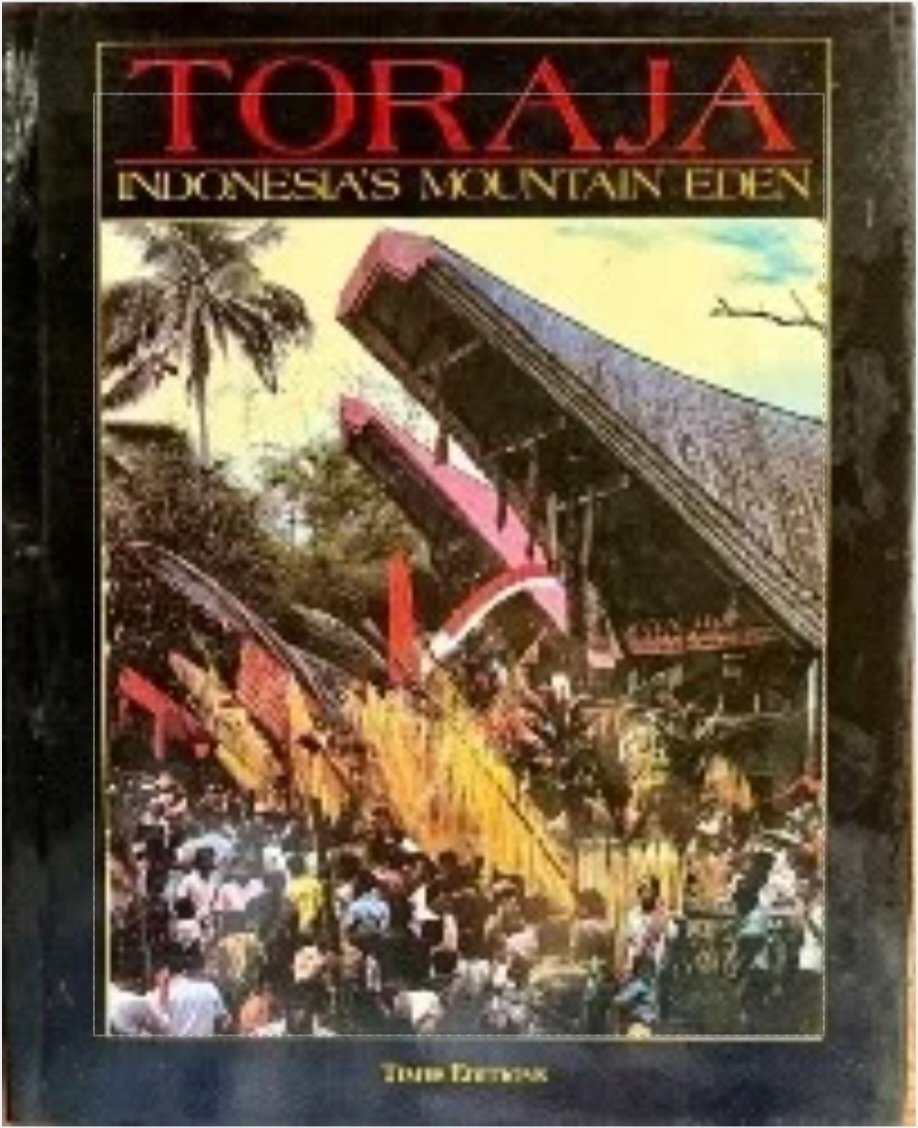
Author: Samban C. Parinding & Judi Achjadi, 1988. 157pgs. (English). Hardcover.
Publisher: Times Editions, Singapore
This classic coffee table volume constitutes a visually sumptuous and culturally reverent introduction to the highlands of Tana Toraja. Through its integration of landscape and architectural photography, the book situates the reader within a milieu where environment and built form are inseparable from social meaning. The accompanying text offers an insider’s vantage point on Toraja cosmology, social stratification, and ritual practice, illuminating the continuum between quotidian agricultural rhythms and the elaborate, multi-day funeral ceremonies that anchor collective identity. Published in the late 1980s, the work reflects a pre-digital era of tourism and anthropology, thereby preserving a snapshot of ethnographic sensibilities prior to the transformative incursions of modern infrastructure, globalization, and shifting cultural economies. As a coffee table format, the volume privileges aesthetic immediacy and visual allure over rigorous sociological critique or sustained theoretical analysis. Yet, in its very limitations, it underscores the enduring fascination with Toraja heritage as a locus of cultural resilience and ritual profundity. For collectors and connoisseurs of Indonesian art, architecture, and heritage, the book remains an essential artifact of cultural preservation, even as contemporary travelers may require supplementary, up-to-date guides to navigate the region’s evolving realities.

Author: unknown, The Guide Magazine Vol 1.
Publisher: Bastian Brown Publishing, London
This volume constitutes a visually and culturally resonant exploration of the highland traditions of South Sulawesi, with particular emphasis on the Toraja people. Through striking photographic documentation and evocative narrative description, the book illuminates the deep-rooted spiritual cosmologies, distinctive architectural forms, and sacred funerary rites that define Toraja cultural identity. Central to its thematic focus is the relationship between the Toraja, their ancestral land, and the Aluk Todolo belief system, which continues to shape ritual practice and communal life. The imagery is immersive and atmospheric, capturing mist-shrouded mountain peaks, the iconic tongkonan houses with their soaring rooflines, and cliff-side burial sites that embody the Toraja’s profound negotiation with mortality. The text interrogates themes of life, death, communal harmony, and the preservation of indigenous heritage amid the pressures of modernity. Moving beyond the conventions of a travel guide, the book situates rituals such as Rambu Solo within a broader philosophical framework, revealing their cosmological significance and social function. As both an ethnographic entry point and a visual archive, the volume offers readers an engaging introduction to Indonesian anthropology and cultural history. It stands as an evocative and respectful tribute to a unique highland society, appealing not only to art lovers and travelers but also to cultural enthusiasts and scholars seeking to understand the enduring vitality of Toraja traditions.
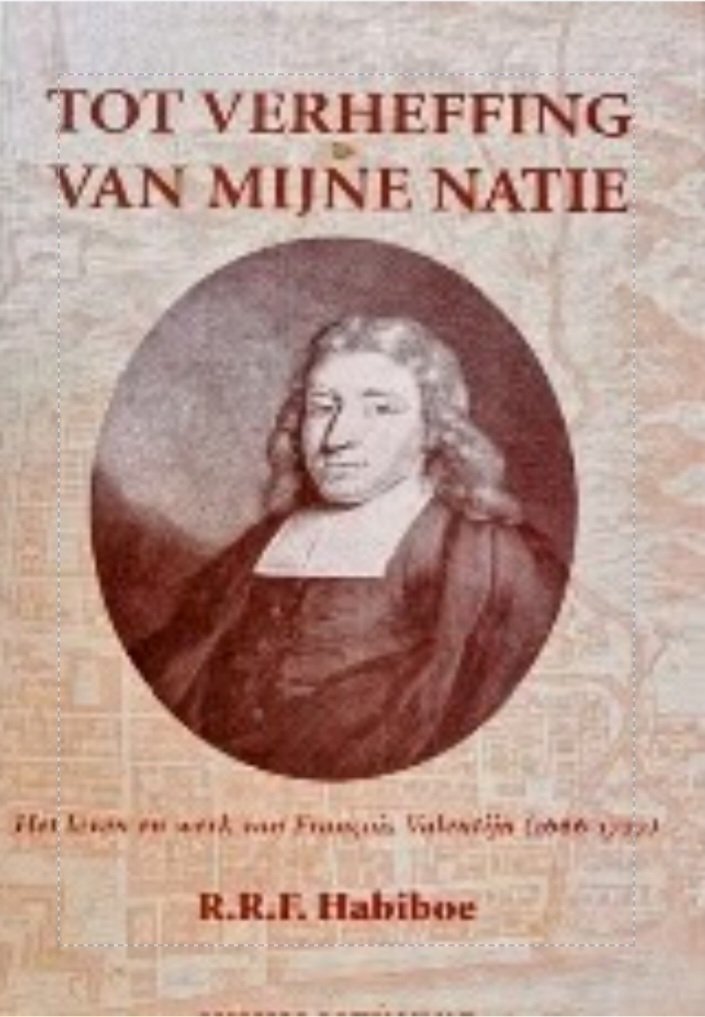
Author: Ron.R.F. Habiboe¸2004. 160pgs. (Dutch), Hardcover
Publisher: Uitgeverij Van Wijnen, Franeker, the Netherlands
The volume is a fascination comprehensive biography of a key, complex figure in Dutch colonial history. Written in Dutch but highly relevant to global maritime and Southeast Asian History. The book tracks the turbulent life of Franҫois Valentijn, a Dutch Minister who spent years in Ambon and East Indies under the Dutch East Indies Company (VOC). He is globally famous for authoring Oud en Nieuw Oost-Indiën. (Old and New East Indies). A massive eight-volume encyclopedia that remains an unmatched – and fiercely debated – historical resource. Habiboe explores the man behind the encyclopedia succesfully balancing Valentijn genuine intellectual curiosity with his unyielding emotional pride and massive ego. Habiboe details Valentijn’s early life in Dordrecht and his voyages to Southeast Asia. Rather than acting purely as a spiritual leader, Valentijn was deeply entangled in the geopolitical framework of the VOC. The book details how his pastoral duties often clashed or merged with commercial espionage, colonial administration, and local politics. A significant portion of the book focuses on the writing of Oud en Nieuw Oost Indiën, Habiboe illustrates the painstaking process Valentijn went through to compile geographic, botanical, zoological and cultural information about Indonesia and surrounding areas. The title The Elevation of my Nation captures Valentijn primary motive: he wanted to cement the Dutch Republic as the absolute peak of global knowledge and power. Habiboe does not shy away from the darker aspects of Valentijn’s legacy. Historically, Valentijn has been accused of plagiarizing contemporary scientists and officials - most notably the legendary botanist Georg Eberhard Rumphius. The biography tackles this controversy head-on, investigating how Valentijn obtained restricted VOC maps and manuscripts that other authors were forbidden to publish. Ron’s Habiboe is an essential companion text for any historian studying colonial maritime history, early modern anthropology or the VOC. It successfully decodes how a single provincial minister managed to publish one of the most comprehensive colonial compendiums in human history
Author: Lilian Too, 2004. 288pgs. (English). Softcover
Publisher: WOFS.com SDN BHD, Malaysia
Total Feng Shui by Lilian Too constitutes a visually vibrant and methodologically comprehensive introduction to the principles of Feng Shui, crafted to guide readers in cultivating health, prosperity, and happiness within domestic and professional environments. The text succeeds in balancing accessibility with breadth, presenting foundational concepts such as chi (vital energy), the five classical elements, and compass orientations in a manner that avoids overwhelming novice practitioners. Too’s pedagogical approach emphasizes actionable strategies—such as the placement of potted plants in designated spatial quadrants to stimulate financial growth—while simultaneously offering a systematic exposition of essential terminology, including pa kua diagrams and Lo Shu numerical symbolism. The integration of vivid color palettes, charts, and illustrations modernizes ancient traditions, rendering them visually engaging and conceptually approachable for contemporary audiences. The book’s strength lies in its ability to distill complex cosmological formulas into simplified, do-it-yourself adjustments adaptable to any interior space. In this respect, it functions as both a practical manual and a cultural bridge, translating esoteric knowledge into everyday design interventions. Nevertheless, readers with advanced expertise or those adhering to more orthodox interpretations of Feng Shui may perceive the broad introductory scope as somewhat generalized, privileging accessibility over doctrinal precision. Ultimately, Total Feng Shui exemplifies the genre of popularized cultural manuals: it democratizes a historically intricate system of spatial philosophy, while simultaneously inviting reflection on the tension between traditional authenticity and modern adaptation
Page 137 of 151